

From letters to the Supreme Court to a year-round resource for animals. Read the story

Why loose cattle eat festival waste and what it does to the rumen

Why loose cattle eat festival waste and what it does to the rumen

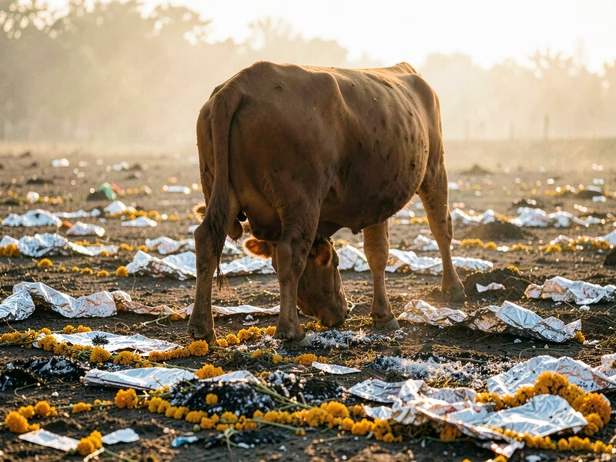
Stray cattle consume festival waste due to digestive processes in their four-chambered system where the rumen holds up to 150 litres of fermenting ingesta. Billions of microbes break down cellulose from dry grass, straw, sugarcane bagasse, and maize leaves through continuous microbial fermentation. The rumen wall contracts roughly once a minute to mix contents and push material toward the reticulum. Cattle are ruminants, meaning digestion begins in this specialized four-chambered system rather than an acid stomach, with the adult cow rumen holding between 100 and 150 litres of fermenting ingesta. Microbes including bacteria, protozoa, and fungi break down cellulose that single-stomached animals cannot process. This microbial fermentation produces volatile fatty acids that serve as the primary energy source absorbed by the animal.

Sources

Read the original (opens in a new tab)Summary written by Animal Writes. Read the original before relying on it.

More in Cattle and Gaushalas

  • Hi tech gaushala project delay proves costly for Sanskriti Jain, Bhopal BMC commissioner transferred

    News

    Hi tech gaushala project delay proves costly for Sanskriti Jain, Bhopal BMC commissioner transferred

    The Madhya Pradesh government transferred the Bhopal Municipal Corporation commissioner following reported delays in completing a hi-tech gaushala project for stray cattle in Bhopal. Sources said Chief Minister Mohan Yadav ordered the transfer after expressing displeasure over the slow progress of the project during an 1 Oct review of major ongoing state projects. The Chief Minister had performed the bhoomi pujan for the Bhopal gaushala project on 23 Nov 2024, but it was not completed within two years, with Yadav reportedly questioning why it had not advanced when similar facilities were already built in Indore, Ujjain, and Gwalior. Ramprakash Ahirwar, a 2018-batch IAS officer, replaces Sanskriti Jain as the new Municipal Corporation Commissioner, triggering further administrative reshuffling including the transfer of Additional Commissioner Anju Arun, from the 2017 batch, due to her seniority over Ahirwar. Another Additional Commissioner, Akshay Temrawal, from the 2018 batch but ranking above Ahirwar, is also expected to be transferred soon. Bhopal Municipal Corporation Council Chairman Kishan Suryavanshi also posted "Permanent Farewell" on social media following Jain's transfer, after relations between them had been strained.

  • Holy cow! Rs 20 lakh paid for a cowshed that doesn’t exist

    News

    Holy cow! Rs 20 lakh paid for a cowshed that doesn’t exist

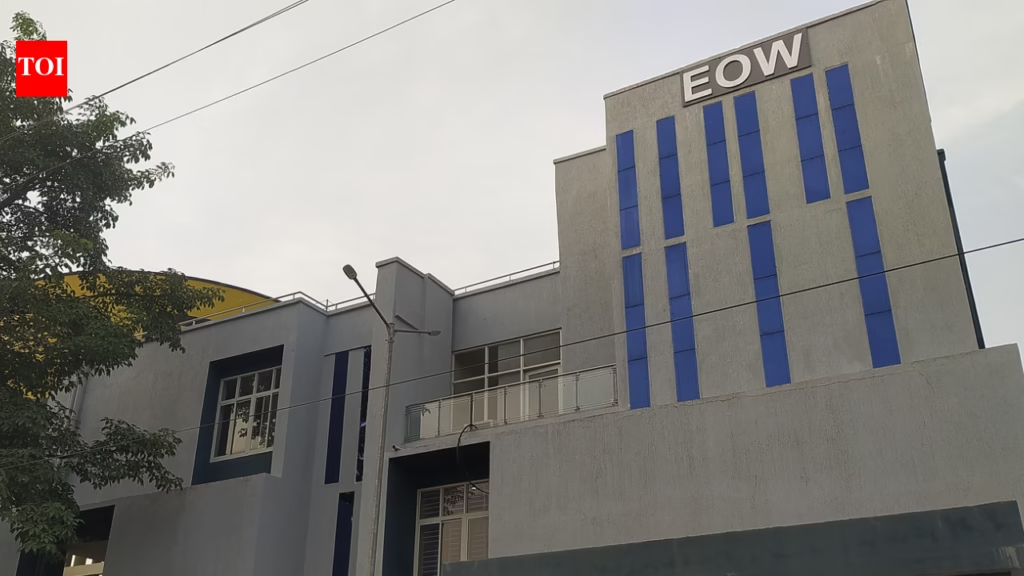
    The Economic Offences Wing registered an FIR after an amount of Rs 20 lakh was paid for a cowshed that does not exist. The funds were cleared for the non-existent gaushala meant to house stray cattle in Rewa district. Investigators found that essential facilities, including sheds, a borewell and a water tank, were missing at the site. The Economic Offences Wing booked six people, including engineers and a contractor, over the alleged fraud in the project sanctioned under the Mahatma Gandhi National Rural Employment Guarantee Act scheme.

  • Police rescue cattle from illegal transport attempt, one booked

    News

    Police rescue cattle from illegal transport attempt, one booked

    Khargone police rescued 21 cattle from an illegal transport-to-slaughter attempt in Madhya Pradesh. Khargone police stated that a case was filed under the Madhya Pradesh cow slaughter ban and animal cruelty laws, while the accused remained absconding. The action follows regulations protecting livestock from illegal transport and slaughter. Police stated that investigations and efforts to apprehend the suspect are continuing.

From the Library

  • AI Keeps an Eye on the ‘Cattle of the Hills’ — and It Could Change How Farmers Watch Their Herds

    Official Release

    AI Keeps an Eye on the ‘Cattle of the Hills’ — and It Could Change How Farmers Watch Their Herds

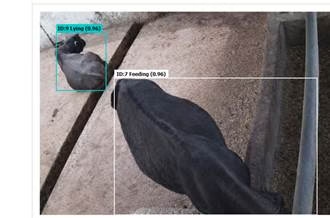
    India’s Press Information Bureau announced that an artificial-intelligence system has been introduced to monitor cattle grazing in hilly regions. The technology uses sensors and imaging to track herd movements and health, providing farmers with real-time data on their animals. Developed by researchers at the ICAR-National Research Centre on Mithun in Nagaland, the system uses 12 high-definition CCTV cameras across two sheds for continuous day-and-night surveillance. Using a dataset of 3,000 manually annotated images, the AI framework combines the YOLOv8n model with DeepSORT technology to track individual animals in real time.