
From letters to the Supreme Court to a year-round resource for animals. Read the story

Dead ostrich in cold storage, as children’s park has no vet

Dead ostrich in cold storage, as children’s park has no vet

An ostrich died at the Children’s Park, Guindy, in Chennai, after a week-long illness without veterinary care. A forest department official stated that the carcass was placed in cold storage awaiting a postmortem examination. Central Zoo Authority guidelines require a postmortem for zoo animal deaths to determine causes, with reports submitted to the authority. Chennai Wildlife Warden Kulal Yogesh Vilas stated that the previous veterinarian left before a replacement joined, and officials arranged temporary help from the Besant Memorial Animal Dispensary, Vandalur Zoo, and Snake Park. He stated that the Tamil Nadu Veterinary and Animal Sciences University agreed to send veterinary graduates to the park.

Sources

Read the original (opens in a new tab)Summary written by Animal Writes. Read the original before relying on it.

More in Laws and Rules

  • Activist urges govt to ban elephants at Dasara events

    News

    Activist urges govt to ban elephants at Dasara events

    An animal rights activist urged the government to ban elephants at Dasara events in Mysuru, Karnataka, citing animal welfare concerns. The activist stated that captive elephants suffer during such large public festivals due to loud noises, heavy crowds, and long processions. The government has not yet announced any official decision regarding the request, and authorities are expected to review the representation submitted by the activist before the next festival planning cycle begins. Animal welfare groups have frequently raised concerns over the physical and psychological toll on pachyderms used in cultural celebrations across the region. Officials from the forest department stated that they monitor the health and upkeep of participating elephants, ensuring veterinary care is provided during their stay. Public welfare bodies and citizens can write to the forest department to support humane treatment guidelines for captive elephants used in state events.
  • Mysuru Dasara faces elephant ban demand after safety concerns

    News

    Mysuru Dasara faces elephant ban demand after safety concerns

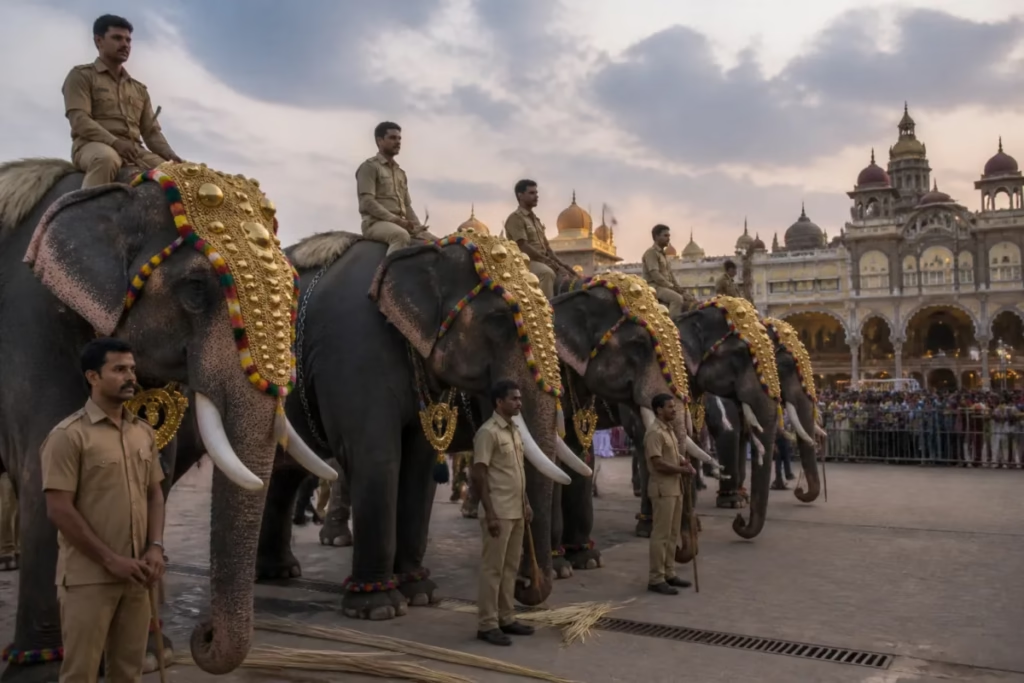
    Mysuru Dasara faces elephant ban demand after safety concerns raised about captive elephants used in the festival in Mysuru, Karnataka. Animal welfare activists and concerned citizens urged authorities to stop using elephants in the celebrations due to safety risks and animal welfare issues. The petitioners asked the Karnataka Forest Department and the district administration to replace live elephants with mechanised alternatives or cultural floats. Opposing the demand, temple authorities and festival committees stated that traditional rituals require live animals. The forest department stated that veterinary teams monitor the health and stress levels of the participating elephants throughout the festival. Officials stated that a final decision on the participation of the elephants will be taken after reviewing safety guidelines and consulting stakeholders before the next festival season.

  • Trunk call for change: Tradition shouldn’t mean cruelty to elephants

    News

    Trunk call for change: Tradition shouldn’t mean cruelty to elephants

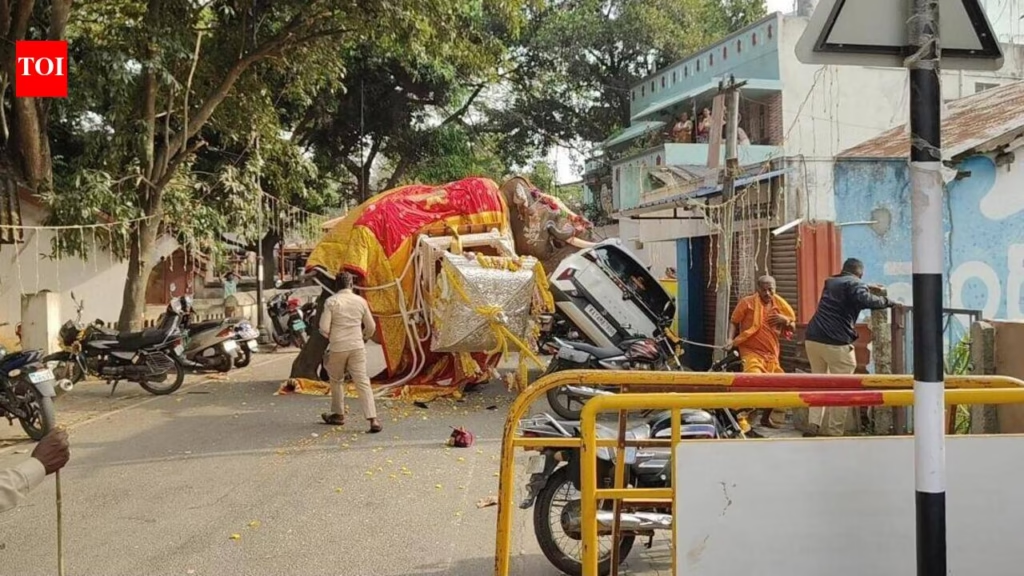
    An elephant panicked and fled while carrying a heavy howdah at the Shivamogga Dasara in Karnataka on October 21, narrowly avoiding loss of human lives. Animal welfare advocates stated that captive elephants suffer trauma from loud noises and heavy crowds during religious festivals. Lawyer Alok Hisarwala Gupta, founder of the Centre for Research on Animal Rights, noted that a 2022 amendment to the 1972 Wildlife (Protection) Act permitted live elephant transfers by certificate holders under government rules, while wealthy temples and groups like the Kerala Elephant Owners Association continue to resist changes. Suparna Ganguly, co-founder and trustee of Compassion Unlimited Plus Action (CUPA) and Wildlife Rescue and Rehabilitation Centre (WRRC), stated, "If the public could only understand that they need to protect what they love." Advocates point to mechanical elephants as a safer alternative for processions, following precedents such as the use of fiberglass hornbill casques in Arunachal. Readers can support alternatives to live animal use by urging event organizers to adopt mechanical replicas during local festivals.

From the Library

  • Government Notifies Expansion of Central Drugs Laboratory Functions at CCS NIAH, Baghpat for Veterinary Vaccine Testing

    Official Release

    Government Notifies Expansion of Central Drugs Laboratory Functions at CCS NIAH, Baghpat for Veterinary Vaccine Testing

    The Ministry of Health and Family Welfare issued a notification amending the Drugs Rules, 1945, to expand veterinary vaccine testing functions at the Central Drugs Laboratory. Published under Gazette Notification G.S.R. 65(E) on the 28 Jan 2026, under the Drugs and Cosmetics Act, 1940, the update applies to the Central Drugs Laboratory at the Chaudhary Charan Singh–National Institute of Animal Health located in Baghpat, Uttar Pradesh. The rule expands the institute's testing capacity from only two veterinary vaccines to 42 veterinary vaccines, covering biologicals used for dogs, horses, poultry and livestock. In practice, this enhancement helps streamline regulatory clearance, reduce testing timelines for manufacturers, and ensure quality-assured vaccines reach the market for animal welfare.

  • Madras High Court, 1 Sep 2026: PCA section 11(1)(a) is non-cognizable (Balaji v. State, Crl.O.P. No. 9632 of 2026)

    Judgment

    Madras High Court, 1 Sep 2026: PCA section 11(1)(a) is non-cognizable (Balaji v. State, Crl.O.P. No. 9632 of 2026)

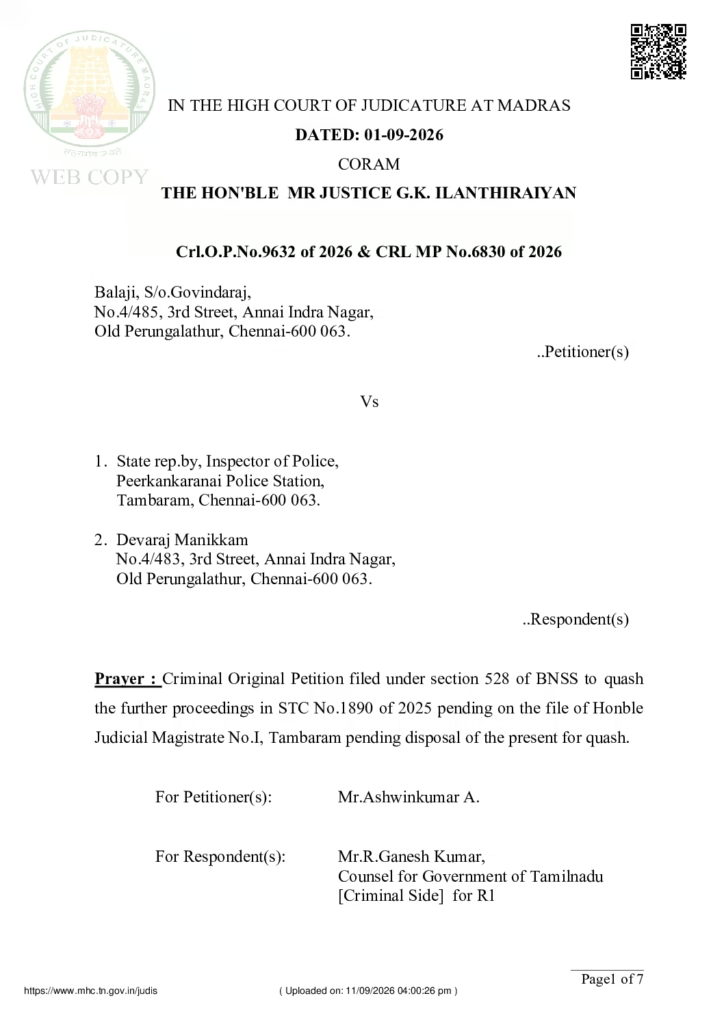
    The Madras High Court delivered a judgment in Balaji v. State, Crl.O.P. No. 9632 of 2026, quashing a criminal case under section 11(1)(a) of the Prevention of Cruelty to Animals Act, 1960 against a man accused of throwing a stone at a neighbour's dog that had bitten him. Justice G.K. Ilanthiraiyan held that the offence is non-cognizable, meaning the police cannot arrest without a warrant under section 31 of the Act, and that for a first offence the punishment is a fine of Rs 10 to Rs 50. The court ruled that the police should therefore have taken the magistrate's permission under section 174(2) of the Bharatiya Nagarik Suraksha Sanhita before registering the first information report. The court also noted that no evidence showed the dog was injured and that the complaint was a counterblast to the petitioner's own complaint.

  • Union Environment Minister inaugurates Centre of Excellence on Human Wildlife Conflict at WII SACON, Coimbatore; launches National Human Wildlife Conflict Portal

    Official Release

    Union Environment Minister inaugurates Centre of Excellence on Human Wildlife Conflict at WII SACON, Coimbatore; launches National Human Wildlife Conflict Portal

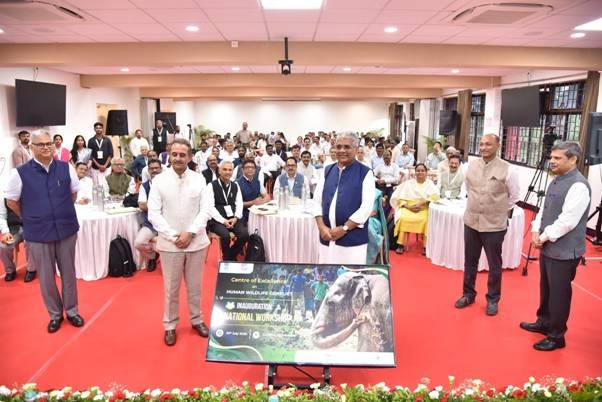
    On 10 Jul 2026, the Union Environment Minister inaugurated a Centre of Excellence for human-wildlife conflict at the Wildlife Institute of India’s SACON campus in Coimbatore. The minister also launched a National Human-Wildlife Conflict Portal on the same day. This newly established center will serve as a national hub for research, innovation, policy support, capacity building, and dissemination of best practices. During the event, officials gathered to deliberate on effective strategies for mitigating human-wildlife conflict and promoting coexistence.