
From letters to the Supreme Court to a year-round resource for animals. Read the story

UP rabies scare: can curd or other dairy products actually spread rabies?

UP rabies scare: can curd or other dairy products actually spread rabies?

Around 450 people received anti-rabies vaccinations in Uttar Pradesh’s Gorakhpur district after consuming charanamrit made from milk of a cow suspected of having rabies. Health officials organised vaccination camps in Dadi Khas and neighbouring Govindpur villages after the animal showed unusual behaviour and died on October 20. India’s National Rabies Control Programme stated that there are no evidence-based reports of human rabies resulting from consuming milk or milk products from an infected animal. While rabies primarily spreads through bites, scratches, or infected saliva contacting broken skin or mucous membranes, health authorities advise against consuming raw milk from suspected animals due to other foodborne infection risks. Anyone who experiences a bite, scratch, or possible contact with infected saliva should consult a doctor promptly for proper evaluation and preventive treatment.

Sources

Read the original (opens in a new tab)Summary written by Animal Writes. Read the original before relying on it.

More in Cattle and Gaushalas

  • Cow dies of dog bite, 450 who had prasad from its milk get anti rabies shots in UP

    News

    Cow dies of dog bite, 450 who had prasad from its milk get anti rabies shots in UP

    A rabid cow bite scare in Gorakhpur prompted health officials to administer anti-rabies shots to 450 people, with nearly 500 total getting vaccines. The Health Department conducted a vaccination camp on 21 October, following the death of a cow that displayed unusual behaviour after a reported stray dog bite in Dadi Khas and Govindpur villages. Owner Nawami Yadav stated that veterinarians suspected a dog bite, which caused alarm among devotees who drank charanamrit and milk-based prasad during Durga Puja, with more than 400 people drinking its milk. Gorakhpur Deputy Chief Medical Officer Dr Rajesh Kumar stated the vaccines were a precautionary measure because authorities have not confirmed if the cow had rabies. Reassuring residents, Dr Kumar said, "There is no need to panic. Boiling the virus destroys the milk," but noted that shots were given to address local anxiety, according to The Times of India.
  • Cow shelter manager arrested in Muzaffarnagar after six cows die due to alleged negligence

    News

    Cow shelter manager arrested in Muzaffarnagar after six cows die due to alleged negligence

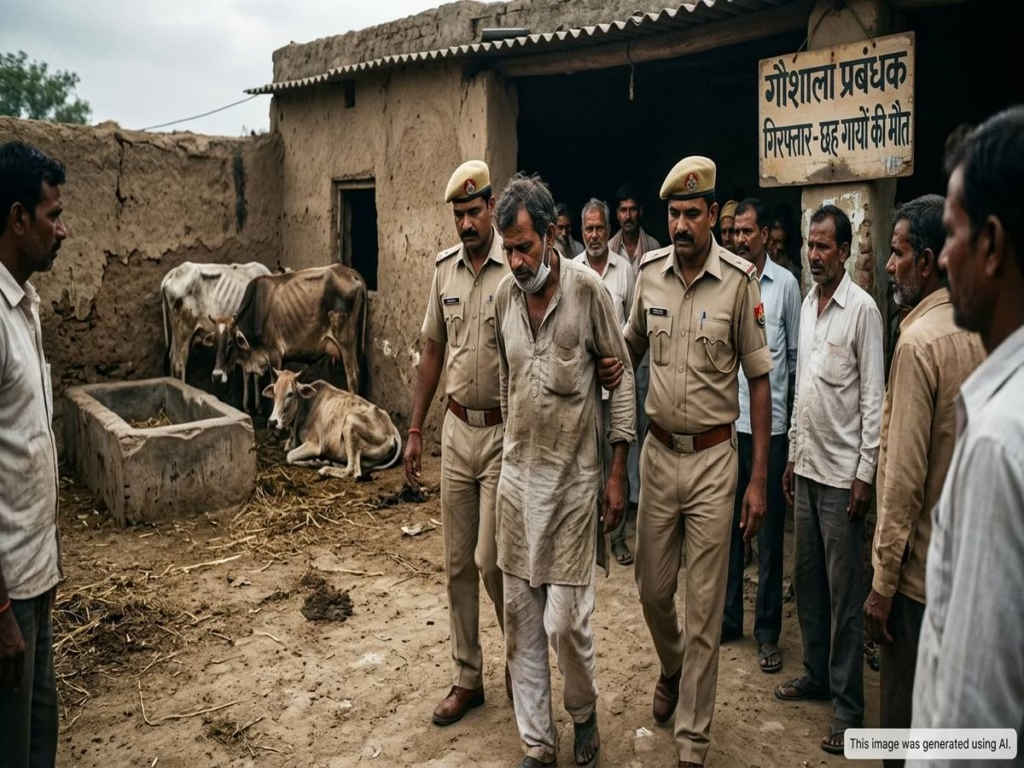
    Six cows died at a cow shelter in Muzaffarnagar, prompting police to arrest its manager for alleged negligence. Police said the manager was taken into custody after reports that the animals were left without adequate food or water, a claim that led to the arrest. The incident raises concerns under the Prevention of Cruelty to Animals Act, 1960, which could be invoked if negligence is proven. An investigation has been launched to determine the cause of the deaths and whether the shelter complied with state welfare regulations. If the allegations hold, the manager could face charges and the shelter’s licence may be reviewed by the authorities.

  • In India, police shootings of alleged cow smugglers raise alarm about impunity and bias

    News

    In India, police shootings of alleged cow smugglers raise alarm about impunity and bias

    Police officers in Uttar Pradesh shot and injured several individuals accused of being cow smugglers who were allegedly transporting cattle illegally across various districts of the state. Human rights activists alleged that the Uttar Pradesh Police are carrying out these encounters to bypass the formal justice system. These advocates claimed the police are disproportionately targeting minority communities under the Uttar Pradesh Prevention of Cow Slaughter Act, which restricts the transport and slaughter of cattle. A legal advocate stated that the authorities use these shootings as a "shortcut to justice" instead of following the established legal framework for animal welfare violations. While the police claimed the suspects fired first, activists have called for independent investigations into the rising number of gun-related injuries. Families of the victims are filing petitions in the High Court to seek accountability for the use of force during these cattle-related arrests.

From the Library

  • Observance of World Rabies Day – 28 Sep 2026

    Circular

    Observance of World Rabies Day – 28 Sep 2026

    The Animal Welfare Board of India released a circular announcing that World Rabies Day will be observed on 28 Sep 2026. This official communication serves to inform stakeholders about the upcoming observance date. The notice officially establishes the schedule for marking the occasion.

  • AI Keeps an Eye on the ‘Cattle of the Hills’ — and It Could Change How Farmers Watch Their Herds

    Official Release

    AI Keeps an Eye on the ‘Cattle of the Hills’ — and It Could Change How Farmers Watch Their Herds

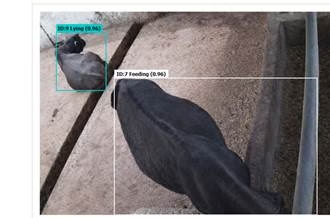
    India’s Press Information Bureau announced that an artificial-intelligence system has been introduced to monitor cattle grazing in hilly regions. The technology uses sensors and imaging to track herd movements and health, providing farmers with real-time data on their animals. Developed by researchers at the ICAR-National Research Centre on Mithun in Nagaland, the system uses 12 high-definition CCTV cameras across two sheds for continuous day-and-night surveillance. Using a dataset of 3,000 manually annotated images, the AI framework combines the YOLOv8n model with DeepSORT technology to track individual animals in real time.