From letters to the Supreme Court to a year-round resource for animals. Read the story

Trunk call for change: Tradition shouldn’t mean cruelty to elephants

Trunk call for change: Tradition shouldn’t mean cruelty to elephants

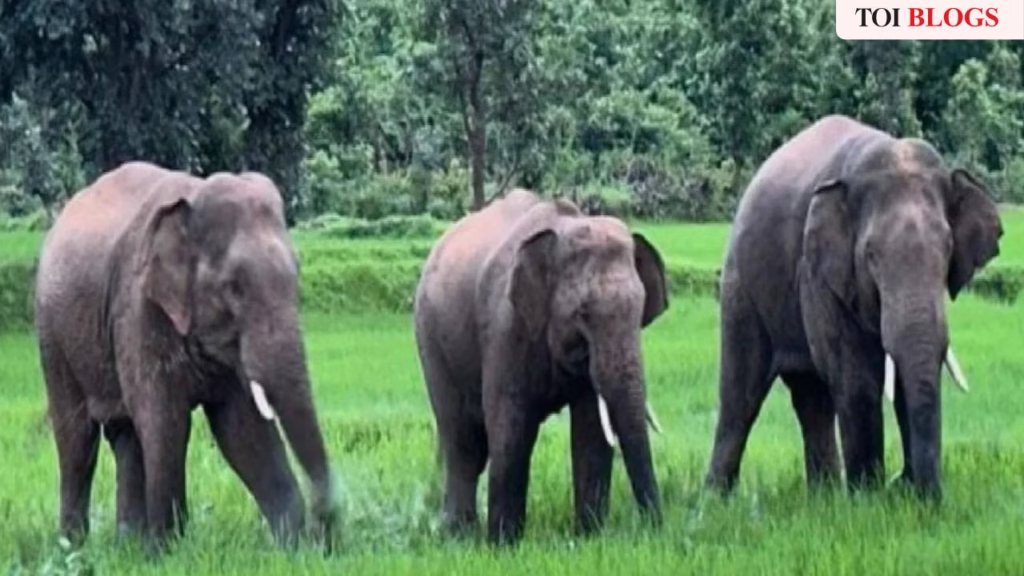
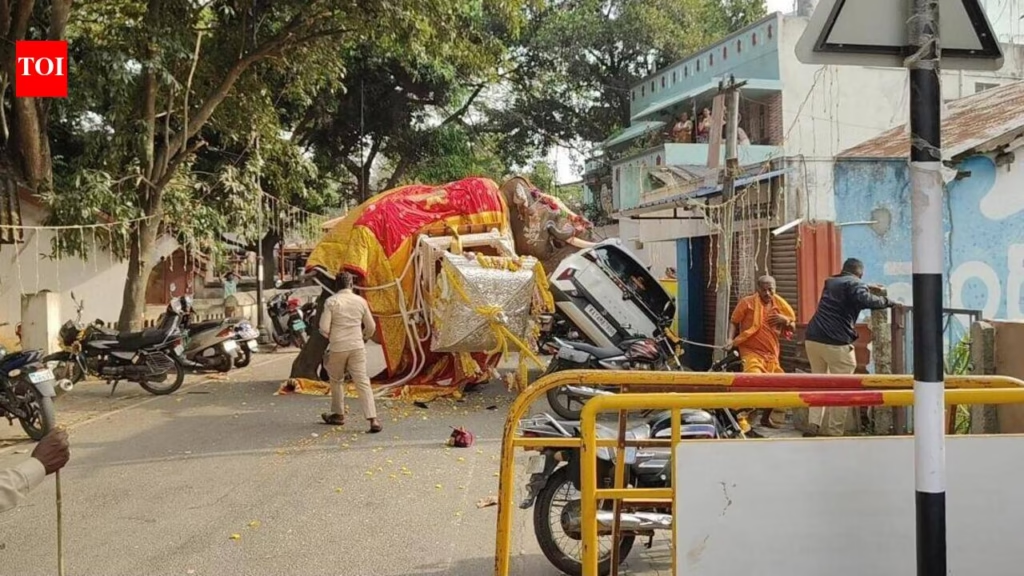
An elephant panicked and fled while carrying a heavy howdah at the Shivamogga Dasara in Karnataka on October 21, narrowly avoiding loss of human lives. Animal welfare advocates stated that captive elephants suffer trauma from loud noises and heavy crowds during religious festivals. Lawyer Alok Hisarwala Gupta, founder of the Centre for Research on Animal Rights, noted that a 2022 amendment to the 1972 Wildlife (Protection) Act permitted live elephant transfers by certificate holders under government rules, while wealthy temples and groups like the Kerala Elephant Owners Association continue to resist changes. Suparna Ganguly, co-founder and trustee of Compassion Unlimited Plus Action (CUPA) and Wildlife Rescue and Rehabilitation Centre (WRRC), stated, “If the public could only understand that they need to protect what they love.” Advocates point to mechanical elephants as a safer alternative for processions, following precedents such as the use of fiberglass hornbill casques in Arunachal. Readers can support alternatives to live animal use by urging event organizers to adopt mechanical replicas during local festivals.

Sources

Read the original (opens in a new tab)Summary written by Animal Writes. Read the original before relying on it.

More in Adoption

  • Activist urges govt to ban elephants at Dasara events

    News

    Activist urges govt to ban elephants at Dasara events

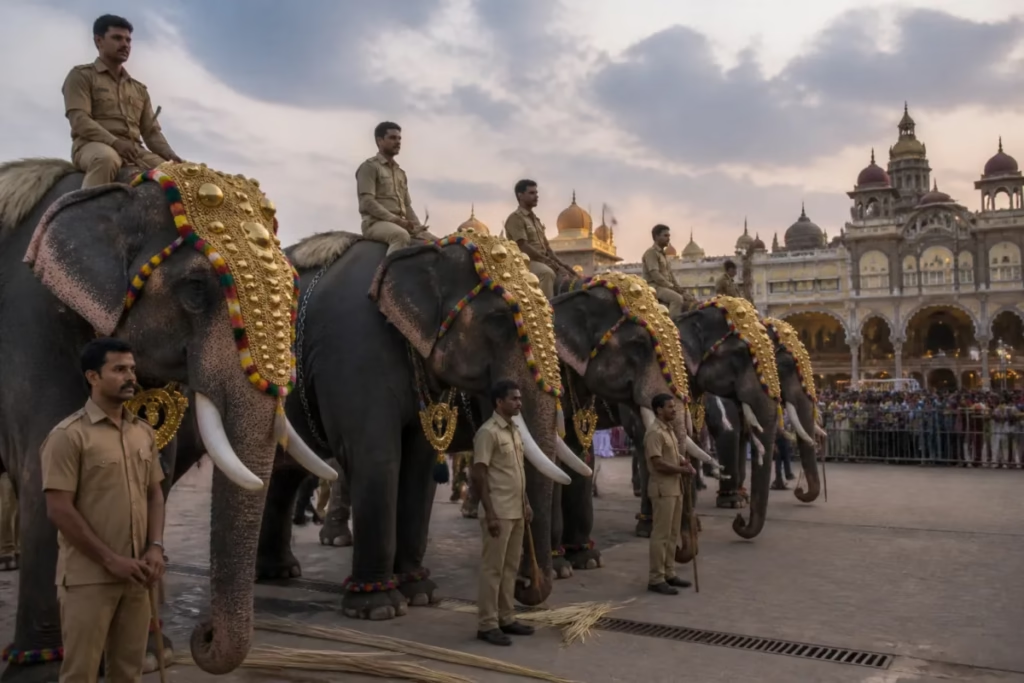
    An animal rights activist urged the government to ban elephants at Dasara events in Mysuru, Karnataka, citing animal welfare concerns. The activist stated that captive elephants suffer during such large public festivals due to loud noises, heavy crowds, and long processions. The government has not yet announced any official decision regarding the request, and authorities are expected to review the representation submitted by the activist before the next festival planning cycle begins. Animal welfare groups have frequently raised concerns over the physical and psychological toll on pachyderms used in cultural celebrations across the region. Officials from the forest department stated that they monitor the health and upkeep of participating elephants, ensuring veterinary care is provided during their stay. Public welfare bodies and citizens can write to the forest department to support humane treatment guidelines for captive elephants used in state events.
  • Mysuru Dasara faces elephant ban demand after safety concerns

    News

    Mysuru Dasara faces elephant ban demand after safety concerns

    Mysuru Dasara faces elephant ban demand after safety concerns raised about captive elephants used in the festival in Mysuru, Karnataka. Animal welfare activists and concerned citizens urged authorities to stop using elephants in the celebrations due to safety risks and animal welfare issues. The petitioners asked the Karnataka Forest Department and the district administration to replace live elephants with mechanised alternatives or cultural floats. Opposing the demand, temple authorities and festival committees stated that traditional rituals require live animals. The forest department stated that veterinary teams monitor the health and stress levels of the participating elephants throughout the festival. Officials stated that a final decision on the participation of the elephants will be taken after reviewing safety guidelines and consulting stakeholders before the next festival season.

  • Baby orangutans in India expose illegal wildlife trade as experts question a billionaire’s zoo

    News

    Baby orangutans in India expose illegal wildlife trade as experts question a billionaire’s zoo

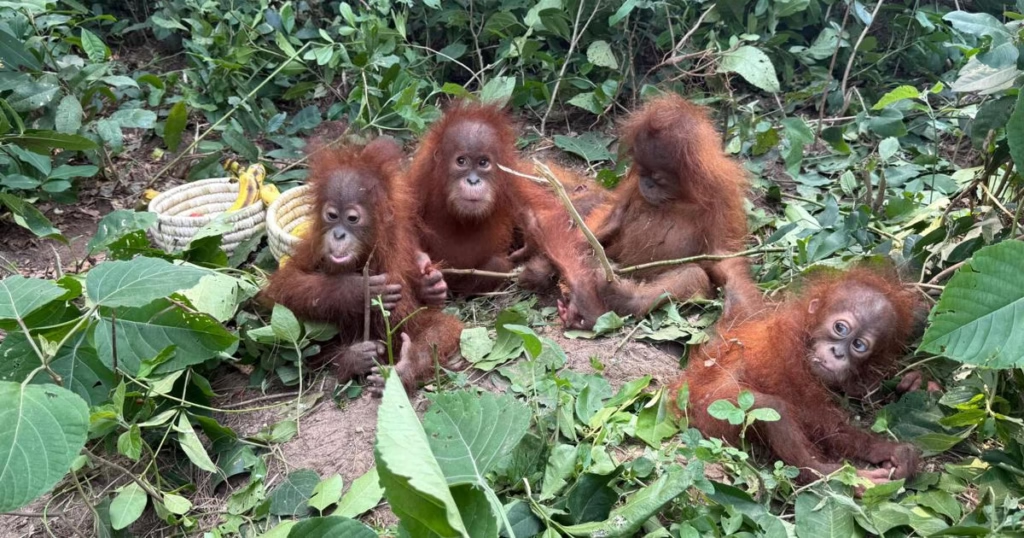
    Five baby orangutans were found abandoned on a plantation in Bhograi village in Balasore district of Odisha, India, exposing illegal wildlife trade. The DFO Balasore Wildlife Division stated that villagers discovered the three males and two females, aged six to eight months, in early Sep 2026. Experts stated that wealthy collectors, expanding air links with Southeast Asia, and loopholes in wildlife laws are driving the illicit trade of apes into India. Government records show India legally imported 41 orangutans between 2021 and 2024, leading experts to question their origins. Meanwhile, efforts to return rescued orangutans to Indonesia have stalled, and scrutiny over ownership intensified after one orangutan was transferred to a private wildlife facility run by billionaire Mukesh Ambani's family. Veterinarians at Nandankanan Zoo inspected the rescued animals, while officials prepared for repatriation procedures.

From the Library

  • Draft Prevention of Cruelty to Animals (Control and Supervision of Experiment, Breeding and Trading of Laboratory Animals) Rules, 2026

    Rule

    Draft Prevention of Cruelty to Animals (Control and Supervision of Experiment, Breeding and Trading of Laboratory Animals) Rules, 2026

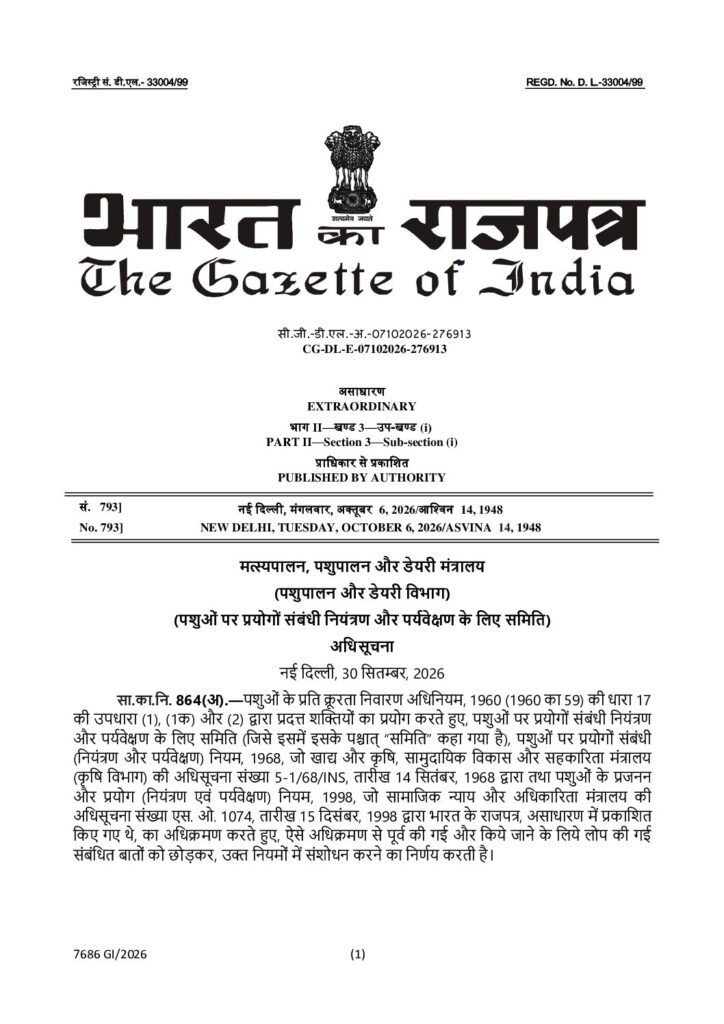
    The Committee for Control and Supervision of Experiments on Animals issued the Draft Laboratory Animals Rules, 2026 under the Prevention of Cruelty to Animals Act, 1960. The notification, issued on 30 Sep 2026, sets out updated standards for scientific and educational experiments involving animals. The new framework will replace India's older 1968 and 1998 rules on experiments on animals. Under the proposed system, each experiment would be classed as non-recovery, mild, moderate or severe. A laboratory's own institutional animal ethics committee would be permitted to approve mild and moderate procedures. The Committee for Control and Supervision of Experiments on Animals would retain approval authority for severe and non-recovery procedures performed on animals positioned above rodents and rabbits. Some farm animals, fish and birds could come from the open market with the approval of the ethics committee. The public and interested stakeholders can send formal objections or suggestions regarding the draft text to the Committee for Control and Supervision of Experiments on Animals until 5 Nov 2026.

  • DRI seizes 86 live Tokay Geckos in Assam in a crackdown on wildlife trafficking; two arrested

    Official Release

    DRI seizes 86 live Tokay Geckos in Assam in a crackdown on wildlife trafficking; two arrested

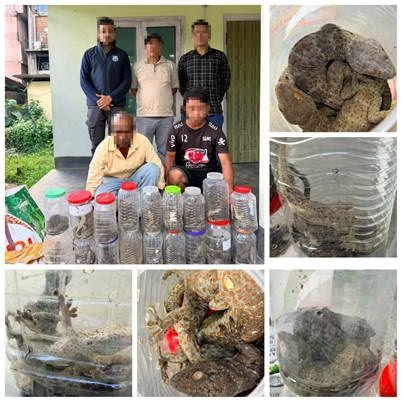
    The Directorate of Revenue Intelligence confiscated 86 live Tokay geckos in Assam during a wildlife trafficking crackdown. Acting on specific intelligence regarding an illegal trade deal, officers intercepted two individuals at Bandar Chalia Gaon Ground in Mariani. The endangered animals were seized under the provisions of the Wildlife (Protection) Act, 1972, and the two apprehended persons were subsequently handed over to the Mariani Range Forest office for further action.

  • Page 1 of Implementation of the Prevention of Cruelty to Animals (Application of Fines) Rules, 1978 read with Section 38(2)(k) of the Prevention of Cruelty to Animals Act, 1960 dated – 31.07.2026

    Circular

    Implementation of the Prevention of Cruelty to Animals (Application of Fines) Rules, 1978 read with Section 38(2)(k) of the Prevention of Cruelty to Animals Act, 1960 dated – 31.07.2026

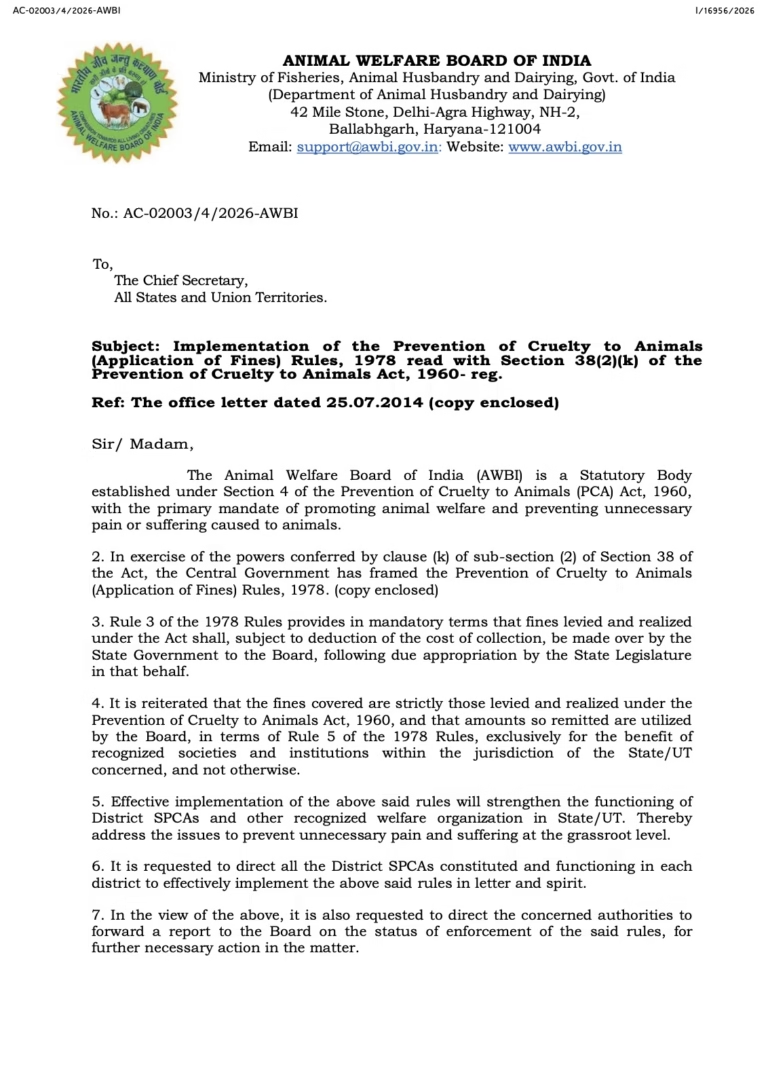
    The Animal Welfare Board of India issued a circular regarding the implementation of the Prevention of Cruelty to Animals (Application of Fines) Rules, 1978, in connection with Section 38(2)(k) of the Prevention of Cruelty to Animals Act, 1960. It directs state governments to ensure that fines levied under the Act are allocated to the Board, which utilizes the funds exclusively for recognized animal welfare societies within relevant states or union territories. The circular also requests all District SPCAs to effectively enforce these rules, aiming to reduce unnecessary pain and suffering to animals. Document number AC-02003/4/2026-AWBI.