

From letters to the Supreme Court to a year-round resource for animals. Read the story

50 year old security guard wraps stray dog in shawl, takes it to cabin at midnight in Hyderabad, then sexually abuses it

50 year old security guard wraps stray dog in shawl, takes it to cabin at midnight in Hyderabad, then sexually abuses it

A stray dog was sexually abused in Hyderabad by a fifty-year-old security guard who was caught in the act after wrapping the animal in a shawl and taking it to a cabin at midnight. Police stated that the man committed the offence against the street dog during the night hours. Following the incident, local authorities registered a criminal case against the accused guard under relevant legal provisions. Police officials stated that a detailed investigation into the matter is currently underway to gather evidence and take further legal action according to the law. Animal welfare advocates noted that such acts against community dogs violate animal protection laws and demand strict punishment for offenders. Residents and animal feeders can report similar cruelty cases to local police stations or animal welfare NGOs to ensure swift intervention and legal recourse. Investigators are examining available evidence, including witness statements, to proceed with the case in court.

Sources

Read the original (opens in a new tab)Summary written by Animal Writes. Read the original before relying on it.

More in Community Dogs

  • Kompally security guard accused of sexually assaulting dog

    News

    Kompally security guard accused of sexually assaulting dog

    A security guard at an apartment complex in Sainagar, Kompally, Hyderabad was accused of sexually assaulting a female dog on October 8, according to a complaint filed with Petbasheerabad police. The alleged victim was tied with a shawl and taken to a security cabin before the assault, the complaint says, naming Sanjay Tiwari, 50, as the accused. Representatives of the Stray Animal Foundation of India gathered information about the incident and approached the police, the complaint records. The complaint was submitted to Petbasheerabad police in the Medchal Malkajgiri district, but no arrest or formal case registration has been confirmed. Police have not yet released details on the investigation or the dog’s condition, and further action will depend on their findings.

  • Hyderabad plans seven more animal care centres for street dogs

    News

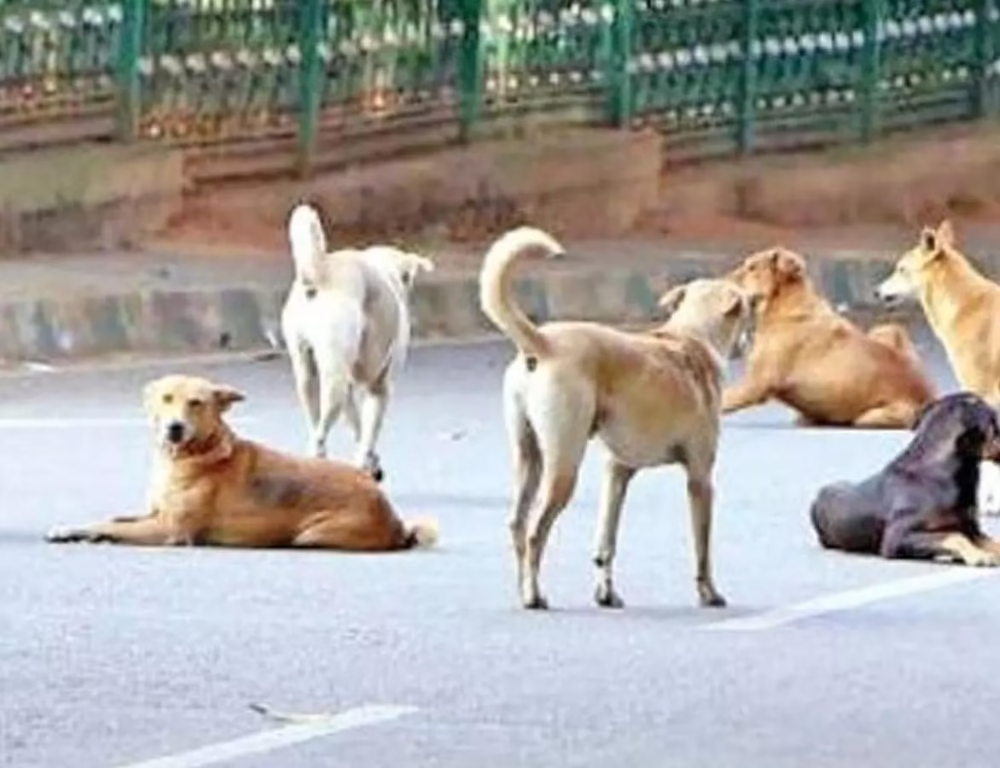
    Hyderabad plans seven more animal care centres for street dogs

    Hyderabad plans to build seven new animal care centres for street dogs across its municipal zones following Supreme Court directions. Officials stated that the expansion will increase the city's total to twelve centres, one for each zone. The new facilities aim to address a shortage of shelters for an estimated seven lakh street dogs in the city.

  • FIR registered over alleged killing of community dog at IIT Hyderabad

    News

    FIR registered over alleged killing of community dog at IIT Hyderabad

    A police complaint was filed regarding the alleged killing of a community dog on the campus of the Indian Institute of Technology in Hyderabad, Telangana. The FIR states that the dog was killed and calls for an investigation. Stray Animal Foundation India and People for the Ethical Treatment of Animals India supported the complaint.

From the Library

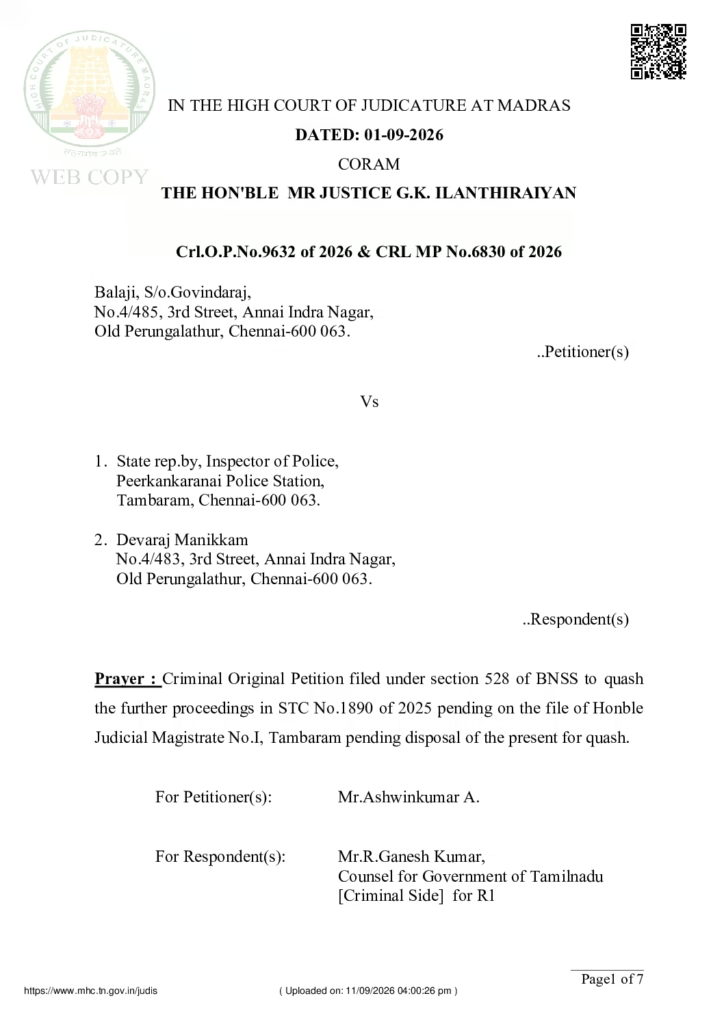
  • Madras High Court, 1 Sep 2026: PCA section 11(1)(a) is non-cognizable (Balaji v. State, Crl.O.P. No. 9632 of 2026)

    Judgment

    Madras High Court, 1 Sep 2026: PCA section 11(1)(a) is non-cognizable (Balaji v. State, Crl.O.P. No. 9632 of 2026)

    The Madras High Court delivered a judgment in Balaji v. State, Crl.O.P. No. 9632 of 2026, quashing a criminal case under section 11(1)(a) of the Prevention of Cruelty to Animals Act, 1960 against a man accused of throwing a stone at a neighbour's dog that had bitten him. Justice G.K. Ilanthiraiyan held that the offence is non-cognizable, meaning the police cannot arrest without a warrant under section 31 of the Act, and that for a first offence the punishment is a fine of Rs 10 to Rs 50. The court ruled that the police should therefore have taken the magistrate's permission under section 174(2) of the Bharatiya Nagarik Suraksha Sanhita before registering the first information report. The court also noted that no evidence showed the dog was injured and that the complaint was a counterblast to the petitioner's own complaint.

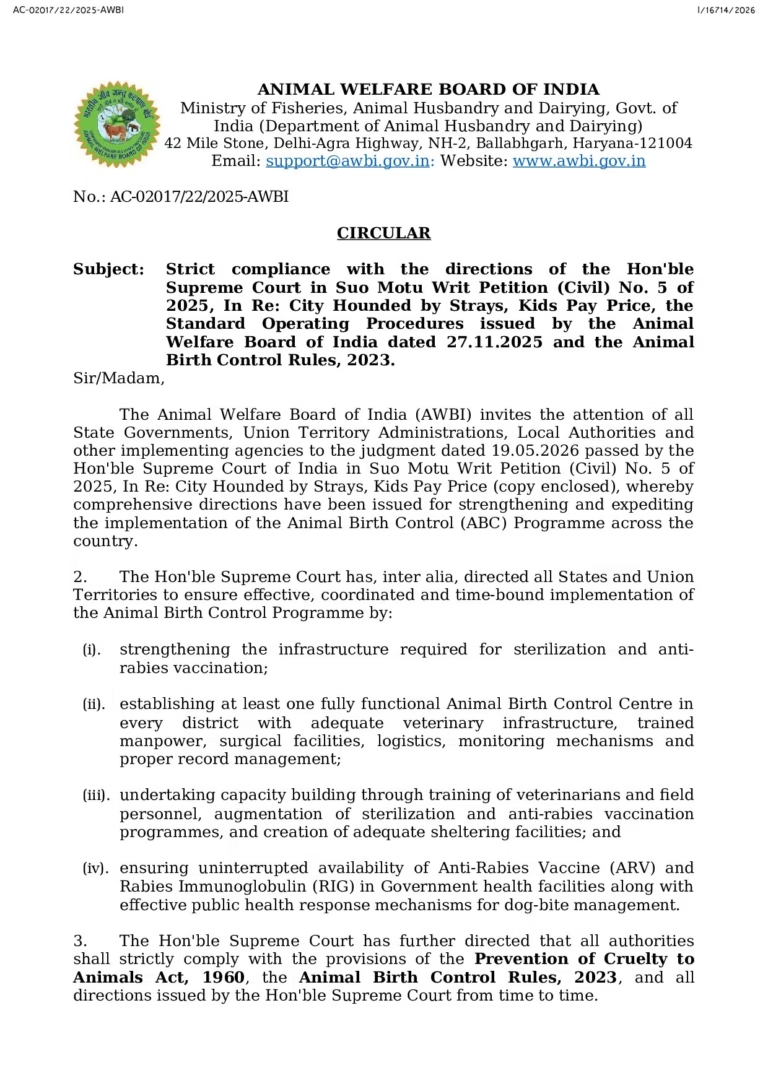
  • Page 1 of Strict compliance with the directions of the Hon’ble Supreme Court in Suo Motu Writ Petition (Civil) No. 5 of 2025, In Re: City Hounded by Strays, Kids Pay Price, the Standard Operating Procedures issued by the Animal Welfare Board of India dated 27.11.2025 and the Animal Birth Control Rules, 2023.

    Circular

    Strict compliance with the directions of the Hon’ble Supreme Court in Suo Motu Writ Petition (Civil) No. 5 of 2025, In Re: City Hounded by Strays, Kids Pay Price, the Standard Operating Procedures issued by the Animal Welfare Board of India dated 27.11.2025 and the Animal Birth Control Rules, 2023.

    The Animal Welfare Board of India issued a circular requiring strict adherence to stray dog management regulations. The notice mandates compliance with Supreme Court of India orders from a 2025 case, the board's standard operating procedures, and the Animal Birth Control Rules, 2023. These directions apply to all state governments, union territory administrations, local authorities, and implementing agencies across the country.

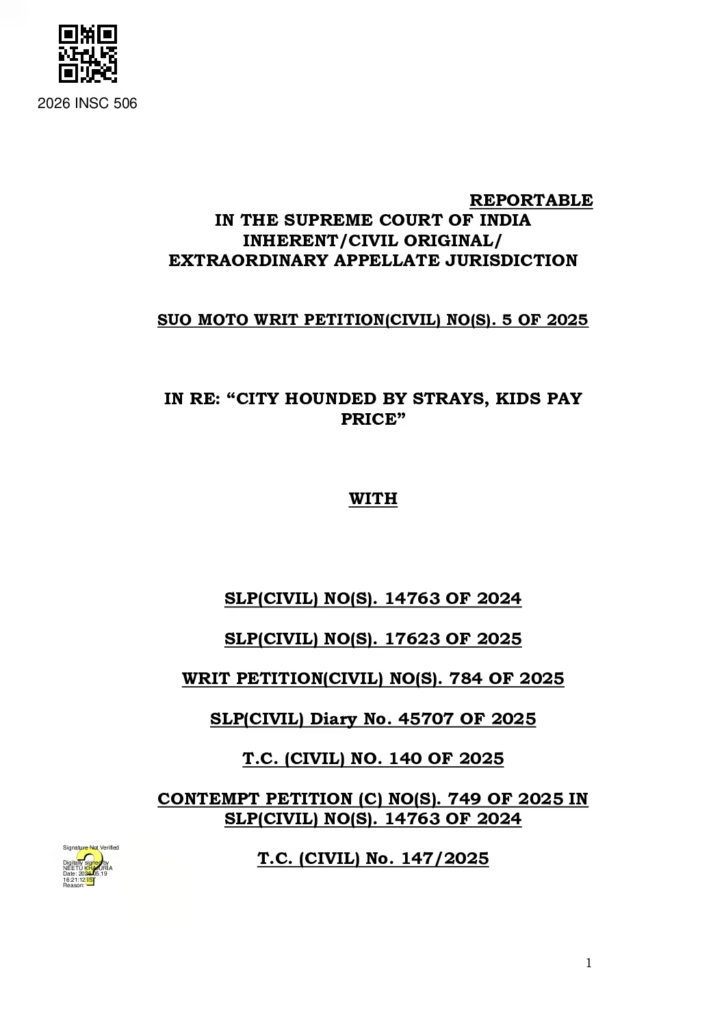
  • Supreme Court judgment of 19 May 2026 on stray dogs (2026 INSC 506)

    Judgment

    Supreme Court judgment of 19 May 2026 on stray dogs (2026 INSC 506)

    The Supreme Court of India, in a judgment of 19 May 2026, dismissed all applications to modify, recall or stay its order of 7 Nov 2025 on removing stray dogs from institutional premises. The bench of Justices Vikram Nath, Sandeep Mehta and N.V. Anjaria held that the Animal Birth Control Rules, 2023 do not require dogs to be released back into such premises, and dismissed the challenges to the Animal Welfare Board of India's Standard Operating Procedures. It allowed authorities, after assessment by qualified veterinary experts and within the law, to euthanise rabid, incurably ill or demonstrably dangerous dogs. Every High Court must register a suo motu case to monitor compliance.