
From letters to the Supreme Court to a year-round resource for animals. Read the story

Baby orangutans in India expose illegal wildlife trade as experts question a billionaire’s zoo

Baby orangutans in India expose illegal wildlife trade as experts question a billionaire’s zoo

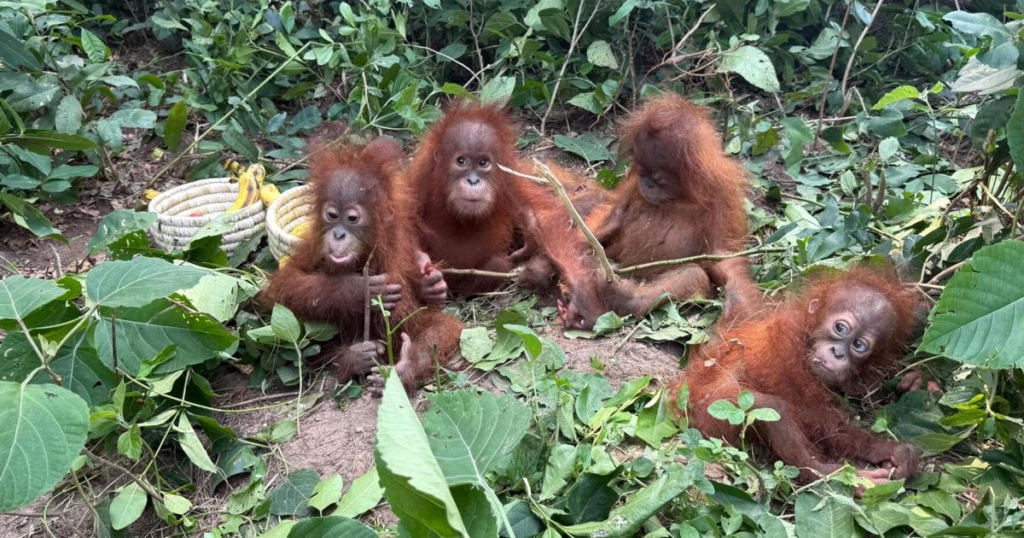
Five baby orangutans were found abandoned on a plantation in Bhograi village in Balasore district of Odisha, India, exposing illegal wildlife trade. The DFO Balasore Wildlife Division stated that villagers discovered the three males and two females, aged six to eight months, in early . Experts stated that wealthy collectors, expanding air links with Southeast Asia, and loopholes in wildlife laws are driving the illicit trade of apes into India. Government records show India legally imported 41 orangutans between 2021 and 2024, leading experts to question their origins. Meanwhile, efforts to return rescued orangutans to Indonesia have stalled, and scrutiny over ownership intensified after one orangutan was transferred to a private wildlife facility run by billionaire Mukesh Ambani’s family. Veterinarians at Nandankanan Zoo inspected the rescued animals, while officials prepared for repatriation procedures.

Sources

Read the original (opens in a new tab)Summary written by Animal Writes. Read the original before relying on it.

More in Performing and Captive Animals

  • Activist urges govt to ban elephants at Dasara events

    News

    Activist urges govt to ban elephants at Dasara events

    An animal rights activist urged the government to ban elephants at Dasara events in Mysuru, Karnataka, citing animal welfare concerns. The activist stated that captive elephants suffer during such large public festivals due to loud noises, heavy crowds, and long processions. The government has not yet announced any official decision regarding the request, and authorities are expected to review the representation submitted by the activist before the next festival planning cycle begins. Animal welfare groups have frequently raised concerns over the physical and psychological toll on pachyderms used in cultural celebrations across the region. Officials from the forest department stated that they monitor the health and upkeep of participating elephants, ensuring veterinary care is provided during their stay. Public welfare bodies and citizens can write to the forest department to support humane treatment guidelines for captive elephants used in state events.
  • Trunk call for change: Tradition shouldn’t mean cruelty to elephants

    News

    Trunk call for change: Tradition shouldn’t mean cruelty to elephants

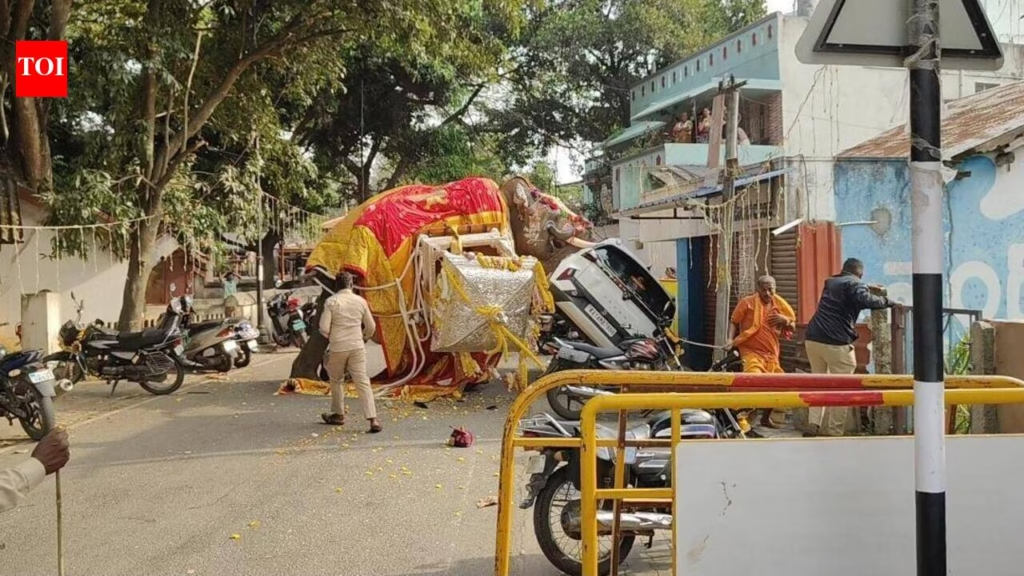
    An elephant panicked and fled while carrying a heavy howdah at the Shivamogga Dasara in Karnataka on October 21, narrowly avoiding loss of human lives. Animal welfare advocates stated that captive elephants suffer trauma from loud noises and heavy crowds during religious festivals. Lawyer Alok Hisarwala Gupta, founder of the Centre for Research on Animal Rights, noted that a 2022 amendment to the 1972 Wildlife (Protection) Act permitted live elephant transfers by certificate holders under government rules, while wealthy temples and groups like the Kerala Elephant Owners Association continue to resist changes. Suparna Ganguly, co-founder and trustee of Compassion Unlimited Plus Action (CUPA) and Wildlife Rescue and Rehabilitation Centre (WRRC), stated, "If the public could only understand that they need to protect what they love." Advocates point to mechanical elephants as a safer alternative for processions, following precedents such as the use of fiberglass hornbill casques in Arunachal. Readers can support alternatives to live animal use by urging event organizers to adopt mechanical replicas during local festivals.

  • Keralam hikes compensation for wildlife attack deaths, disabilities by 25 pc

    News

    Keralam hikes compensation for wildlife attack deaths, disabilities by 25 pc

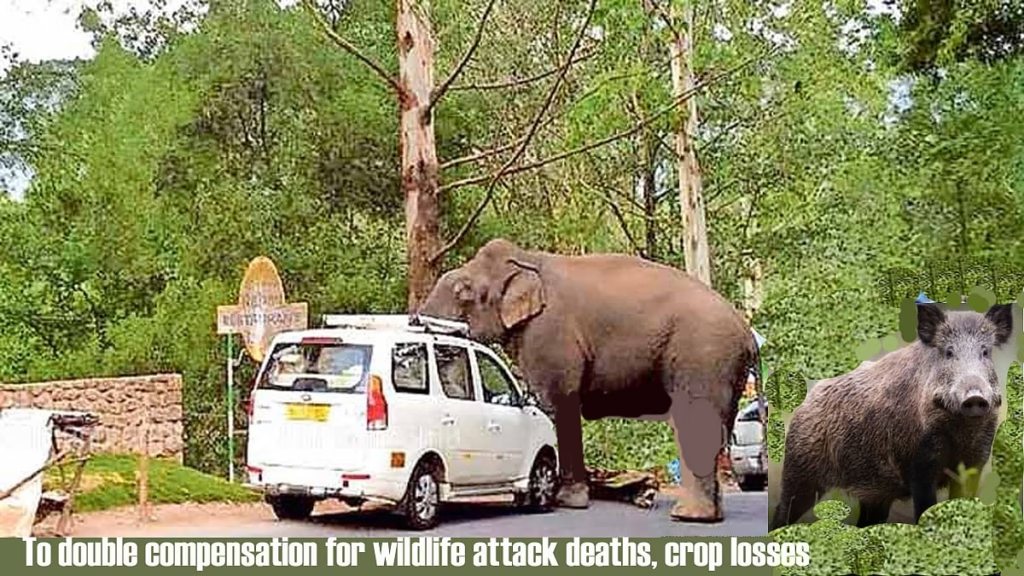
    The Keralam government hiked financial assistance for wildlife attack deaths and permanent disabilities, providing relief to affected residents in the state. According to Asianet Newsable, the Forest Department issued an order on Saturday doubling compensation for crop damage, while overall payments for fatalities and injuries saw a twenty-five per cent increase. The government announced that compensation for deaths caused by wild animal attacks rose from fourteen lakh rupees to seventeen lakh fifty thousand rupees, and deaths from snake, bee, and wasp attacks increased from four lakh rupees to five lakh rupees. Disability payouts for forty to sixty per cent impairment increased to two lakh fifty thousand rupees, while impairments exceeding sixty per cent rose to three lakh twelve thousand five hundred rupees. Medical assistance up to one lakh twenty-five thousand rupees was introduced for hospitalised injuries, alongside potential coverage for prolonged care through the Chief Minister's Distress Relief Fund. Explaining the revision, the government stated, "The new government order is intended to provide greater relief to families affected by wildlife attacks."

From the Library

  • Union Environment Minister inaugurates Centre of Excellence on Human Wildlife Conflict at WII SACON, Coimbatore; launches National Human Wildlife Conflict Portal

    Official Release

    Union Environment Minister inaugurates Centre of Excellence on Human Wildlife Conflict at WII SACON, Coimbatore; launches National Human Wildlife Conflict Portal

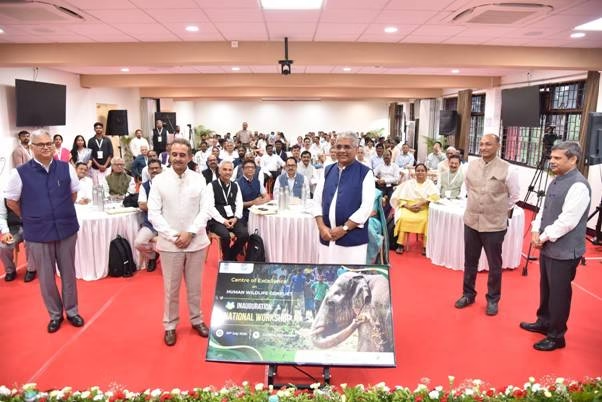
    On 10 Jul 2026, the Union Environment Minister inaugurated a Centre of Excellence for human-wildlife conflict at the Wildlife Institute of India’s SACON campus in Coimbatore. The minister also launched a National Human-Wildlife Conflict Portal on the same day. This newly established center will serve as a national hub for research, innovation, policy support, capacity building, and dissemination of best practices. During the event, officials gathered to deliberate on effective strategies for mitigating human-wildlife conflict and promoting coexistence.

  • Union Environment Minister presides over the 28th Meeting of the reconstituted Wildlife Institute of India (WII) Society, at Coimbatore

    Official Release

    Union Environment Minister presides over the 28th Meeting of the reconstituted Wildlife Institute of India (WII) Society, at Coimbatore

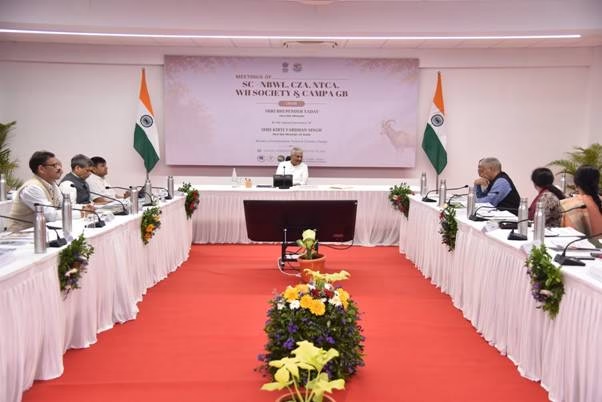
    The Union Minister for Environment, Forest and Climate Change, Shri Bhupender Yadav, chaired the 28th meeting of the reconstituted Wildlife Institute of India (WII) Society at the Central Academy for State Forest Service in Coimbatore. This meeting marked the first gathering since the society's reconstitution for a three-year term. Shri Yadav emphasized the need to align WII’s research, training, and policy-support frameworks with the vision of ‘Viksit Bharat @ 2047’. He stated the importance of focusing on human-wildlife conflict resolution and capacity building. The meeting also featured an overview of WII's achievements and involved participation from various officials and stakeholders in wildlife conservation.

  • Union Environment Minister chairs 90th Meeting of the Standing Committee of the National Board for Wildlife in Dehradun; key Policy Issues on Wildlife Conservation deliberated

    Official Release

    Union Environment Minister chairs 90th Meeting of the Standing Committee of the National Board for Wildlife in Dehradun; key Policy Issues on Wildlife Conservation deliberated

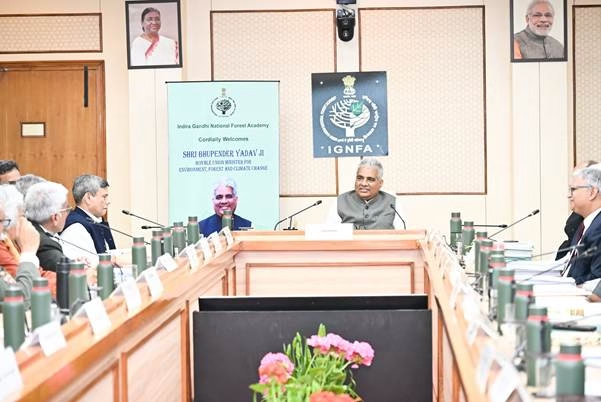
    The Union Minister for Environment, Forest and Climate Change chaired the 90th meeting of the Standing Committee of the National Board for Wildlife in Dehradun to address wildlife conservation. The statutory body constituted under the Wild Life (Protection) Act, 1972 reviewed infrastructure proposals across sectors such as roads, drinking water supply, transmission lines, defence, and irrigation. During the proceedings, a Memorandum of Understanding was signed between the Forest Survey of India and the Bhaskaracharya National Institute for Space Applications and Geo-informatics to strengthen geospatial technologies, remote sensing, and artificial intelligence and machine learning tools in forest fire management and wildlife conservation. The committee also reviewed progress on decisions from the 7th meeting of the National Board for Wildlife regarding species recovery and habitat management. The agenda covered environmental flows in the River Chambal for riverine species like dolphins and gharials during lean seasons. The participants examined the conservation of grasslands and rangelands for biodiversity and pastoral livelihoods, along with the ecological dependence of nomadic communities on Protected Areas. The meeting addressed the conservation status of the wild water buffalo and recommended a conservation action plan for the species.