Indian law allows experiments on animals but asks for other methods first where they work. Three sets of rules matter: the 3Rs in the rules on animal experiments, the ban on testing cosmetics on animals, and the 2023 change to the drug trial rules.
The 3Rs
- Replacement: use methods that do not involve animals.
- Reduction: use the fewest animals that give a valid result.
- Refinement: change procedures and care to reduce pain and distress.
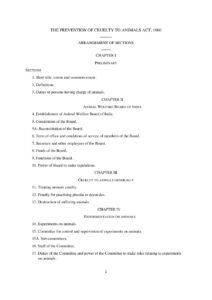
Section 17(2) of the PCA Act already asks that experiments be avoided wherever possible, for example in medical colleges where books, models and films will do, and that experiments are not done merely to acquire manual skill. The 2006 amendment to the 1998 Rules added that “replacement alternatives not involving experiments on animals should be given due and full consideration”, with sound justification if available alternatives are not used, and that the minimum number of animals be used. CCSEA lists promoting the 3Rs and keeping a database of non-animal methods among its functions. Rule 3(1) of the 2026 draft asks for non-animal methods “wherever possible”.
Cosmetics: banned since 2014
G.S.R. 346(E) of amended the Drugs and Cosmetics Rules, 1945 to prohibit testing cosmetics on animals in India, on the Drugs Technical Advisory Board’s recommendation. The Bureau of Indian Standards had already approved non-animal tests for cosmetic safety in . Both bans are now in the Cosmetics Rules, 2020:
- Rule 39(7): “No person shall use any animal for testing of cosmetics.”
- Rule 18(4): no cosmetic tested on animals after may be imported.
Drugs: the 2023 amendment
The New Drugs and Clinical Trials (Amendment) Rules, 2023 (G.S.R. 175(E), , Gazette of India No. 136 of ) list the non-clinical methods that can be used to assess the safety and efficacy of a new drug:
- Cell-based assays
- Organ chips and microphysiological systems
- Sophisticated computer modelling
- Other human biology-based test methods
- Animal studies
Animal studies stay on the list. The change means the other methods can be offered in their place where they are suitable.
What these methods are
| Method | What it is |
|---|---|
| Cell-based assays | Tests on human or animal cells grown in a dish, including 3D tissue models |
| Organ chips | Small devices lined with living human cells that copy how an organ such as a lung or liver works |
| Computer modelling | Software that predicts how a substance behaves in the body from existing data |
| Human biology-based methods | Other tests built on human biology, such as stem-cell derived tissues |
Under the 2026 draft
The draft repeats the call for non-animal methods “wherever possible” (Rule 3(1)). What the draft says, rule by rule.
Questions and answers
Is animal testing of cosmetics banned in India?
Yes. Testing cosmetics on animals has been banned since , and importing cosmetics tested on animals after is also banned. Both are in the Cosmetics Rules, 2020.
Can new drugs be tested without animals in India?
The New Drugs and Clinical Trials (Amendment) Rules, 2023 list cell-based assays, organ chips, computer modelling and other human biology-based methods alongside animal studies as non-clinical testing methods.
What are the 3Rs?
Replacement, reduction and refinement: use non-animal methods where possible, use fewer animals, and reduce pain and distress.
Objections to the draft lab animal rules can be sent to CCSEA until . Write and send yours in two minutes.
Sources
- Gazette of India: New Drugs and Clinical Trials (Amendment) Rules, 2023, G.S.R. 175(E),
- PIB: Ban on Testing of Cosmetics on Animals,
- Cosmetics Rules, 2020, G.S.R. 763(E), (copy on the Goa Government portal)
- CCSEA: Compendium of CPCSEA (PCA Act Chapter IV, 1998 Rules, 2001 and 2006 amendments, standard operating procedures)
- CCSEA: Functions
- CCSEA: Draft Laboratory Animals Rules, 2026, G.S.R. 864(E) (Gazette of India, Extraordinary, No. 793, )