From letters to the Supreme Court to a year-round resource for animals. Read the story

Kalki Koechlin, Abhirami And Nafisa Ali Voice Opposition To Proposed Animal Testing Rules

Kalki Koechlin, Abhirami And Nafisa Ali Voice Opposition To Proposed Animal Testing Rules

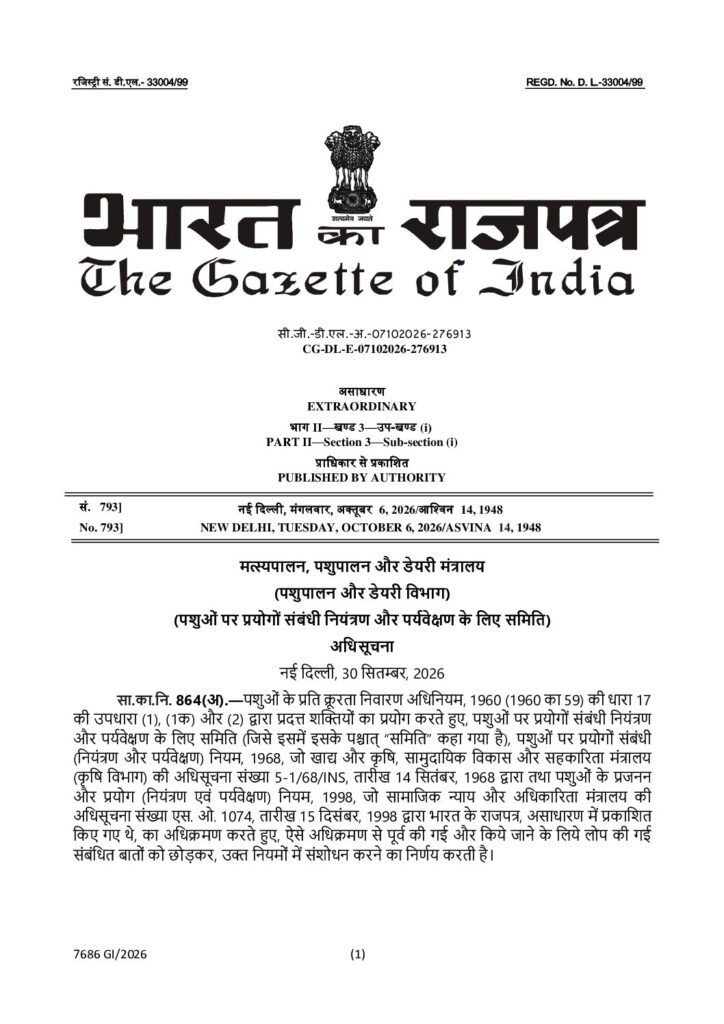
Actors Kalki Koechlin, Abhirami and Nafisa Ali have opposed the draft rules on laboratory animal testing, GSR 864(E), and urged people to object to CCSEA. The draft Prevention of Cruelty to Animals (Control and Supervision of Experiment, Breeding and Trading of Laboratory Animals) Rules, 2026 would replace the rules of 1968 and 1998. Abhirami said laboratories could approve experiments causing mild or moderate pain themselves, without the central committee, and take animals from informal sources, including strays. The draft was published in the Gazette of India on , and objections are due by .

Sources

Read the original (opens in a new tab)Summary written by Animal Writes. Read the original before relying on it.

More in Animal Experimentation

  • PETA India calls for withdrawal of Centre’s draft rules on animal experimentation

    News

    PETA India calls for withdrawal of Centre’s draft rules on animal experimentation

    Maneka Gandhi raised alarm over the Centre's draft animal testing rules in Thiruvananthapuram, alleging the proposals favour companies. PETA India urged the Centre to withdraw the draft Prevention of Cruelty to Animals Rules, 2026. The NGO alleged the draft rules would weaken existing animal welfare protections, reduce independent oversight, and expose wild animals, free-ranging dogs, and cats to greater suffering in painful laboratory experiments. The organisation advocated stronger regulations that prioritize scientifically advanced non-animal research methods instead of weakening safeguards.
  • India Proposes Rules to Streamline Animal Research Approvals

    News

    India Proposes Rules to Streamline Animal Research Approvals

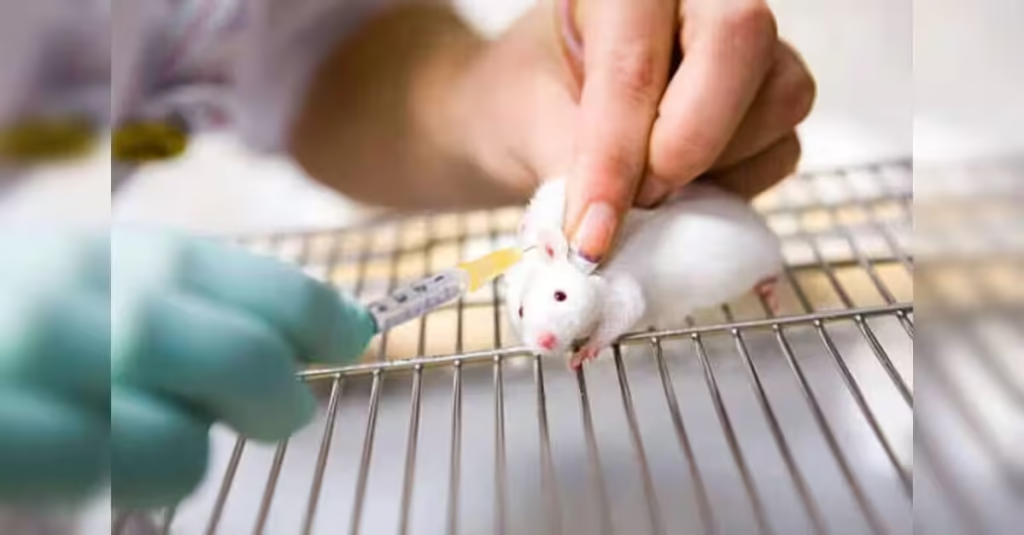
    In October 2026, the Centre proposed new rules to regulate animal experiments nationwide based on the pain, distress and suffering they may cause to laboratory animals. The draft rules define pain levels, introduce four severity categories, strengthen approval requirements for severe procedures and adopt the 3Rs principles of animal research. These proposed changes aim to streamline animal experiment approvals and simplify administrative procedures while enhancing laboratory animal welfare safeguards and potentially impacting drug research.

  • Explained: Will it get easier to experiment on animals in India? What the draft rules propose

    News

    Explained: Will it get easier to experiment on animals in India? What the draft rules propose

    Draft rules would let institutional ethics committees in India approve mild and moderate experiments on animals of any size, a shift animal welfare groups oppose. Under its Rule 11, only severe or non-recovery experiments on animals larger than rodents and rabbits would need approval from the Committee for Control and Supervision of Experiments on Animals (CCSEA). The draft also allows protected wildlife, wild-caught animals, monkeys and stray animals to be used under exceptions. Gauri Maulekhi of People for Animals called the draft "disastrous in nature", and Humane World for Animals India said the exceptions could weaken ethical safeguards.

From the Library

  • Draft Prevention of Cruelty to Animals (Control and Supervision of Experiment, Breeding and Trading of Laboratory Animals) Rules, 2026

    Rule

    Draft Prevention of Cruelty to Animals (Control and Supervision of Experiment, Breeding and Trading of Laboratory Animals) Rules, 2026

    The Draft Laboratory Animals Rules, 2026 from CCSEA would replace India's 1968 and 1998 rules on experiments on animals. The Committee for Control and Supervision of Experiments on Animals issued the draft under the Prevention of Cruelty to Animals Act, 1960 in a notification dated 30 Sep 2026, published in the Gazette of India on 6 Oct 2026; it covers animals used for scientific or educational purposes. Each experiment would be classed as non-recovery, mild, moderate or severe; a lab's own ethics committee would approve mild and moderate ones, and CCSEA severe and non-recovery ones on animals above rodents and rabbits. Some farm animals, fish and birds could come from the open market with the ethics committee's approval. Objections can be sent to CCSEA until 5 Nov 2026.

  • Administrative (Committee for Control and Supervision of Experiments on Animals) Amendment Rules, 2026

    Rule

    Administrative (Committee for Control and Supervision of Experiments on Animals) Amendment Rules, 2026

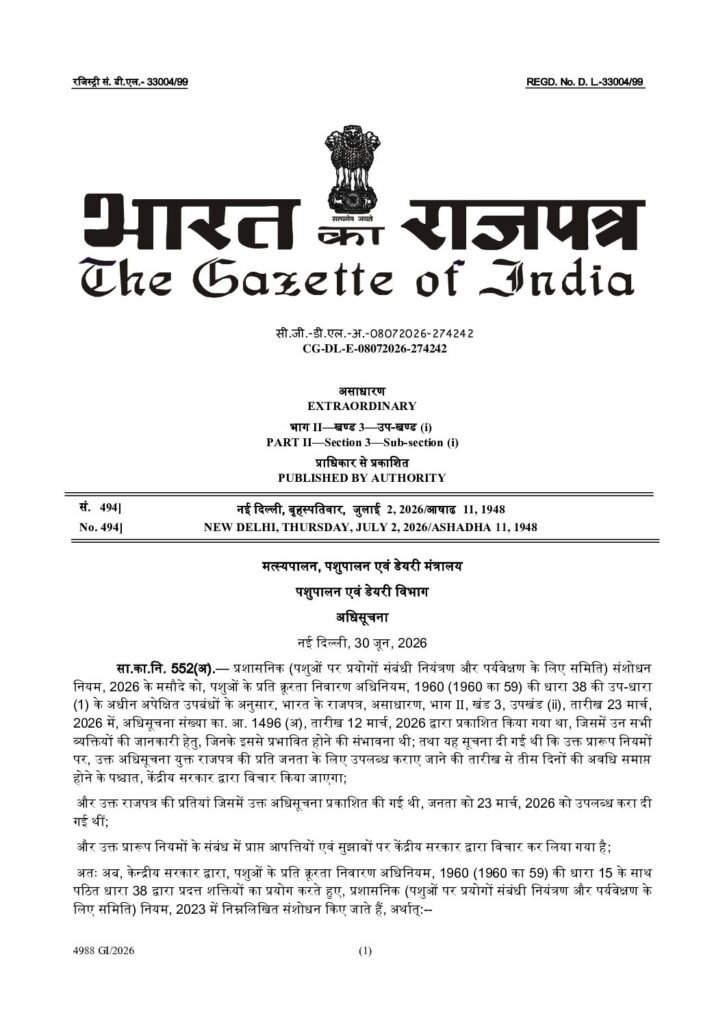
    The Ministry of Fisheries, Animal Husbandry and Dairying issued notification G.S.R. 552(E), setting CCSEA's fees for registering animal facilities, breeding, renewal, ethics committee revision, and protocols on large animals. Published in the Gazette of India under the Prevention of Cruelty to Animals Act, 1960, the document establishes processing fees of 12,000 rupees for small and large animal registration and small animal facility amendments. Breeding registration for in-house use costs 18,000 rupees for small animals and 30,000 rupees for large animals, while trade breeding is 30,000 rupees for both. Renewal costs 3,000 rupees, revision of the Institutional Animal Ethics Committee is 1,200 rupees, and large animal educational protocols cost 1,200 rupees per protocol, with non-educational protocols costing 6,000 rupees.

  • Department of Animal Husbandry & Dairying, Government of India Organises National Conference on Laboratory Animal Welfare to Promote Ethical and Responsible Research

    Official release

    Department of Animal Husbandry & Dairying, Government of India Organises National Conference on Laboratory Animal Welfare to Promote Ethical and Responsible Research

    The Department of Animal Husbandry and Dairying organised a national conference on laboratory animal welfare in India to promote ethical research. The Committee for Control and Supervision of Experiments on Animals acted to advance ethical standards under the ministry. The event matters because it guides proper care and scientific responsibility for animals in laboratories. Officials stated that ethical protocols will continue to be reviewed through upcoming regulatory meetings.

Animal Writes uses Accessibility Checker to monitor our website's accessibility.