
From letters to the Supreme Court to a year-round resource for animals. Read the story

Maneka Gandhi raises alarm over centres draft animal testing rules, alleges proposals favour companies

Maneka Gandhi raises alarm over centres draft animal testing rules, alleges proposals favour companies

Maneka Gandhi and PETA opposed new draft rules easing animal test approvals, raising concerns over provisions that favour commercial companies over animal welfare. Maneka Gandhi alleged that the proposed changes weaken existing protections and reduce oversight for laboratories using animals in experiments. Animal welfare advocates and critics pointed out that such relaxation of rules could lead to increased suffering for experimental animals without scientific justification. The Ministry of Fisheries, Animal Husbandry and Dairying has invited public feedback on the draft rules before deciding on their final implementation. Animal welfare organisations plan to submit formal objections to the ministry to demand stricter regulatory standards.

Sources

Read the original (opens in a new tab)Summary written by Animal Writes. Read the original before relying on it.

More in Animal Experimentation

  • Activists flag risks to community animals under draft lab rules

    News

    Activists flag risks to community animals under draft lab rules

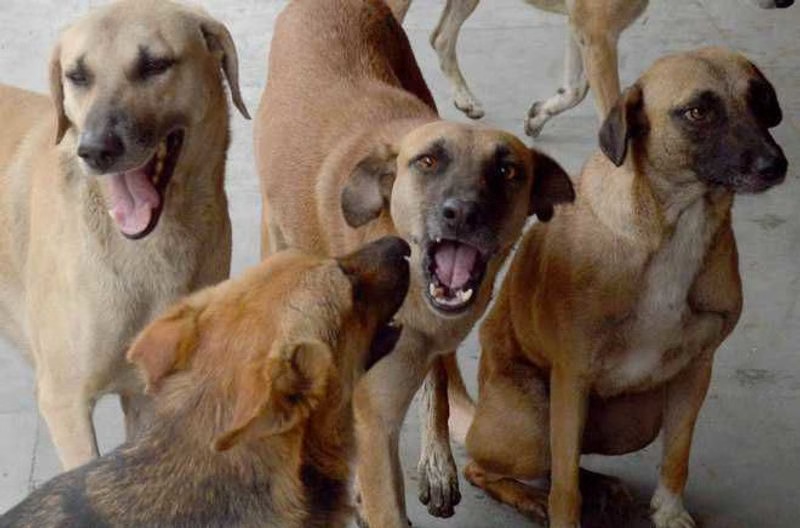
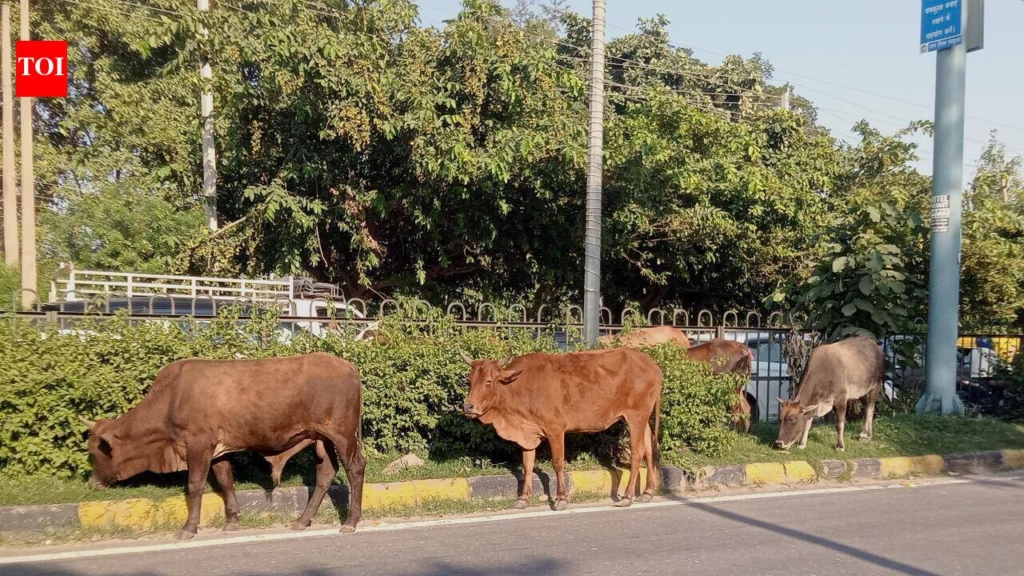
    Activists from Peedus People warned draft laboratory animal rules could expose community dogs, cats, cows and wildlife to experimentation during a protest at Sector 17 Plaza and Elante Mall in Chandigarh. The campaign was organized by the animal‑welfare organisation Peedus People and took place on Friday in the commercial hubs of Chandigarh, Punjab. Former Union Minister Maneka Gandhi said the proposal could allow animals to be sourced from roads, markets and unregistered establishments, while PETA India warned the draft may permit experiments on community animals and the capture of wild species under vague scientific justification. Veterinarian Dr Manish Rathee cautioned that the rules could enable backyard breeding, illegal capture and abandonment of community animals, and Sahil Sharma, president of Salute The Trees, said “Animals are living, sentient beings, not laboratory commodities to be exploited in the name of scientific progress.” The draft seeks to replace the 1968 and 1998 rules, with November 5 set as the last date for filing objections to the Committee for Control and Supervision of Experiments on Animals (CCSEA).
  • Activist urges govt to ban elephants at Dasara events

    News

    Activist urges govt to ban elephants at Dasara events

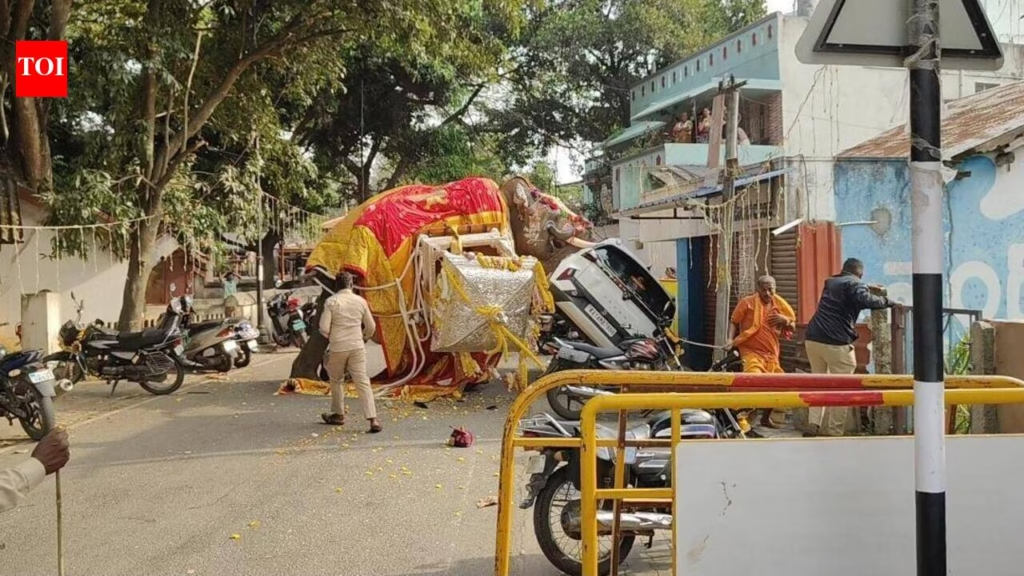
    An animal rights activist urged the government to ban elephants at Dasara events in Mysuru, Karnataka, citing animal welfare concerns. The activist stated that captive elephants suffer during such large public festivals due to loud noises, heavy crowds, and long processions. The government has not yet announced any official decision regarding the request, and authorities are expected to review the representation submitted by the activist before the next festival planning cycle begins. Animal welfare groups have frequently raised concerns over the physical and psychological toll on pachyderms used in cultural celebrations across the region. Officials from the forest department stated that they monitor the health and upkeep of participating elephants, ensuring veterinary care is provided during their stay. Public welfare bodies and citizens can write to the forest department to support humane treatment guidelines for captive elephants used in state events.

  • Gaushalas full: Panchkula streets turn into open air cattle pounds

    News

    Gaushalas full: Panchkula streets turn into open air cattle pounds

    Stray cattle roaming freely across public spaces in Panchkula, Haryana, have turned city streets into open-air cattle pounds because gaushalas have reached full capacity. The Panchkula municipal corporation missed its latest deadline of August 31 from over a year ago to clear city roads of stray cattle, and its cattle-catching drive has nearly stopped due to the lack of shelter space. This overcrowding leaves animals wandering on national highways, roads, parks, and waste bins, causing traffic jams, sanitation issues, and fatal road accidents. To address the stray bulls, the municipal corporation floated tenders for a Nandishala, but the project is stuck at the bidding stage. Resident welfare groups criticized the civic body for inaction on complaints. Mohit Gupta of the Sahyog group stated, "No cattle catching teams are operational as there is no space at gaushalas." SK Nayar, president of the Panchkula Citizens Welfare Association, urged the municipal corporation to act seriously and asked residents to stop feeding animals at non-designated spots. The municipal corporation faces ongoing pressure to create more shelter capacity and resume cattle-catching operations to clear the streets.

From the Library

  • Draft Prevention of Cruelty to Animals (Control and Supervision of Experiment, Breeding and Trading of Laboratory Animals) Rules, 2026

    Rule

    Draft Prevention of Cruelty to Animals (Control and Supervision of Experiment, Breeding and Trading of Laboratory Animals) Rules, 2026

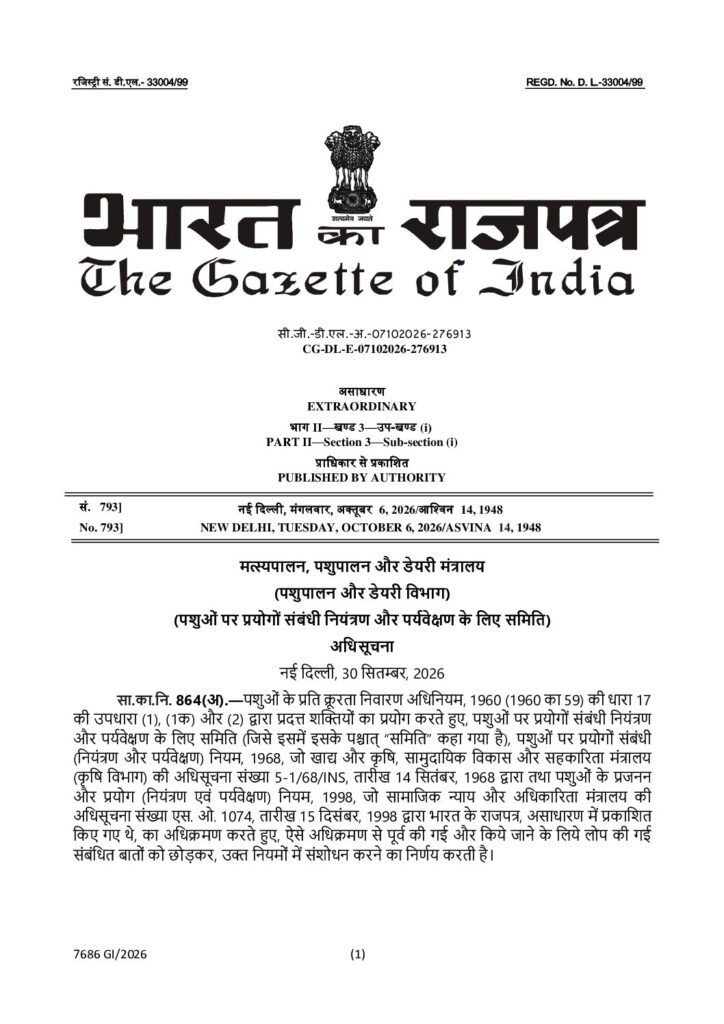
    The Committee for Control and Supervision of Experiments on Animals issued the Draft Laboratory Animals Rules, 2026 under the Prevention of Cruelty to Animals Act, 1960. The notification, issued on 30 Sep 2026, sets out updated standards for scientific and educational experiments involving animals. The new framework will replace India's older 1968 and 1998 rules on experiments on animals. Under the proposed system, each experiment would be classed as non-recovery, mild, moderate or severe. A laboratory's own institutional animal ethics committee would be permitted to approve mild and moderate procedures. The Committee for Control and Supervision of Experiments on Animals would retain approval authority for severe and non-recovery procedures performed on animals positioned above rodents and rabbits. Some farm animals, fish and birds could come from the open market with the approval of the ethics committee. The public and interested stakeholders can send formal objections or suggestions regarding the draft text to the Committee for Control and Supervision of Experiments on Animals until 5 Nov 2026.

  • Administrative (Committee for Control and Supervision of Experiments on Animals) Amendment Rules, 2026

    Rule

    Administrative (Committee for Control and Supervision of Experiments on Animals) Amendment Rules, 2026

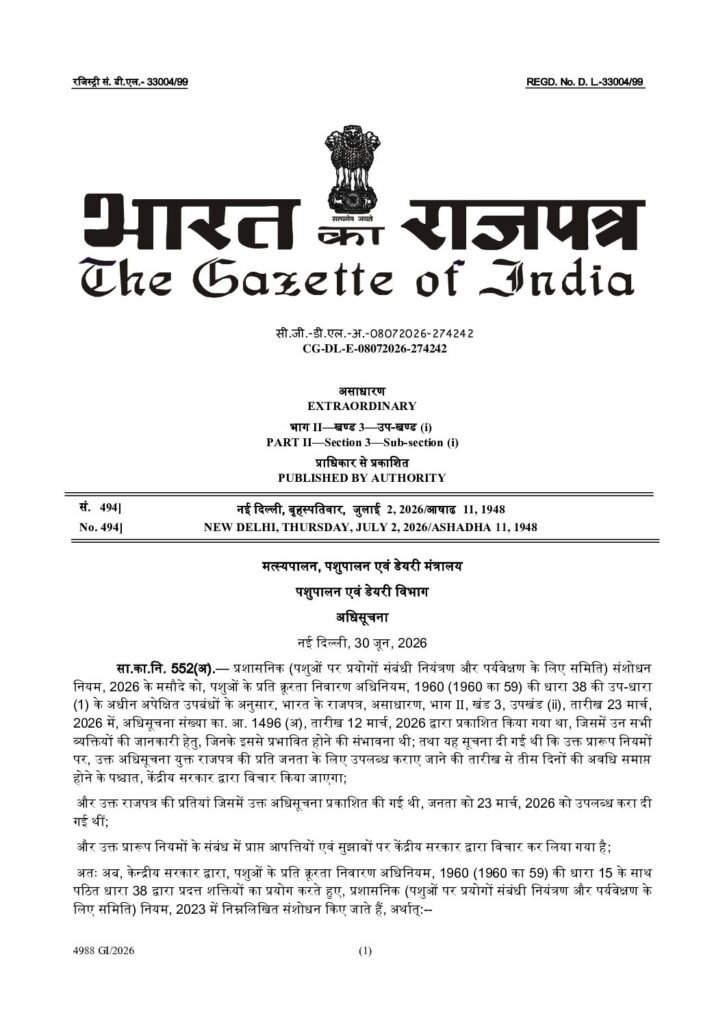
    The Ministry of Fisheries, Animal Husbandry and Dairying issued notification G.S.R. 552(E), setting CCSEA's fees for registering animal facilities, breeding, renewal, ethics committee revision, and protocols on large animals. Published in the Gazette of India under the Prevention of Cruelty to Animals Act, 1960, the document establishes processing fees of 12,000 rupees for small and large animal registration and small animal facility amendments. Breeding registration for in-house use costs 18,000 rupees for small animals and 30,000 rupees for large animals, while trade breeding is 30,000 rupees for both. Renewal costs 3,000 rupees, revision of the Institutional Animal Ethics Committee is 1,200 rupees, and large animal educational protocols cost 1,200 rupees per protocol, with non-educational protocols costing 6,000 rupees.

  • Department of Animal Husbandry & Dairying, Government of India Organises National Conference on Laboratory Animal Welfare to Promote Ethical and Responsible Research

    Official Release

    Department of Animal Husbandry & Dairying, Government of India Organises National Conference on Laboratory Animal Welfare to Promote Ethical and Responsible Research

    The Department of Animal Husbandry and Dairying organised a national conference on laboratory animal welfare in India to promote ethical research. The Committee for Control and Supervision of Experiments on Animals acted to advance ethical standards under the ministry. The event matters because it guides proper care and scientific responsibility for animals in laboratories. Officials stated that ethical protocols will continue to be reviewed through upcoming regulatory meetings.