
From letters to the Supreme Court to a year-round resource for animals. Read the story

Who shot Kuno’s young cheetah? Three arrested, weapon missing

Who shot Kuno’s young cheetah? Three arrested, weapon missing

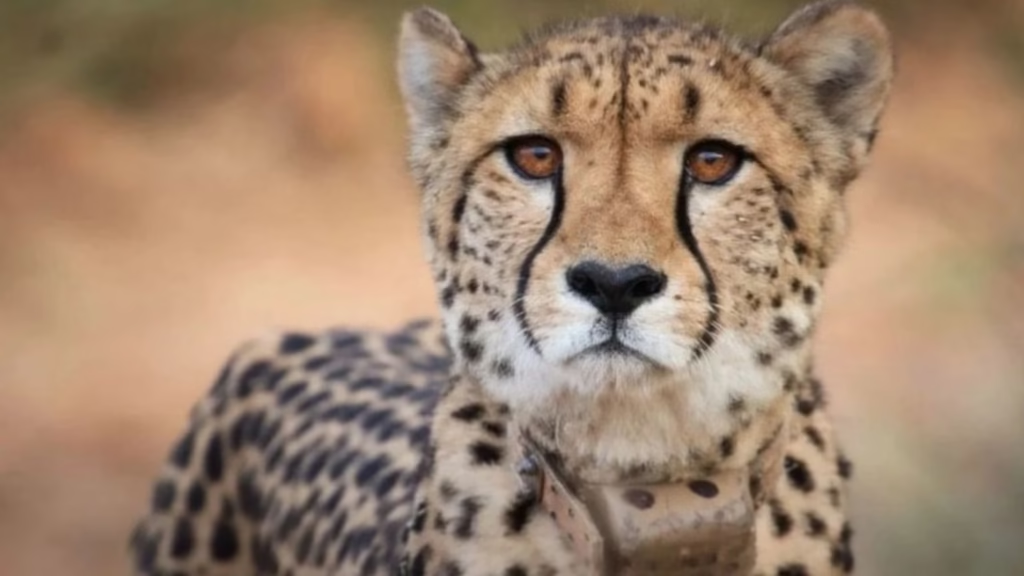
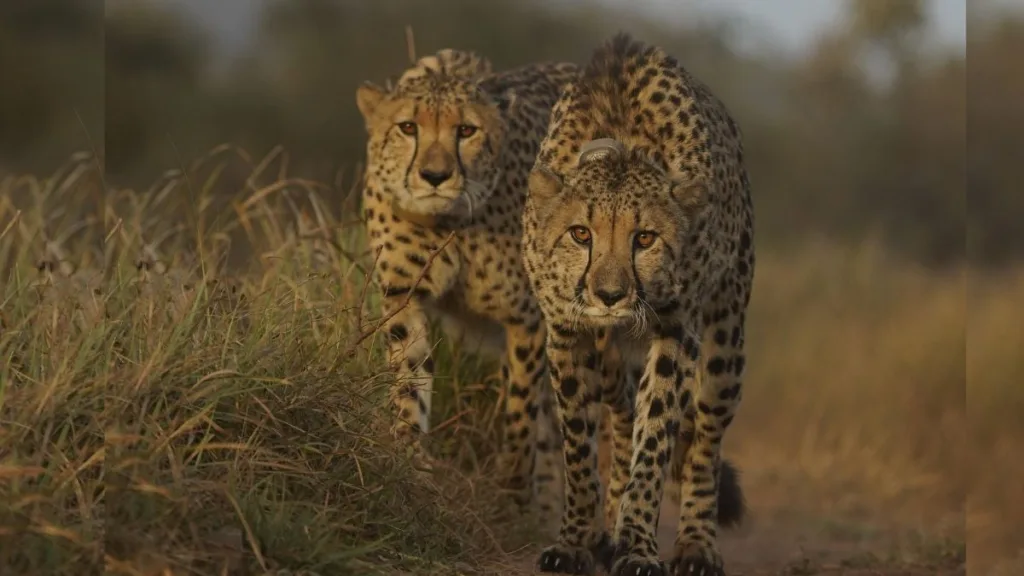
A young cheetah was shot dead in Kuno National Park in India, leaving India with 58 cheetahs across its protected sanctuaries and reserves, according to wildlife officials. The State Tiger Strike Force stated that local residents were suspected of involvement in hunting the 19-month-old male cub. Officials stated that two brothers were among the suspects arrested, produced before the local court, and taken to the site for scene recreation. A wildlife official stated, “Local people were suspected to be involved, and three persons were arrested and produced before the local court.” Five pellets from a traditional muzzle-loading firearm were recovered from the animal’s body during surgery at Nanaji Deshmukh Veterinary Science University in Jabalpur, and the MP government stated that a licensed gun used in the killing was recovered, though the muzzle-loading weapon itself has not been found. The Madhya Pradesh government constituted a four-member Special Task Force to investigate the incident. The Ministry of Environment, Forest and Climate Change deputed a three-member team from the National Tiger Conservation Authority and the Wildlife Crime Control Bureau to examine security arrangements and evidence. Investigators continue to examine radio-collar data and question villagers to determine the exact shooting location.

Sources

Read the original (opens in a new tab)Summary written by Animal Writes. Read the original before relying on it.

More in Courts and Judgments

  • Two arrested in connection with poaching of Kuno cheetah cub

    News

    Two arrested in connection with poaching of Kuno cheetah cub

    Two suspects were arrested for the poaching of a cheetah cub from Kuno National Park in Morena district of Madhya Pradesh. ANI reported that the Special Task Force in Madhya Pradesh arrested Bhagwan Singh and his brother Pritam Singh for allegedly hunting the animal using a licensed muzzle-loading shotgun in the forests of Sheopur. The 19-month-old male cub had died from pellet injuries on October 26, a day after a monitoring team found it wounded in the Morena territorial forest division and sent it to the veterinary institute in Jabalpur. ANI stated that the accused were booked under sections of the Wildlife (Protection) Act, 1972 pertaining to hunting. This marks the first killing and the 25th death of a cheetah since the reintroduction of the wild animal to India in 2022, when cheetahs from Namibia and South Africa were brought back seven decades after being declared extinct by the Indian government in 1952. The country now has a total of 54 cheetahs, with 50 located in Kuno National Park and four in the Gandhi Sagar Sanctuary.
  • India’s cheetahs are roaming beyond protected forests. Can GPS collars keep them safe?

    News

    India’s cheetahs are roaming beyond protected forests. Can GPS collars keep them safe?

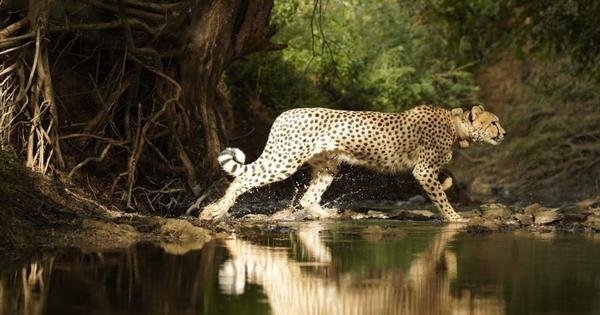
    A 19-month-old male cheetah, KNG22, died after being shot with firearm pellets in the territorial forests of Morena district, Madhya Pradesh, outside Kuno National Park. Veterinary surgeons recovered five firearm pellets from the cub, born to the female cheetah Nirva, after it was found critically injured. The incident raised questions about the safety of cheetahs moving beyond protected areas under Project Cheetah. Kuno National Park director Uttam Kumar Sharma stated that satellite collars used for monitoring are generally programmed to transmit location data every six hours to balance updates with battery life. While satellite collars provide broad location data, dense terrain and transmission gaps mean monitoring teams cannot maintain constant visual contact, showing the limits of tracking technology for highly mobile animals that travel several kilometres daily in search of prey and territory.

  • PETA’s plea: Celebrities, politicians, scientists sign against Centre’s draft on animal cruelty rules

    News

    PETA’s plea: Celebrities, politicians, scientists sign against Centre’s draft on animal cruelty rules

    Celebrities, politicians, and scientists in New Delhi opposed draft animal cruelty rules for laboratory animals, fearing weakened animal protection safeguards. PETA India stated that over 18,000 people, including actors John Abraham, Tabu, and Hema Malini, along with parliamentarians and scientists, signed the appeal seeking the withdrawal of the Prevention of Cruelty to Animals (Control and Supervision of Experiment, Breeding and Trading of Laboratory Animals) Rules, 2026. The proposed rules aim to replace the Breeding of and Experiments on Animals (Control and Supervision) Rules, 1998, by introducing institutional self-regulation for pharmaceutical, medical, and academic research. The Government stated that the draft rules strengthen ethical accountability and invited objections and suggestions until November 5. PETA India alleged that the proposal could increase the capture and use of protected wildlife for experiments, permit community dogs and cats in laboratories, and dilute oversight by the Central Committee for Control and Supervision of Experiments on Animals (CCSEA). PETA India's science and research policy advisor Dr Noopur Jain said, "We must build on this progress, not move backward."

From the Library

  • 45 live reptiles seized at Trichy airport, 2 arrested

    Official Release

    45 live reptiles seized at Trichy airport, 2 arrested

    The Directorate of Revenue Intelligence issued a seizure report detailing how officers foiled an attempt to smuggle live reptiles into India at Trichy Airport. The action applies to international passengers and wildlife smugglers operating through airports. According to Free Press Journal, officers intercepted two Indian passengers arriving from Bangkok via Colombo on 26 Oct 2026. A systematic examination of passenger baggage led to the recovery of forty-five live reptiles concealed inside twenty-seven food packets while the sedated animals remained hidden. The seized animals comprised twenty-three Corn Snakes, sixteen Ball Pythons, five Argentine Black and White Tegus, and one Snow White Iguana. Two passengers faced arrest by the Air Intelligence Unit, Trichy, under the provisions of the Customs Act, 1962, and the recovered wildlife went to the unit for further necessary action. In practice, this means travellers attempting to transport animals illegally face baggage searches, confiscation of concealed wildlife, and arrest under federal customs laws. Readers can report suspected wildlife trafficking activity to customs authorities and airport intelligence units.

  • 86 live tokay geckos seized in Assam, two arrested

    Official Release

    86 live tokay geckos seized in Assam, two arrested

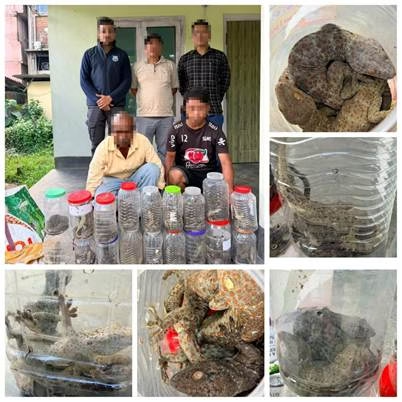
    The Directorate of Revenue Intelligence confiscated 86 live Tokay geckos in Assam during a wildlife trafficking crackdown. Acting on specific intelligence regarding an illegal trade deal, officers intercepted two individuals at Bandar Chalia Gaon Ground in Mariani. The endangered animals were seized under the provisions of the Wildlife (Protection) Act, 1972, and the two apprehended persons were subsequently handed over to the Mariani Range Forest office for further action.

  • A brown street dog lying on a pavement under pink bougainvillea flowers.

    Judgment

    Madras High Court, 1 Sep 2026: PCA section 11(1)(a) is non-cognizable (Balaji v. State, Crl.O.P. No. 9632 of 2026)

    The Madras High Court delivered a judgment in Balaji v. State, Crl.O.P. No. 9632 of 2026, quashing a criminal case under section 11(1)(a) of the Prevention of Cruelty to Animals Act, 1960 against a man accused of throwing a stone at a neighbour's dog that had bitten him. Justice G.K. Ilanthiraiyan held that the offence is non-cognizable, meaning the police cannot arrest without a warrant under section 31 of the Act, and that for a first offence the punishment is a fine of Rs 10 to Rs 50. The court ruled that the police should therefore have taken the magistrate's permission under section 174(2) of the Bharatiya Nagarik Suraksha Sanhita before registering the first information report. The court also noted that no evidence showed the dog was injured and that the complaint was a counterblast to the petitioner's own complaint.

Get Animal Writes updates

News, important developments and practical guides — no spam.

Newsletter

Email me Animal Writes updates. I can unsubscribe at any time.