
From letters to the Supreme Court to a year-round resource for animals. Read the story

Two arrested in connection with poaching of Kuno cheetah cub

Two arrested in connection with poaching of Kuno cheetah cub

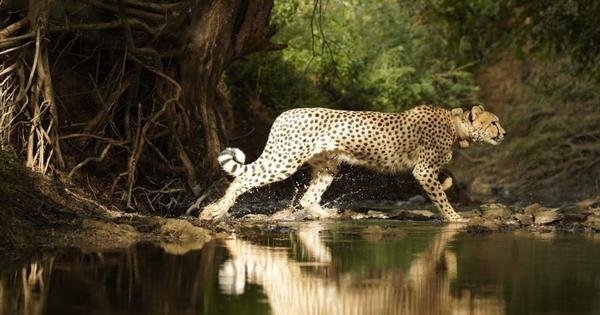
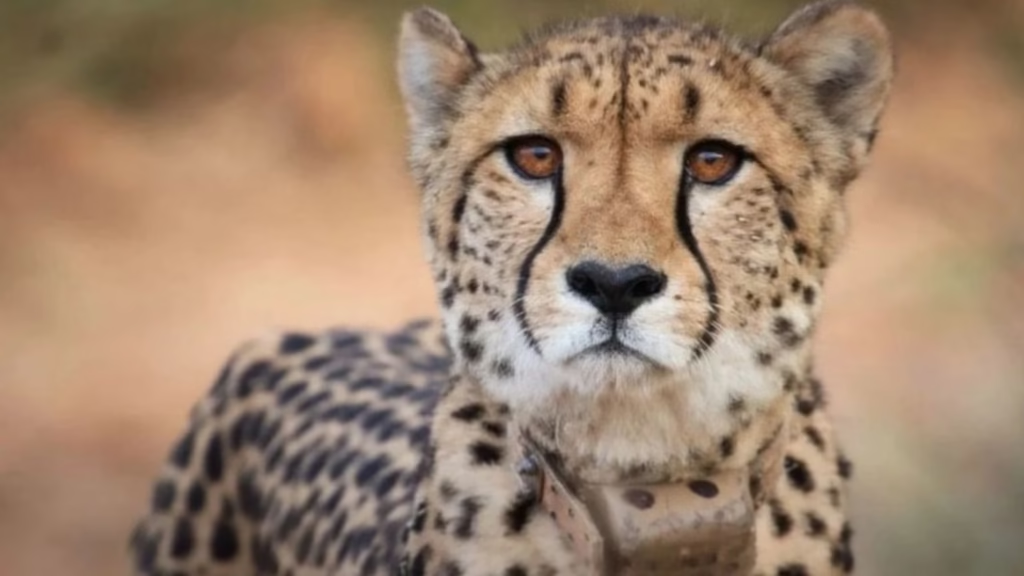
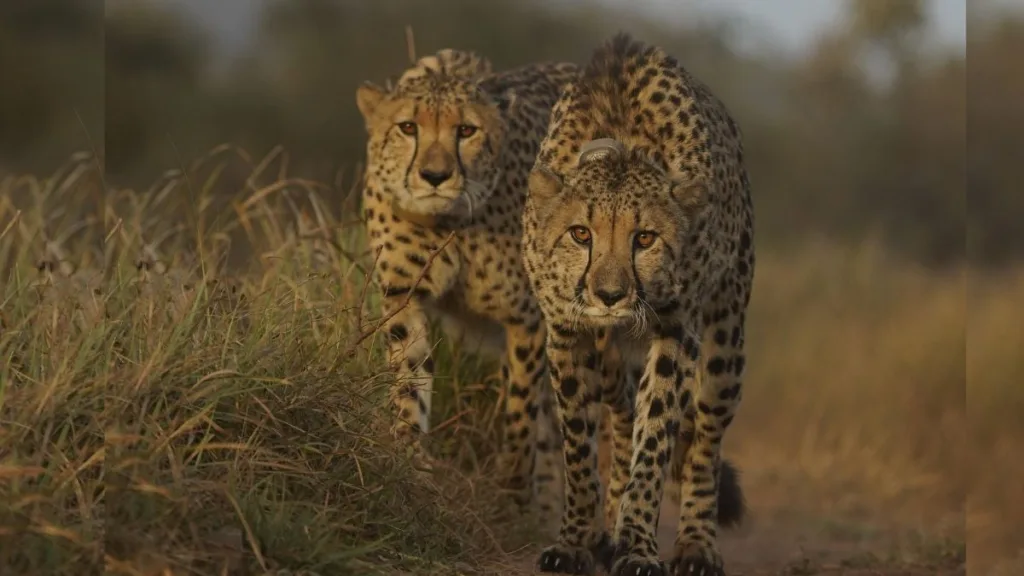
Two suspects were arrested for the poaching of a cheetah cub from Kuno National Park in Morena district of Madhya Pradesh. ANI reported that the Special Task Force in Madhya Pradesh arrested Bhagwan Singh and his brother Pritam Singh for allegedly hunting the animal using a licensed muzzle-loading shotgun in the forests of Sheopur. The 19-month-old male cub had died from pellet injuries on October 26, a day after a monitoring team found it wounded in the Morena territorial forest division and sent it to the veterinary institute in Jabalpur. ANI stated that the accused were booked under sections of the Wildlife (Protection) Act, 1972 pertaining to hunting. This marks the first killing and the 25th death of a cheetah since the reintroduction of the wild animal to India in 2022, when cheetahs from Namibia and South Africa were brought back seven decades after being declared extinct by the Indian government in 1952. The country now has a total of 54 cheetahs, with 50 located in Kuno National Park and four in the Gandhi Sagar Sanctuary.

Sources

Read the original (opens in a new tab)Summary written by Animal Writes. Read the original before relying on it.

More in Cruelty and Prosecution

  • Who shot Kuno’s young cheetah? Three arrested, weapon missing

    News

    Who shot Kuno’s young cheetah? Three arrested, weapon missing

    A young cheetah was shot dead in Kuno National Park in India, leaving India with 58 cheetahs across its protected sanctuaries and reserves, according to wildlife officials. The State Tiger Strike Force stated that local residents were suspected of involvement in hunting the 19-month-old male cub. Officials stated that two brothers were among the suspects arrested, produced before the local court, and taken to the site for scene recreation. A wildlife official stated, "Local people were suspected to be involved, and three persons were arrested and produced before the local court." Five pellets from a traditional muzzle-loading firearm were recovered from the animal's body during surgery at Nanaji Deshmukh Veterinary Science University in Jabalpur, and the MP government stated that a licensed gun used in the killing was recovered, though the muzzle-loading weapon itself has not been found. The Madhya Pradesh government constituted a four-member Special Task Force to investigate the incident. The Ministry of Environment, Forest and Climate Change deputed a three-member team from the National Tiger Conservation Authority and the Wildlife Crime Control Bureau to examine security arrangements and evidence. Investigators continue to examine radio-collar data and question villagers to determine the exact shooting location.
  • India’s cheetahs are roaming beyond protected forests. Can GPS collars keep them safe?

    News

    India’s cheetahs are roaming beyond protected forests. Can GPS collars keep them safe?

    A 19-month-old male cheetah, KNG22, died after being shot with firearm pellets in the territorial forests of Morena district, Madhya Pradesh, outside Kuno National Park. Veterinary surgeons recovered five firearm pellets from the cub, born to the female cheetah Nirva, after it was found critically injured. The incident raised questions about the safety of cheetahs moving beyond protected areas under Project Cheetah. Kuno National Park director Uttam Kumar Sharma stated that satellite collars used for monitoring are generally programmed to transmit location data every six hours to balance updates with battery life. While satellite collars provide broad location data, dense terrain and transmission gaps mean monitoring teams cannot maintain constant visual contact, showing the limits of tracking technology for highly mobile animals that travel several kilometres daily in search of prey and territory.

  • ‘Self approval, self policing’: PETA India’s Anjana Aggarwal tears into govt’s draft rules on animal testing

    News

    ‘Self approval, self policing’: PETA India’s Anjana Aggarwal tears into govt’s draft rules on animal testing

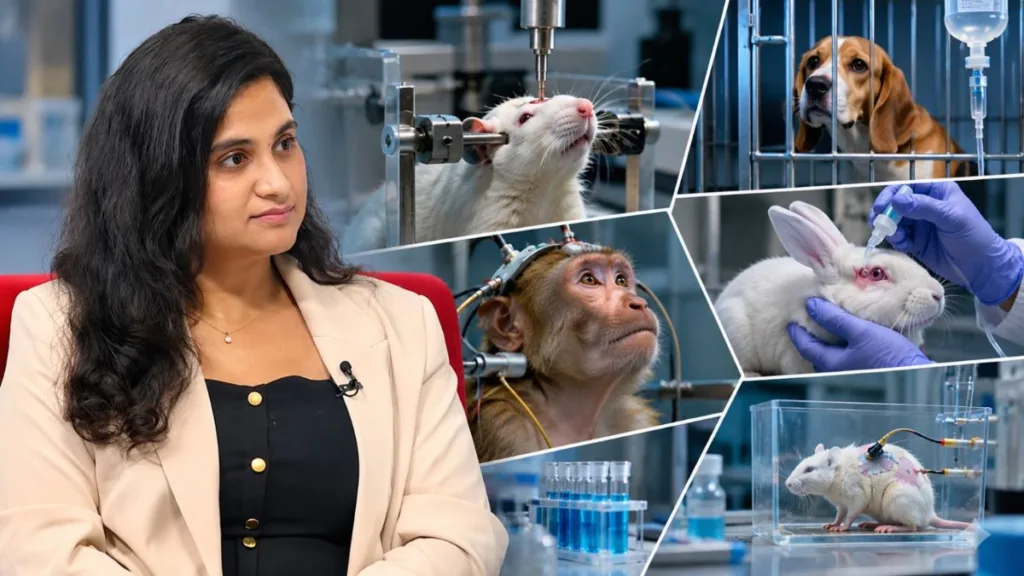
    The Centre’s draft Prevention of Cruelty to Animals (Control and Supervision of Experiment, Breeding and Trading of Laboratory Animals) Rules, 2026, released in Oct 2026, has drawn criticism from PETA India. Dr Anjana Aggarwal, Scientist and Research Policy Advisor at PETA India, said the draft could weaken independent oversight and allow protected wildlife and community animals to be used in laboratories. She warned that “if these draft rules are notified, institutions will monitor themselves” and that the process could become a rubber‑stamp. The rules would replace the 1968 and 1998 rules and the Centre is accepting suggestions until 5 Nov 2026. Dr Aggarwal noted the absence of an openly available database on animal experiments, citing the CCSEA’s lack of public records. She urged India to adopt alternative methods such as organ‑on‑chips, organoids, computational and AI models, and to align with the European Union’s 2026 non‑animal testing framework.

From the Library

  • 45 live reptiles seized at Trichy airport, 2 arrested

    Official Release

    45 live reptiles seized at Trichy airport, 2 arrested

    The Directorate of Revenue Intelligence issued a seizure report detailing how officers foiled an attempt to smuggle live reptiles into India at Trichy Airport. The action applies to international passengers and wildlife smugglers operating through airports. According to Free Press Journal, officers intercepted two Indian passengers arriving from Bangkok via Colombo on 26 Oct 2026. A systematic examination of passenger baggage led to the recovery of forty-five live reptiles concealed inside twenty-seven food packets while the sedated animals remained hidden. The seized animals comprised twenty-three Corn Snakes, sixteen Ball Pythons, five Argentine Black and White Tegus, and one Snow White Iguana. Two passengers faced arrest by the Air Intelligence Unit, Trichy, under the provisions of the Customs Act, 1962, and the recovered wildlife went to the unit for further necessary action. In practice, this means travellers attempting to transport animals illegally face baggage searches, confiscation of concealed wildlife, and arrest under federal customs laws. Readers can report suspected wildlife trafficking activity to customs authorities and airport intelligence units.

  • Veterinary vaccine testing lab expanded at Baghpat

    Official Release

    Veterinary vaccine testing lab expanded at Baghpat

    The Ministry of Health and Family Welfare issued a notification amending the Drugs Rules, 1945, to expand veterinary vaccine testing functions at the Central Drugs Laboratory. Published under Gazette Notification G.S.R. 65(E) on the 28 Jan 2026, under the Drugs and Cosmetics Act, 1940, the update applies to the Central Drugs Laboratory at the Chaudhary Charan Singh–National Institute of Animal Health located in Baghpat, Uttar Pradesh. The rule expands the institute's testing capacity from only two veterinary vaccines to 42 veterinary vaccines, covering biologicals used for dogs, horses, poultry and livestock. In practice, this enhancement helps streamline regulatory clearance, reduce testing timelines for manufacturers, and ensure quality-assured vaccines reach the market for animal welfare.

  • A thick stack of printed papers on a wooden desk by a window, with a binder clip and a pencil beside it.

    Rule

    Draft Prevention of Cruelty to Animals (Control and Supervision of Experiment, Breeding and Trading of Laboratory Animals) Rules, 2026 (GSR 864E)

    The Committee for Control and Supervision of Experiments on Animals issued the Draft Laboratory Animals Rules, 2026 under the Prevention of Cruelty to Animals Act, 1960. The notification, issued on 30 Sep 2026, sets out updated standards for scientific and educational experiments involving animals. The new framework will replace India's older 1968 and 1998 rules on experiments on animals. Under the proposed system, each experiment would be classed as non-recovery, mild, moderate or severe. A laboratory's own institutional animal ethics committee would be permitted to approve mild and moderate procedures. The Committee for Control and Supervision of Experiments on Animals would retain approval authority for severe and non-recovery procedures performed on animals positioned above rodents and rabbits. Some farm animals, fish and birds could come from the open market with the approval of the ethics committee. The public and interested stakeholders can send formal objections or suggestions regarding the draft text to the Committee for Control and Supervision of Experiments on Animals until 5 Nov 2026.

Get Animal Writes updates

News, important developments and practical guides — no spam.

Newsletter

Email me Animal Writes updates. I can unsubscribe at any time.