
From letters to the Supreme Court to a year-round resource for animals. Read the story

Call to reduce laboratory animal use is not driven by ethics alone

Call to reduce laboratory animal use is not driven by ethics alone

On October 6, the Ministry of Fisheries, Animal Husbandry and Dairying proposed the Draft Laboratory Animals Rules, 2026 under the Prevention of Cruelty to Animals Act, 1960, raising concerns over laboratory animal use in India. The ministry stated that the new rules aim to update standards for scientific and educational experiments involving animals. Critics argued that three provisions of the draft contradict the 3R principles of replacement, reduction, and refinement. Rule 4(6) permits the use of animals in teaching laboratories that phased out dissection over a decade ago under University Grants Commission guidelines. Rule 5 creates exceptions allowing species protected under the Wildlife (Protection) Act, 1972, as well as free-ranging and feral animals, to be used in experiments and training, while Rule 21(2) allows sourcing from unregistered establishments and open markets. Observers stated that these provisions threaten biodiversity, risk ecological disruption, and conflict with modern non-animal technologies and advancements in human-specific cell and gene therapies.

Sources

Read the original (opens in a new tab)Summary written by Animal Writes. Read the original before relying on it.

More in Animal Experimentation

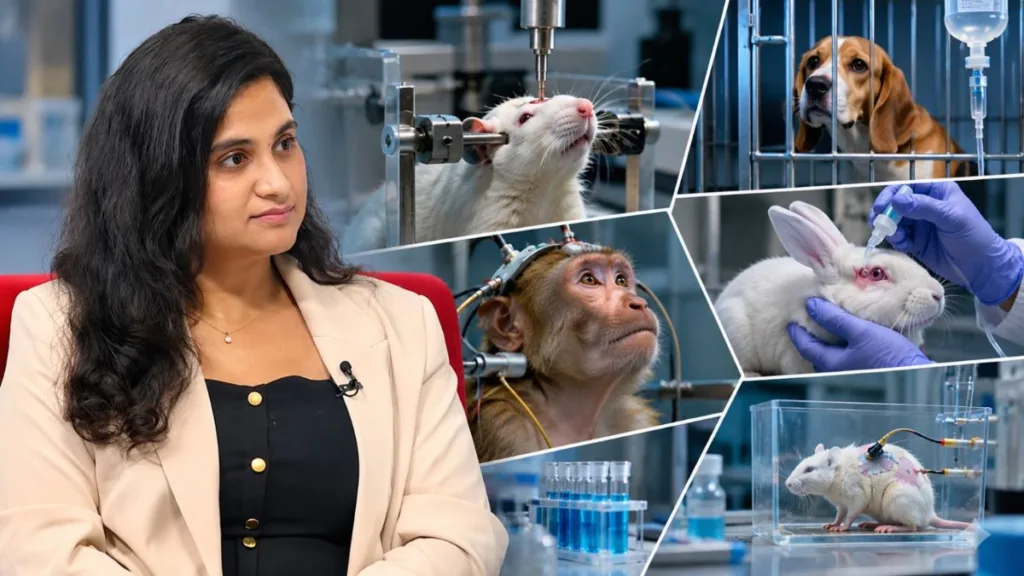
  • ‘Self approval, self policing’: PETA India’s Anjana Aggarwal tears into govt’s draft rules on animal testing

    News

    ‘Self approval, self policing’: PETA India’s Anjana Aggarwal tears into govt’s draft rules on animal testing

    The Centre’s draft Prevention of Cruelty to Animals (Control and Supervision of Experiment, Breeding and Trading of Laboratory Animals) Rules, 2026, released in Oct 2026, has drawn criticism from PETA India. Dr Anjana Aggarwal, Scientist and Research Policy Advisor at PETA India, said the draft could weaken independent oversight and allow protected wildlife and community animals to be used in laboratories. She warned that “if these draft rules are notified, institutions will monitor themselves” and that the process could become a rubber‑stamp. The rules would replace the 1968 and 1998 rules and the Centre is accepting suggestions until 5 Nov 2026. Dr Aggarwal noted the absence of an openly available database on animal experiments, citing the CCSEA’s lack of public records. She urged India to adopt alternative methods such as organ‑on‑chips, organoids, computational and AI models, and to align with the European Union’s 2026 non‑animal testing framework.
  • PETA’s plea: Celebrities, politicians, scientists sign against Centre’s draft on animal cruelty rules

    News

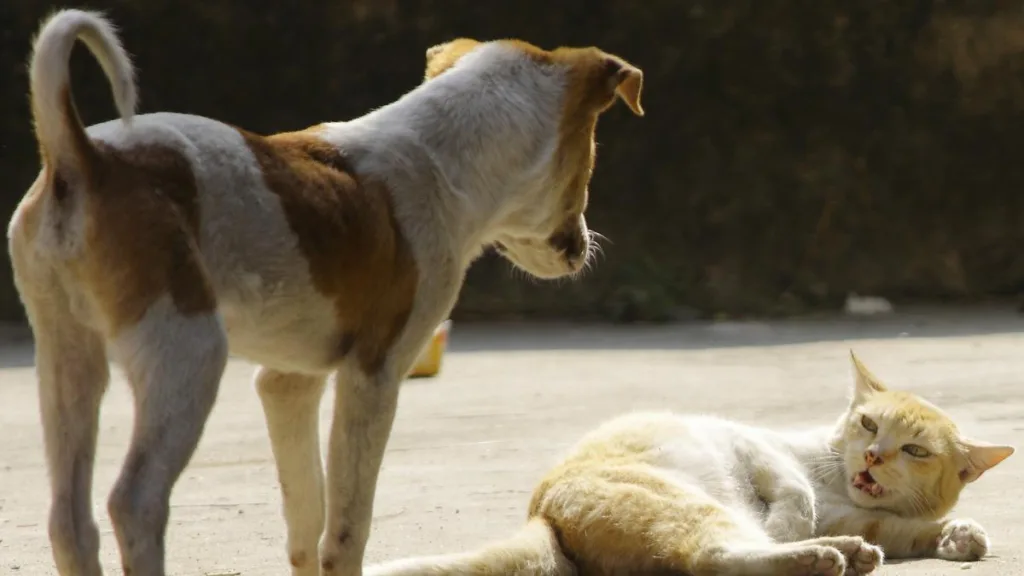
    PETA’s plea: Celebrities, politicians, scientists sign against Centre’s draft on animal cruelty rules

    Celebrities, politicians, and scientists in New Delhi opposed draft animal cruelty rules for laboratory animals, fearing weakened animal protection safeguards. PETA India stated that over 18,000 people, including actors John Abraham, Tabu, and Hema Malini, along with parliamentarians and scientists, signed the appeal seeking the withdrawal of the Prevention of Cruelty to Animals (Control and Supervision of Experiment, Breeding and Trading of Laboratory Animals) Rules, 2026. The proposed rules aim to replace the Breeding of and Experiments on Animals (Control and Supervision) Rules, 1998, by introducing institutional self-regulation for pharmaceutical, medical, and academic research. The Government stated that the draft rules strengthen ethical accountability and invited objections and suggestions until November 5. PETA India alleged that the proposal could increase the capture and use of protected wildlife for experiments, permit community dogs and cats in laboratories, and dilute oversight by the Central Committee for Control and Supervision of Experiments on Animals (CCSEA). PETA India's science and research policy advisor Dr Noopur Jain said, "We must build on this progress, not move backward."

  • Two arrested in connection with poaching of Kuno cheetah cub

    News

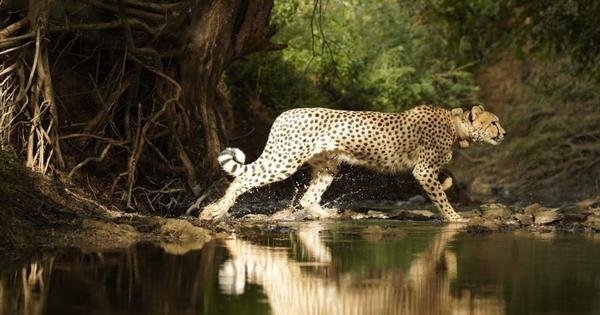
    Two arrested in connection with poaching of Kuno cheetah cub

    Two suspects were arrested for the poaching of a cheetah cub from Kuno National Park in Morena district of Madhya Pradesh. ANI reported that the Special Task Force in Madhya Pradesh arrested Bhagwan Singh and his brother Pritam Singh for allegedly hunting the animal using a licensed muzzle-loading shotgun in the forests of Sheopur. The 19-month-old male cub had died from pellet injuries on October 26, a day after a monitoring team found it wounded in the Morena territorial forest division and sent it to the veterinary institute in Jabalpur. ANI stated that the accused were booked under sections of the Wildlife (Protection) Act, 1972 pertaining to hunting. This marks the first killing and the 25th death of a cheetah since the reintroduction of the wild animal to India in 2022, when cheetahs from Namibia and South Africa were brought back seven decades after being declared extinct by the Indian government in 1952. The country now has a total of 54 cheetahs, with 50 located in Kuno National Park and four in the Gandhi Sagar Sanctuary.

From the Library

  • 45 live reptiles seized at Trichy airport, 2 arrested

    Official Release

    45 live reptiles seized at Trichy airport, 2 arrested

    The Directorate of Revenue Intelligence issued a seizure report detailing how officers foiled an attempt to smuggle live reptiles into India at Trichy Airport. The action applies to international passengers and wildlife smugglers operating through airports. According to Free Press Journal, officers intercepted two Indian passengers arriving from Bangkok via Colombo on 26 Oct 2026. A systematic examination of passenger baggage led to the recovery of forty-five live reptiles concealed inside twenty-seven food packets while the sedated animals remained hidden. The seized animals comprised twenty-three Corn Snakes, sixteen Ball Pythons, five Argentine Black and White Tegus, and one Snow White Iguana. Two passengers faced arrest by the Air Intelligence Unit, Trichy, under the provisions of the Customs Act, 1962, and the recovered wildlife went to the unit for further necessary action. In practice, this means travellers attempting to transport animals illegally face baggage searches, confiscation of concealed wildlife, and arrest under federal customs laws. Readers can report suspected wildlife trafficking activity to customs authorities and airport intelligence units.

  • A thick stack of printed papers on a wooden desk by a window, with a binder clip and a pencil beside it.

    Rule

    Draft Prevention of Cruelty to Animals (Control and Supervision of Experiment, Breeding and Trading of Laboratory Animals) Rules, 2026 (GSR 864E)

    The Committee for Control and Supervision of Experiments on Animals issued the Draft Laboratory Animals Rules, 2026 under the Prevention of Cruelty to Animals Act, 1960. The notification, issued on 30 Sep 2026, sets out updated standards for scientific and educational experiments involving animals. The new framework will replace India's older 1968 and 1998 rules on experiments on animals. Under the proposed system, each experiment would be classed as non-recovery, mild, moderate or severe. A laboratory's own institutional animal ethics committee would be permitted to approve mild and moderate procedures. The Committee for Control and Supervision of Experiments on Animals would retain approval authority for severe and non-recovery procedures performed on animals positioned above rodents and rabbits. Some farm animals, fish and birds could come from the open market with the approval of the ethics committee. The public and interested stakeholders can send formal objections or suggestions regarding the draft text to the Committee for Control and Supervision of Experiments on Animals until 5 Nov 2026.

  • A white rat and a grey rat facing each other on wood shavings inside a clear plastic cage.

    Rule

    Administrative (Committee for Control and Supervision of Experiments on Animals) Amendment Rules, 2026

    The Ministry of Fisheries, Animal Husbandry and Dairying issued notification G.S.R. 552(E), setting CCSEA's fees for registering animal facilities, breeding, renewal, ethics committee revision, and protocols on large animals. Published in the Gazette of India under the Prevention of Cruelty to Animals Act, 1960, the document establishes processing fees of 12,000 rupees for small and large animal registration and small animal facility amendments. Breeding registration for in-house use costs 18,000 rupees for small animals and 30,000 rupees for large animals, while trade breeding is 30,000 rupees for both. Renewal costs 3,000 rupees, revision of the Institutional Animal Ethics Committee is 1,200 rupees, and large animal educational protocols cost 1,200 rupees per protocol, with non-educational protocols costing 6,000 rupees.

Get Animal Writes updates

News, important developments and practical guides — no spam.

Newsletter

Email me Animal Writes updates. I can unsubscribe at any time.