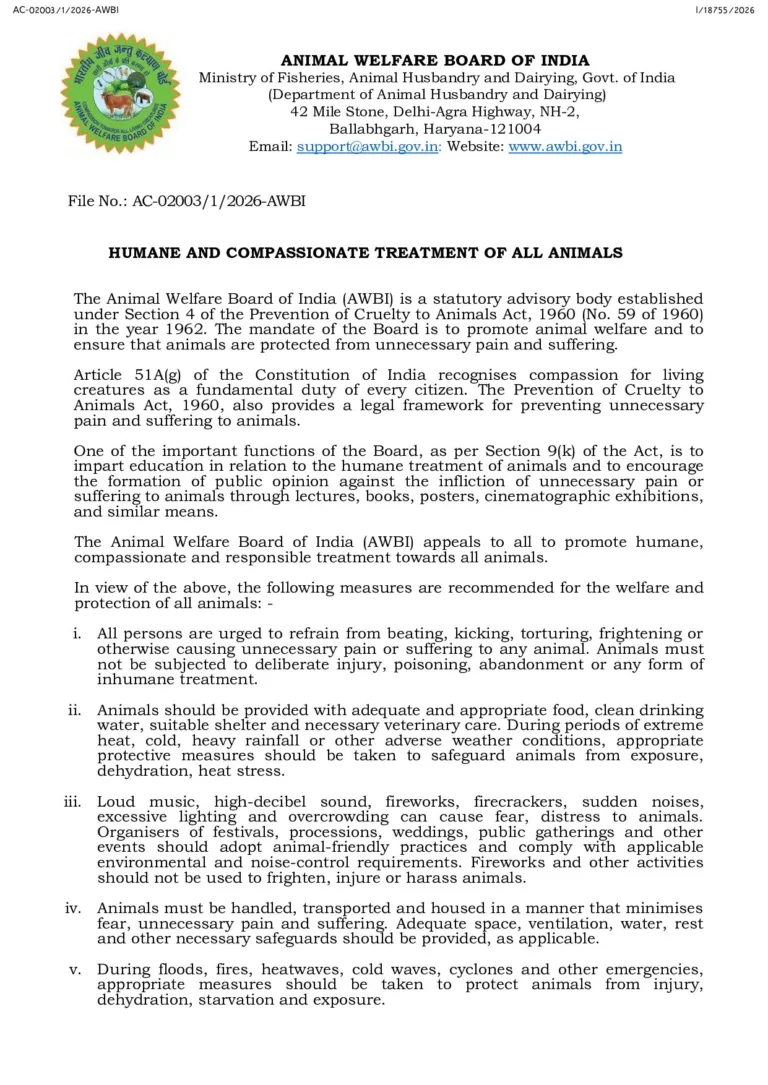
Livestock governance in India combines state-level responsibility with Union support for planning, research and development programmes affecting farm animals across the country. Animal husbandry and the preservation of stock fall primarily under Entry 15 of the State List in the Seventh Schedule, giving state governments principal legislative and executive responsibility. The Department of Animal Husbandry and Dairying, under the Ministry of Fisheries, Animal Husbandry and Dairying, acts as the Union nodal agency for policy formulation and implementation of livestock development programmes. The Indian Council of Agricultural Research contributes research on genetic improvement and animal health management, while the National Dairy Development Board supports dairy-sector development. State Animal Husbandry Departments handle local enforcement of regulations. The Prevention of Cruelty to Animals Act, 1960, functions as the primary legislation addressing animal welfare, including conditions for animals used in breeding and research. Article 48 of the Directive Principles of State Policy directs the State to organise agriculture and animal husbandry on modern lines, preserve cattle breeds, and prohibit the slaughter of cows, calves and other milch and draught cattle. State Livestock Development Boards and Milk Federations regulate breeding practices, supported by Minimum Standards of Practice for Artificial Insemination.