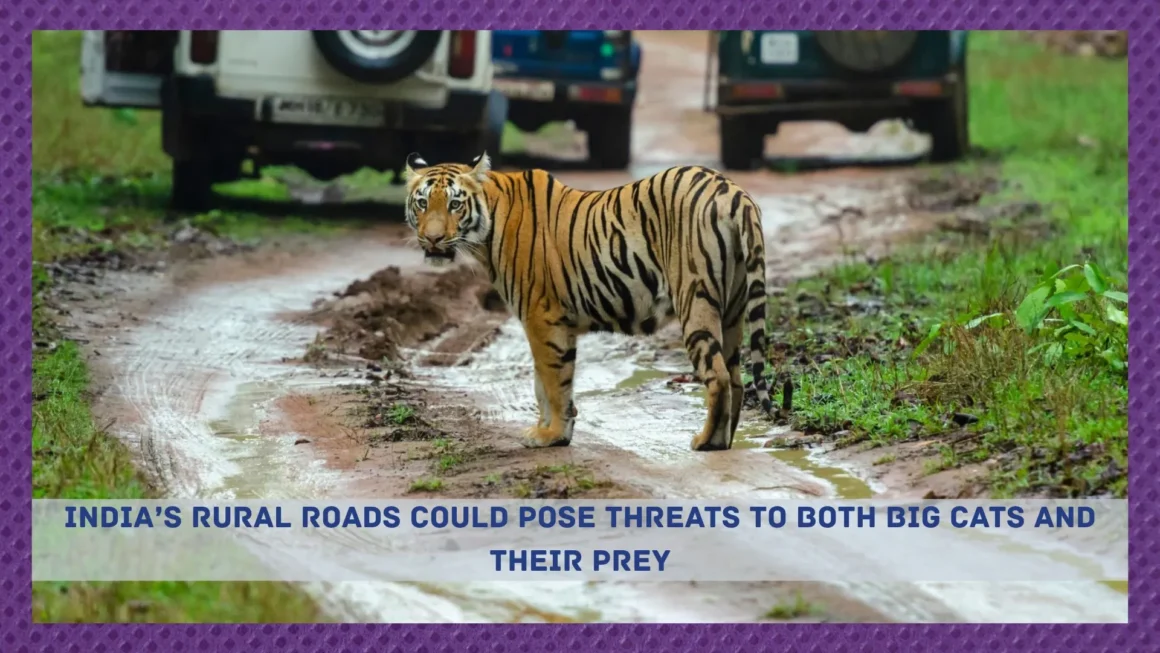
Rural roads in central India’s tiger heartland pose severe danger to tigers, leopards and their prey, a new study finds. Researchers from the Wildlife Institute of India analysed 32,500 km of paved country roads and identified roughly 9,750 km (about 30 %) as having a medium‑to‑high likelihood of disrupting animal movement or causing vehicle collisions. The team’s rule‑based exposure‑and‑hazard framework combined field surveys of tracks, dung and tree‑rubbing signs with satellite‑tracked tiger and leopard corridors, and used a Random Forest model to estimate traffic volumes where counters are absent. Validation showed that over 88 % of 565 recorded tiger road crossings occurred on sections the model flagged as high‑ or medium‑priority, and 85 % of documented tiger roadkills and 71 % of leopard roadkills matched the predicted hotspots. The researchers say the map provides an “accessible blueprint” for planners to prioritize wildlife underpasses or other mitigations on the most hazardous stretches.