From letters to the Supreme Court to a year-round resource for animals. Read the story

UK ministers told not to engage formally with Indian mega zoo after lobbying

UK ministers told not to engage formally with Indian mega zoo after lobbying

UK government officials advised ministers against formal engagement with the Greens Zoological Rescue and Rehabilitation Centre, a private mega-zoo housing numerous wild animals in Jamnagar, Gujarat. Foreign, Commonwealth and Development Office diplomats issued this guidance after lobbying by representatives of the facility in Jamnagar, Gujarat. Internal documents showed that officials cautioned against providing a formal platform to the project. The Foreign, Commonwealth and Development Office stated that the facility has acquired species including elephants and leopards for its operations. Officials raised concerns that ministerial involvement could be seen as an official endorsement of the private entity. An internal communication stated that “we should avoid any formal ministerial engagement” to maintain distance from the project. The Foreign, Commonwealth and Development Office recommended that future interactions be limited to technical or informal levels instead of high-level diplomatic support. No hearing or investigation was mentioned.

Sources

Read the original (opens in a new tab)Summary written by Animal Writes. Read the original before relying on it.

More in Performing and Captive Animals

  • India’s animal megacentre vows reset after criticism

    News

    India’s animal megacentre vows reset after criticism

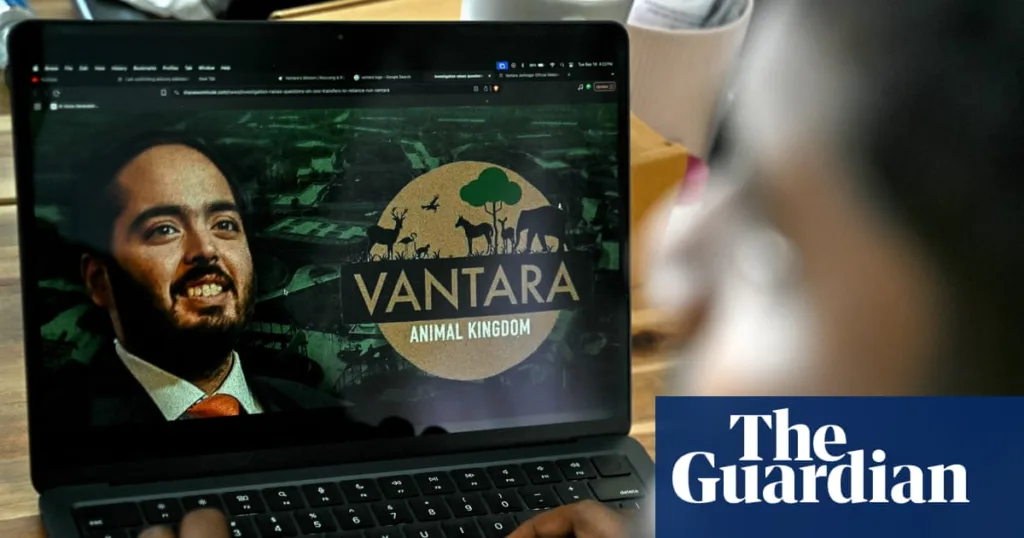
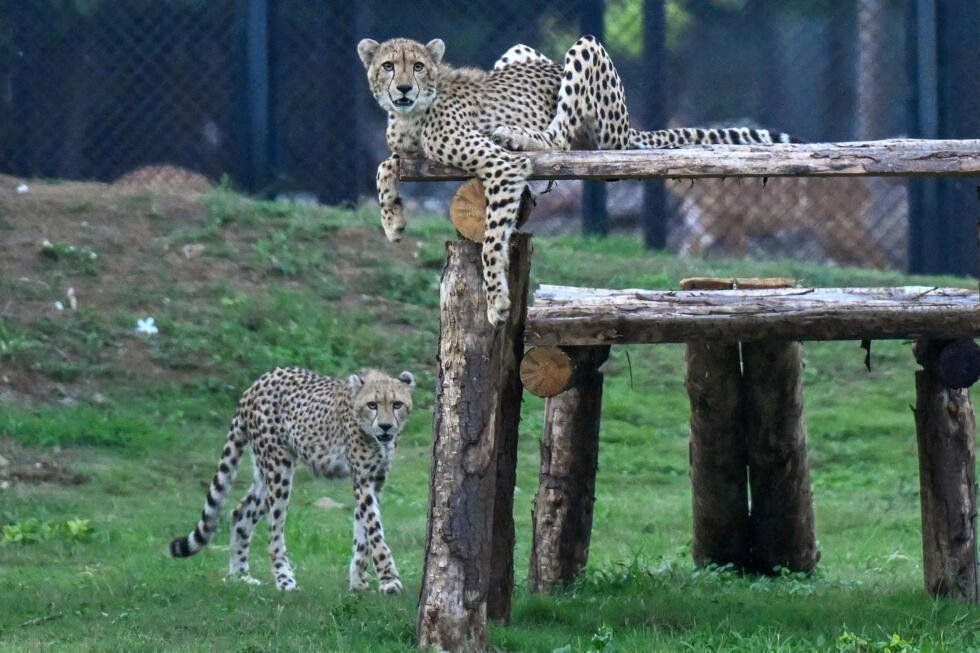
    Vantara, billed as the world's biggest animal rescue centre based in Jamnagar, Gujarat, has pledged a reset following criticism over how it amassed its collection of wildlife, according to Dawn and The Straits Times. Vantara CEO Vivaan Karani stated that the facility has halted imports, hired global experts, and shifted towards helping wildlife in its natural habitat, saying, "Wherever animals can be effectively supported in their own countries, we increasingly believe our resources should travel, rather than the animals." Spanning 3,500 acres, the facility is the vision of Anant Ambani, son of Reliance Industries chairman Mukesh Ambani. The centre houses more than 150,000 animals from over 2,000 species brought from at least 30 countries. The acquisitions have drawn the attention of the secretariat overseeing CITES, which urged reforms regarding captive-bred specimens, while last month 27 international conservation organisations demanded measurable reforms and full public transparency over the origins of every animal. Karani defended the facility by pointing to a Supreme Court-ordered probe that found no evidence of any breach or offence.
  • Vantara hosts EARAZA 2026 wildlife conservation conference

    News

    Vantara hosts EARAZA 2026 wildlife conservation conference

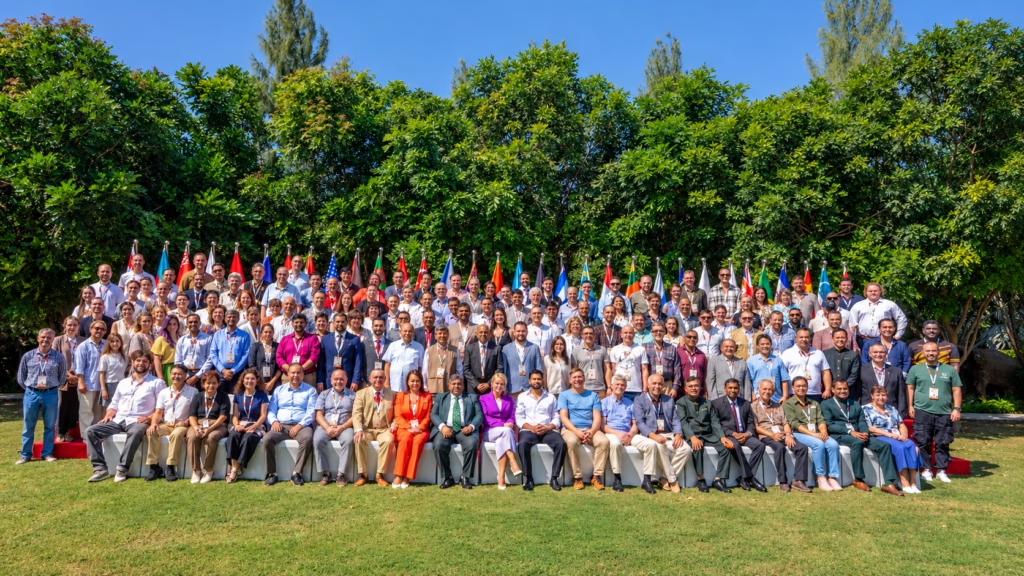
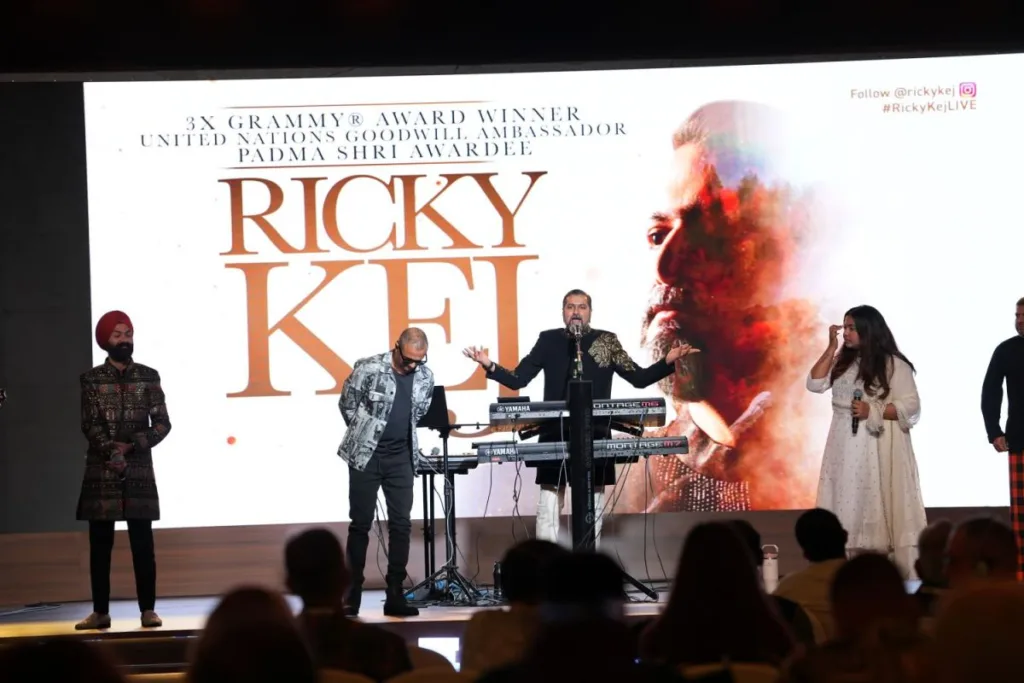
    Vantara hosted the Eurasian Regional Association of Zoos and Aquariums 2026 Wildlife Conservation Conference from October 26 to 29 in Jamnagar, Gujarat, gathering zoo professionals to discuss the welfare of wildlife and captive animals. According to the conference organizers, the event brought together representatives from 98 institutions in 30 countries and 29 Indian zoos. During the inauguration, Svetlana Akulova, President of the Eurasian Regional Association of Zoos and Aquariums, stated that conservation today cannot stop at national borders and when institutions share data, expertise and responsibility, every programme becomes stronger. Vantara CEO Vivaan Karani announced that the ANTZ Software Platform will be offered free to all members of the Eurasian Regional Association of Zoos and Aquariums for one year to facilitate data exchange and management. Participants examined cross-border programmes for species such as the Amur tiger, Oriental stork and great bustard, and discussed animal-welfare outcomes, veterinary capacity building and human-wildlife conflict. Dr V. Clement Ben, Member Secretary of the Central Zoo Authority, Ministry of Environment, Forest and Climate Change, said the gathering helps raise standards of animal welfare and strengthen regional cooperation, and the conference will continue discussions to set collaborative priorities for the coming year.

  • Vantara brings the world’s wildlife community to Jamnagar for EARAZA annual conference 2026

    News

    Vantara brings the world’s wildlife community to Jamnagar for EARAZA annual conference 2026

    Vantara hosted the Eurasian Regional Association of Zoos and Aquariums Annual Conference 2026 in Jamnagar, Gujarat, gathering global leaders, scientists, and conservationists. Vantara announced that its ANTZ Software Platform would be offered free for one year to all EARAZA members. The Central Zoo Authority participated in the event, which ran from October 26 to October 29. The meeting focused on international cooperation, animal welfare, and veterinary capacity under the theme Strengthening Global Partnerships for Wildlife Conservation. Delegates discussed cross-border protection programs for species such as the Amur tiger and great bustard, while experts shared insights on human-wildlife conflict and crisis management. Ms Svetlana Akulova stated that the gathering aimed at establishing "a global data infrastructure for biodiversity conservation". The programme included panel sessions, interactive video booths, solution stations, and an exhibition showcasing advanced veterinary technologies and conservation tools. Members also held a voting session to determine the association's direction for the coming year.

From the Library

  • Human wildlife conflict centre and portal launched

    Official Release

    Human wildlife conflict centre and portal launched

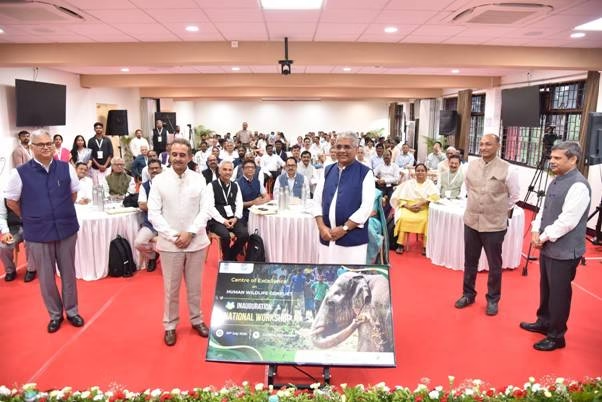
    On 10 Jul 2026, the Union Environment Minister inaugurated a Centre of Excellence for human-wildlife conflict at the Wildlife Institute of India’s SACON campus in Coimbatore. The minister also launched a National Human-Wildlife Conflict Portal on the same day. This newly established center will serve as a national hub for research, innovation, policy support, capacity building, and dissemination of best practices. During the event, officials gathered to deliberate on effective strategies for mitigating human-wildlife conflict and promoting coexistence.

  • 28th meeting of the Wildlife Institute of India Society

    Official Release

    28th meeting of the Wildlife Institute of India Society

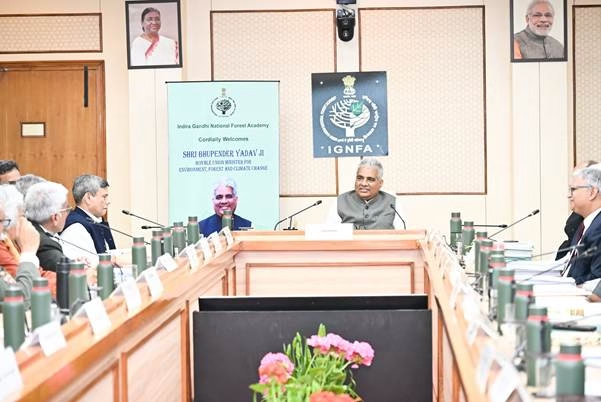
    The Union Minister for Environment, Forest and Climate Change, Shri Bhupender Yadav, chaired the 28th meeting of the reconstituted Wildlife Institute of India (WII) Society at the Central Academy for State Forest Service in Coimbatore. This meeting marked the first gathering since the society's reconstitution for a three-year term. Shri Yadav emphasized the need to align WII’s research, training, and policy-support frameworks with the vision of ‘Viksit Bharat @ 2047’. He stated the importance of focusing on human-wildlife conflict resolution and capacity building. The meeting also featured an overview of WII's achievements and involved participation from various officials and stakeholders in wildlife conservation.

  • 90th meeting of the National Board for Wildlife committee

    Official Release

    90th meeting of the National Board for Wildlife committee

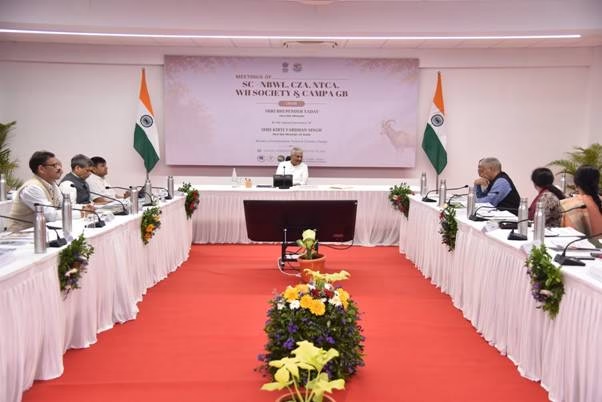
    The Union Minister for Environment, Forest and Climate Change chaired the 90th meeting of the Standing Committee of the National Board for Wildlife in Dehradun to address wildlife conservation. The statutory body constituted under the Wild Life (Protection) Act, 1972 reviewed infrastructure proposals across sectors such as roads, drinking water supply, transmission lines, defence, and irrigation. During the proceedings, a Memorandum of Understanding was signed between the Forest Survey of India and the Bhaskaracharya National Institute for Space Applications and Geo-informatics to strengthen geospatial technologies, remote sensing, and artificial intelligence and machine learning tools in forest fire management and wildlife conservation. The committee also reviewed progress on decisions from the 7th meeting of the National Board for Wildlife regarding species recovery and habitat management. The agenda covered environmental flows in the River Chambal for riverine species like dolphins and gharials during lean seasons. The participants examined the conservation of grasslands and rangelands for biodiversity and pastoral livelihoods, along with the ecological dependence of nomadic communities on Protected Areas. The meeting addressed the conservation status of the wild water buffalo and recommended a conservation action plan for the species.

Get Animal Writes updates

News, important developments and practical guides — no spam.

Newsletter

Email me Animal Writes updates. I can unsubscribe at any time.