
From letters to the Supreme Court to a year-round resource for animals. Read the story

Why India calls its grasslands wasteland and what that word has cost wildlife

Why India calls its grasslands wasteland and what that word has cost wildlife

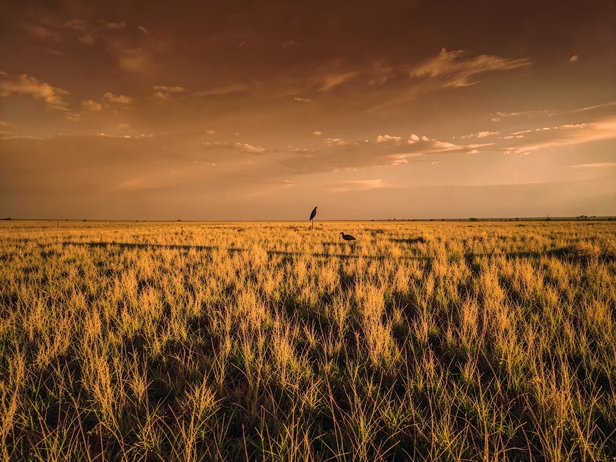
India’s classification of natural grasslands as wastelands threatens the survival of endangered wildlife including the Great Indian Bustard, Lesser Florican, and Indian Grey Wolf across several ecological regions. The Ministry of Rural Development and the Department of Land Resources record these habitats in the Wasteland Atlas of India, primarily affecting arid zones in Rajasthan and Gujarat. Researchers from the Ashoka Trust for Research in Ecology and the Environment alleged that officials mislabel “ecologically productive” areas as unproductive land to facilitate industrial projects. This policy enables the diversion of vital grazing lands for solar farms and tree plantations, which the NGO stated destroys the specialized biodiversity of open natural ecosystems. The Supreme Court of India recently directed a committee to define these areas correctly to prevent the extinction of birds sensitive to habitat changes.

Sources

Read the original (opens in a new tab)Summary written by Animal Writes. Read the original before relying on it.

More in Birds

  • Indore Metro Project: MP High Court permits tree felling, but directs phased cutting under bird experts’ supervision

    News

    Indore Metro Project: MP High Court permits tree felling, but directs phased cutting under bird experts’ supervision

    The Madhya Pradesh High Court permitted the felling of trees for the Indore Metro project while ordering measures to protect nesting birds in Indore, Madhya Pradesh. A division bench of the High Court issued these directions in Indore after a petition raised concerns about the impact of the construction on local avian populations. The court held that the Indore Metro Rail Corporation must carry out the tree cutting in a phased manner under the supervision of bird experts. This supervision aims to ensure that no nests are destroyed during the breeding season, as the court noted the importance of balancing infrastructure development with environmental conservation. The Indore Municipal Corporation and the forest department are tasked with identifying suitable locations for transplanting trees and rehabilitating any affected wildlife. The project proponents must submit periodic compliance reports to the court to confirm that the felling adheres to the stipulated wildlife protection guidelines.
  • PM shares an article by former England cricket captain Mr. Kevin Pietersen highlighting India’s progress across sports, technology and wildlife conservation

    News

    PM shares an article by former England cricket captain Mr. Kevin Pietersen highlighting India’s progress across sports, technology and wildlife conservation

    Wildlife conservation efforts in India have seen progress through national leadership and initiatives protecting natural heritage, according to an article shared by former England cricket captain Kevin Pietersen. Mr Pietersen stated that the leadership of Prime Minister Narendra Modi contributed to India's changing outlook, alongside the protection of wildlife and natural heritage. The article also reflected on India's growing sporting strength, the rise of women's cricket, and progress in infrastructure and technology.

  • Baby orangutans in India expose illegal wildlife trade as experts question a billionaire’s zoo

    News

    Baby orangutans in India expose illegal wildlife trade as experts question a billionaire’s zoo

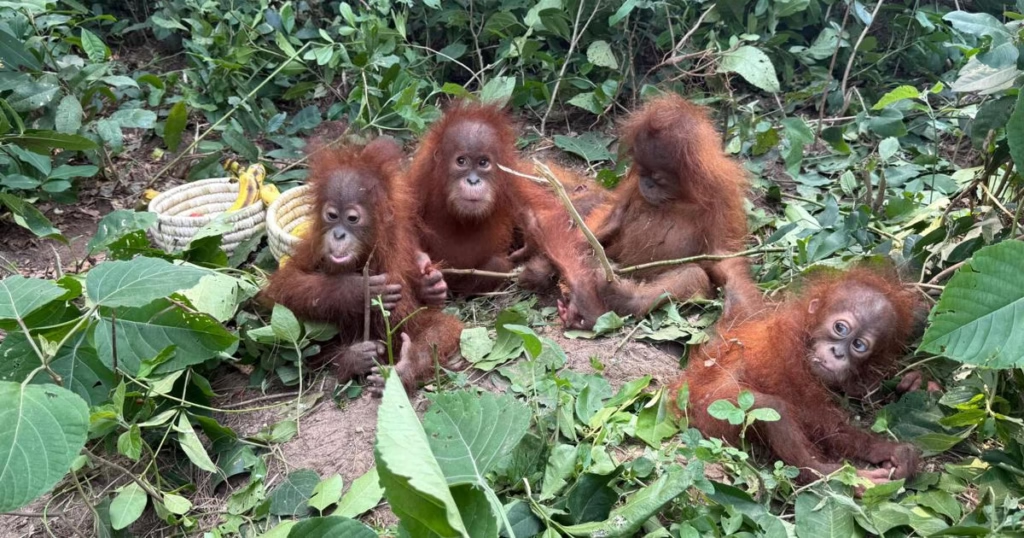
    Five baby orangutans were found abandoned on a plantation in Bhograi village in Balasore district of Odisha, India, exposing illegal wildlife trade. The DFO Balasore Wildlife Division stated that villagers discovered the three males and two females, aged six to eight months, in early Sep 2026. Experts stated that wealthy collectors, expanding air links with Southeast Asia, and loopholes in wildlife laws are driving the illicit trade of apes into India. Government records show India legally imported 41 orangutans between 2021 and 2024, leading experts to question their origins. Meanwhile, efforts to return rescued orangutans to Indonesia have stalled, and scrutiny over ownership intensified after one orangutan was transferred to a private wildlife facility run by billionaire Mukesh Ambani's family. Veterinarians at Nandankanan Zoo inspected the rescued animals, while officials prepared for repatriation procedures.

From the Library

  • CBI DRI Joint Action Busts Wildlife Trafficking Racket 53 Protected Animals/ Birds Rescued, 06 Accused Arrested

    Official Release

    CBI DRI Joint Action Busts Wildlife Trafficking Racket 53 Protected Animals/ Birds Rescued, 06 Accused Arrested

    The Central Bureau of Investigation (CBI) and DRI, Mumbai, conducted a joint operation that disrupted a wildlife trafficking network, resulting in the rescue of 53 protected animals and birds. The operation, supported by the Wildlife Crime Control Bureau, involved multiple locations in Maharashtra and West Bengal. Rescued species included 15 Slow Loris, 2 Binturong, 28 Star Tortoises, 6 Egyptian Vultures, and 2 Shikra birds. Six suspects were arrested, three in Mumbai and three in Kolkata, under the Wildlife (Protection) Act, 1972, and Criminal Conspiracy under Bhartiya Nyaya Sanhita, 2023. The investigation is ongoing.

  • Union Environment Minister inaugurates Centre of Excellence on Human Wildlife Conflict at WII SACON, Coimbatore; launches National Human Wildlife Conflict Portal

    Official Release

    Union Environment Minister inaugurates Centre of Excellence on Human Wildlife Conflict at WII SACON, Coimbatore; launches National Human Wildlife Conflict Portal

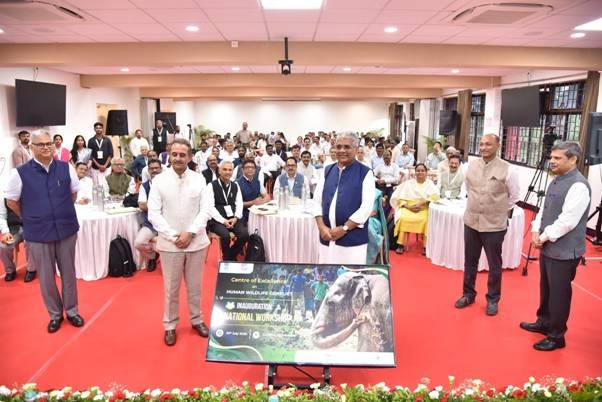
    On 10 Jul 2026, the Union Environment Minister inaugurated a Centre of Excellence for human-wildlife conflict at the Wildlife Institute of India’s SACON campus in Coimbatore. The minister also launched a National Human-Wildlife Conflict Portal on the same day. This newly established center will serve as a national hub for research, innovation, policy support, capacity building, and dissemination of best practices. During the event, officials gathered to deliberate on effective strategies for mitigating human-wildlife conflict and promoting coexistence.

  • Union Environment Minister presides over the 28th Meeting of the reconstituted Wildlife Institute of India (WII) Society, at Coimbatore

    Official Release

    Union Environment Minister presides over the 28th Meeting of the reconstituted Wildlife Institute of India (WII) Society, at Coimbatore

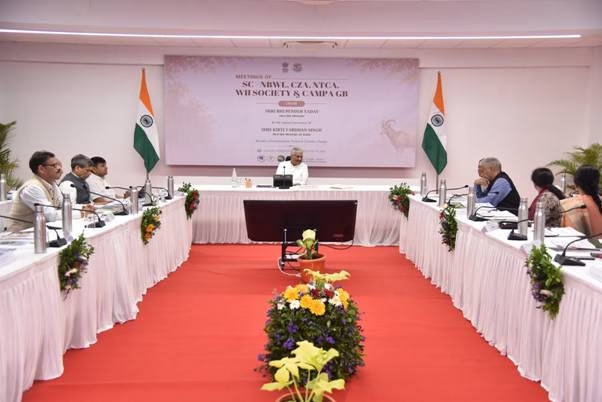
    The Union Minister for Environment, Forest and Climate Change, Shri Bhupender Yadav, chaired the 28th meeting of the reconstituted Wildlife Institute of India (WII) Society at the Central Academy for State Forest Service in Coimbatore. This meeting marked the first gathering since the society's reconstitution for a three-year term. Shri Yadav emphasized the need to align WII’s research, training, and policy-support frameworks with the vision of ‘Viksit Bharat @ 2047’. He stated the importance of focusing on human-wildlife conflict resolution and capacity building. The meeting also featured an overview of WII's achievements and involved participation from various officials and stakeholders in wildlife conservation.