A review of human-wildlife conflict in India synthesises a 23-year Chhattisgarh study recording 828 human-elephant incidents and 737 deaths, and evaluates mitigation strategies including an AI-enabled thermal-camera system on the Madukkarai railway stretch. The review, published in the International Journal of Agriculture Extension and Social Development, consolidates literature on interactions across elephant, tiger and leopard landscapes in Tamil Nadu and other states. The Chhattisgarh data show incidents concentrated near forest edges, roads, crop fields and settlements. On the Madukkarai stretch in Coimbatore, a system commissioned in facilitated 9,481 safe elephant crossings with no elephant deaths on the track by . Comparable systems in West Bengal and Yunnan, China, shortened alert and response times and reduced human casualties. The authors identify community participation, scientifically designed and maintained physical barriers, corridor protection, invasive weed control, real-time information networks and prompt transparent compensation as pillars of sustainable management. They suggest integrated approaches requiring extension functionaries, including veterinary and animal husbandry personnel in forest-fringe villages, to translate these strategies into practice.
K. Senthilkumar carried out the study, titled “Human–wildlife conflict in India: Status, drivers and emerging strategies for mitigation and coexistence: A review”. Read the study.
The study was published in International Journal of Agriculture Extension and Social Development on . See it in the journal.
A review of human-wildlife conflict in India synthesises a 23-year Chhattisgarh study recording 828 human-elephant incidents and 737 deaths, and evaluates mitigation strategies including an AI-enabled thermal-camera system on the Madukkarai railway stretch. Read the full study.
Sources
Study: Human–wildlife conflict in India: Status, drivers and emerging strategies for mitigation and coexistence: A review by K. Senthilkumar in International Journal of Agriculture Extension and Social Development ·Read the original ↗ (opens in a new tab)
Summary written by Animal Writes. Read the original before relying on it.
The study finds that delayed compensation and fragmented coordination weaken Odisha's framework for human‑elephant conflict, which contributes to an estimated 400 human and over 100 elephant deaths in India. The…
A study in the Journal of Geomatics found 1,22,986 human–elephant conflict incidents recorded across eight Karnataka districts from 2019 to 2023. Researchers analysed geo-tagged data from the e-Parihara web portal…
A study found Wayanad district accounted for 17 of 42 recorded human deaths from human-wildlife conflict in Kerala between 2021 and 2025, with Asian elephants linked to 27 fatalities. Researchers…
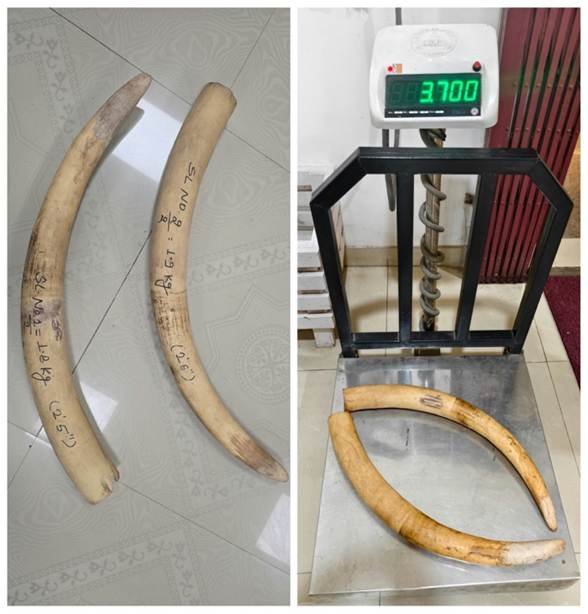
The Directorate of Revenue Intelligence issued an enforcement report detailing the seizure of elephant tusks during a wildlife trafficking operation near Guwahati, Assam. This action applies to law enforcement agencies,…
Pune zoo workers at centre of India’s zoonotic disease tracking through a workshop and health check-up camp for stray dogs, wildlife, and zoonotic diseases held at Rajiv Gandhi Zoological Park…
The Directorate of Revenue Intelligence issued a seizure report detailing how officers foiled an attempt to smuggle live reptiles into India at Trichy Airport. The action applies to international passengers…
Get Animal Writes updates
News, important developments and practical guides — no spam.