
From letters to the Supreme Court to a year-round resource for animals. Read the story

Human elephant conflict rose sharply in Karnataka, study finds

Human elephant conflict rose sharply in Karnataka, study finds

A study in the Journal of Geomatics found 1,22,986 human–elephant conflict incidents recorded across eight Karnataka districts from 2019 to 2023. Researchers analysed geo-tagged data from the e-Parihara web portal of the Karnataka Forest Department covering the Southern Western Ghats region. Kodagu district recorded the highest cases and compensation. Cases rose from 8,184 in 2019 to 30,912 in 2023, while compensation increased from ₹53.7 million to ₹390.4 million, totalling ₹1,050.5 million over five years. Districts within the Western Ghats were distinguished from those outside such as Mandya and Ramanagara to understand geographical dynamics. The study categorised damage into six types including crop loss, property damage, and human injury or death. It identified 1,998 conflict-prone villages, classifying 26.1% as Very High and 35.4% as High hotspots, with 9.4% as New or Emerging Hotspots. The authors suggest the village-level hotspot database supports targeted habitat management and policy interventions aligned with the Ministry of Environment, Forest and Climate Change 2023 mitigation guidelines, emphasising early warning and rapid response systems.

Questions about the human elephant conflict study in Karnataka

Animal welfare FAQ

G.M. Pavithra, G.V. Venkataramana, Shaik Vazeed Pasha and others carried out the study, titled “Geospatial Quantification of Human–Elephant Conflict Hotspots in the Southern Western Ghats”. Read the study.

The study was published in Journal of Geomatics on . See it in the journal.

A study in the Journal of Geomatics found 1,22,986 human–elephant conflict incidents recorded across eight Karnataka districts from 2019 to 2023. Read the full study.

Sources

Study: Geospatial Quantification of Human–Elephant Conflict Hotspots in the Southern Western Ghats by G.M. Pavithra, G.V. Venkataramana, Shaik Vazeed Pasha et al. in Journal of Geomatics Read the original (opens in a new tab)

Summary written by Animal Writes. Read the original before relying on it.

More research

  • Human Wildlife Conflict in Kerala: Spatial Patterns and Community Perceptions in Selected Forest Fringe Areas

    Research

    Human Wildlife Conflict in Kerala: Spatial Patterns and Community Perceptions in Selected Forest Fringe Areas

    A study found Wayanad district accounted for 17 of 42 recorded human deaths from human-wildlife conflict in Kerala between 2021 and 2025, with Asian elephants linked to 27 fatalities. Researchers from CHRIST (Deemed to be University) in Bengaluru mapped fatalities using newspaper archives and GIS tools and conducted structured interviews with 50 residents in Mulli, Sholayur and settlements near Chimmini Dam during the same period. The authors found avoidance of night-time outdoor movement (mean score 4.22) and worry for family safety (3.84) were common fear responses, while sleep disturbance scored 3.24. Educational impacts were limited among ten respondents with school-going children. Compensation awareness varied from 30.8% among those without formal schooling to 83.3% among graduates, and low awareness made up 42.1% of 76 cited insurance barriers. Forest Department incident response rated 4.38 versus 2.24 for government conflict-control measures. The researchers suggest regular upkeep of preventive infrastructure and clearer information on financial support schemes deserve attention.
  • Two light brown cows standing behind a barbed-wire fence on a field, trees and a house behind them under an evening sky.

    Guide

    Who regulates animal welfare in India

    Who decides what for animals in India: the ministry, AWBI, CCSEA and lab committees, state boards and district SPCAs, forest departments, police and courts.

From the Library

  • 45 live reptiles seized at Trichy airport, 2 arrested

    Official Release

    45 live reptiles seized at Trichy airport, 2 arrested

    The Directorate of Revenue Intelligence issued a seizure report detailing how officers foiled an attempt to smuggle live reptiles into India at Trichy Airport. The action applies to international passengers and wildlife smugglers operating through airports. According to Free Press Journal, officers intercepted two Indian passengers arriving from Bangkok via Colombo on 26 Oct 2026. A systematic examination of passenger baggage led to the recovery of forty-five live reptiles concealed inside twenty-seven food packets while the sedated animals remained hidden. The seized animals comprised twenty-three Corn Snakes, sixteen Ball Pythons, five Argentine Black and White Tegus, and one Snow White Iguana. Two passengers faced arrest by the Air Intelligence Unit, Trichy, under the provisions of the Customs Act, 1962, and the recovered wildlife went to the unit for further necessary action. In practice, this means travellers attempting to transport animals illegally face baggage searches, confiscation of concealed wildlife, and arrest under federal customs laws. Readers can report suspected wildlife trafficking activity to customs authorities and airport intelligence units.

  • A thick stack of printed papers on a wooden desk by a window, with a binder clip and a pencil beside it.

    Rule

    Draft Prevention of Cruelty to Animals (Control and Supervision of Experiment, Breeding and Trading of Laboratory Animals) Rules, 2026 (GSR 864E)

    The Committee for Control and Supervision of Experiments on Animals issued the Draft Laboratory Animals Rules, 2026 under the Prevention of Cruelty to Animals Act, 1960. The notification, issued on 30 Sep 2026, sets out updated standards for scientific and educational experiments involving animals. The new framework will replace India's older 1968 and 1998 rules on experiments on animals. Under the proposed system, each experiment would be classed as non-recovery, mild, moderate or severe. A laboratory's own institutional animal ethics committee would be permitted to approve mild and moderate procedures. The Committee for Control and Supervision of Experiments on Animals would retain approval authority for severe and non-recovery procedures performed on animals positioned above rodents and rabbits. Some farm animals, fish and birds could come from the open market with the approval of the ethics committee. The public and interested stakeholders can send formal objections or suggestions regarding the draft text to the Committee for Control and Supervision of Experiments on Animals until 5 Nov 2026.

  • Human wildlife conflict centre and portal launched

    Official Release

    Human wildlife conflict centre and portal launched

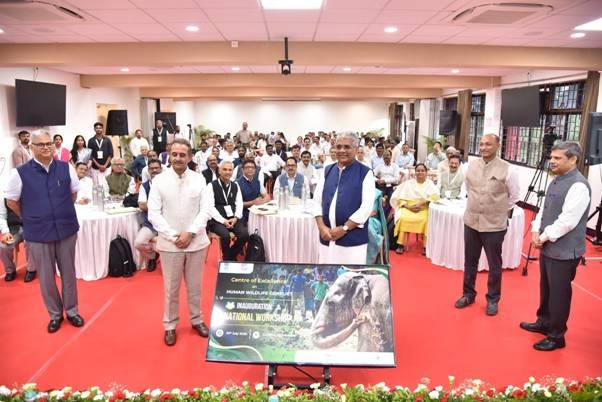
    On 10 Jul 2026, the Union Environment Minister inaugurated a Centre of Excellence for human-wildlife conflict at the Wildlife Institute of India’s SACON campus in Coimbatore. The minister also launched a National Human-Wildlife Conflict Portal on the same day. This newly established center will serve as a national hub for research, innovation, policy support, capacity building, and dissemination of best practices. During the event, officials gathered to deliberate on effective strategies for mitigating human-wildlife conflict and promoting coexistence.

Get Animal Writes updates

News, important developments and practical guides — no spam.

Newsletter

Email me Animal Writes updates. I can unsubscribe at any time.