From letters to the Supreme Court to a year-round resource for animals. Read the story

Who regulates animal welfare in India

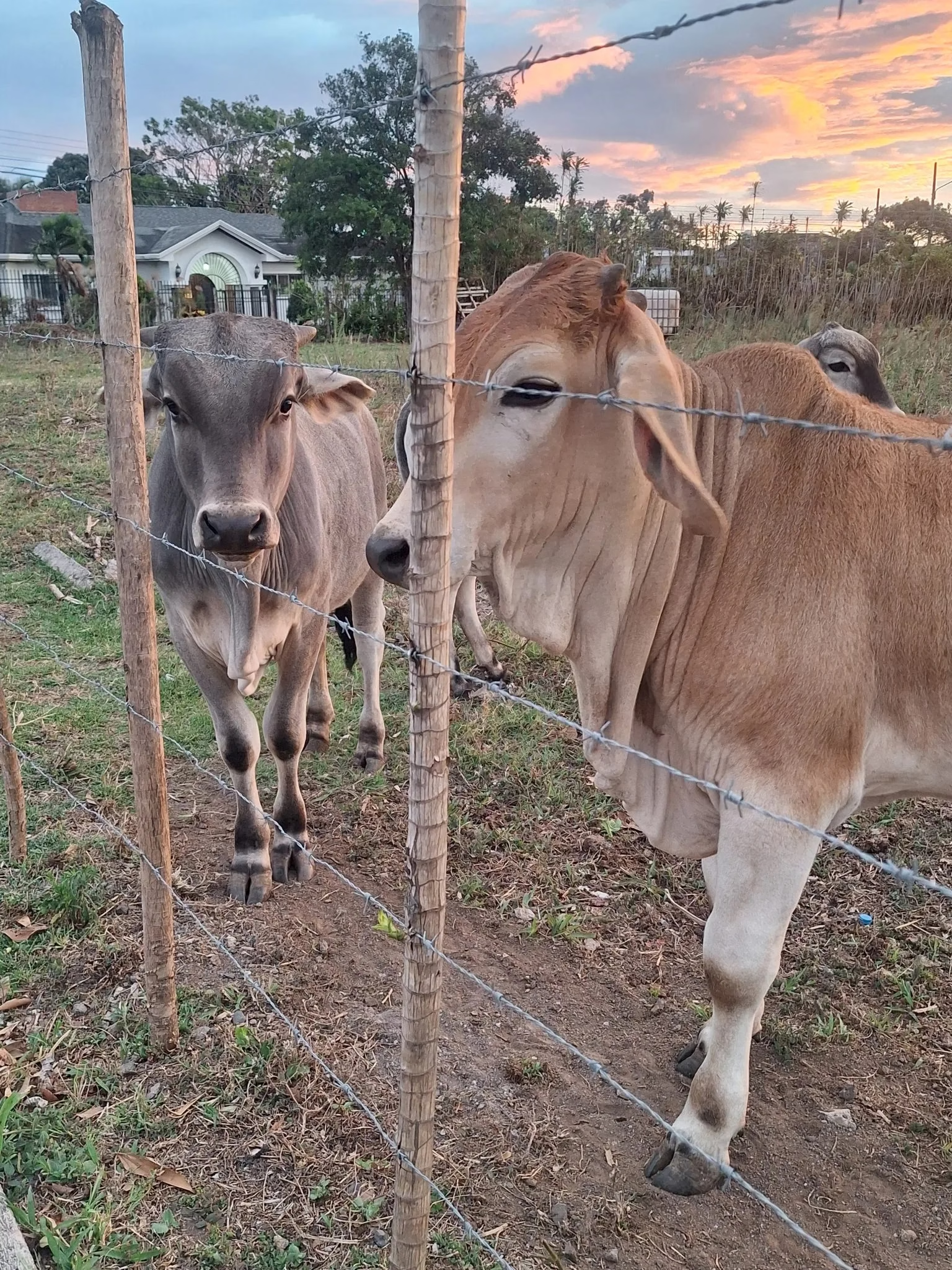
Two light brown cows standing behind a barbed-wire fence on a field, trees and a house behind them under an evening sky.

Animal welfare in India is regulated mainly by the Department of Animal Husbandry and Dairying, through the Animal Welfare Board of India (AWBI) and the Committee for Control and Supervision of Experiments on Animals (CCSEA). States add their own animal welfare boards and district SPCAs. Wild animals fall under forest departments, and cruelty is a crime for the police.

The ministry

The Department of Animal Husbandry and Dairying, in the Ministry of Fisheries, Animal Husbandry and Dairying, is in charge of the main law, the Prevention of Cruelty to Animals Act, 1960. Both AWBI and CCSEA come under it. For the laws themselves, read animal welfare laws in India, in plain words.

Animal Welfare Board of India (AWBI)

AWBI is a statutory body set up in 1962 under the PCA Act. It advises the government on animal welfare law and rules, recognises animal welfare organisations and gaushalas, and takes complaints through an online Grievance form. Read Animal Welfare Board of India (AWBI): complaints, recognition and contact.

CCSEA, formerly CPCSEA: experiments on animals

CCSEA, set up under Section 15 of the PCA Act, controls experiments on animals. It registers labs that breed or use animals, places its nominees on each lab’s ethics committee and approves experiments on large animals. It was called CPCSEA until . Read CPCSEA full form, why it is now CCSEA, and what it does.

IAEC: each lab’s own committee

Every establishment registered with CCSEA has an Institutional Animals Ethics Committee (IAEC). Today it approves experiments on small animals. Under the 2026 draft rules it would approve all mild and moderate experiments itself. Read IAEC full form, members and what it approves and who approves an animal experiment under the draft rules.

State Animal Welfare Boards and district SPCAs

Each state has a State Animal Welfare Board. Pet shops and dog breeders must register with it (Pet Shop Rules, 2018; Dog Breeding and Marketing Rules, 2017), and you can inform it of cruelty. In every district, a Society for the Prevention of Cruelty to Animals (SPCA) is meant to make sure the PCA Act is carried out locally: on AWBI asked every state and union territory to set one up, or revive it, in each district (AWBI circular). Find SPCAs and other groups near you in the Directory.

Wild animals and birds

Wild animals and many native birds are protected under the Wild Life (Protection) Act, 1972, which comes under the Ministry of Environment, Forest and Climate Change. Report captive or injured wildlife to the state forest department. Organised wildlife crime, such as trafficking, is the work of the Wildlife Crime Control Bureau, a statutory body of the same ministry.

Police and courts

Cruelty to animals is a crime. Killing, poisoning or maiming an animal is an offence under Section 325 of the Bharatiya Nyaya Sanhita, 2023, so the police can register an FIR. Read how to report animal cruelty and file an FIR. Courts decide how the laws apply: see the Supreme Court’s stray dog orders, explained.

Who does what

BodyLawWhat it decidesHow to reach it
Department of Animal Husbandry and DairyingPCA Act, 1960The law and the rules under itThrough AWBI and CCSEA
AWBIPCA Act, Section 4Advice, recognition of groups, complaintsGrievance form on awbi.gov.in; office 0129-2555700
CCSEAPCA Act, Section 15Labs, large-animal experimentsccsea.gov.in
IAEC1998 Rules (2026 draft)Experiments in its own labThrough the lab
State Animal Welfare BoardRules under the PCA ActPet shops, breeders, state mattersState government
District SPCAPCA ActCarrying out the PCA Act in the districtIts Directory listing, where one exists
State forest departmentWild Life (Protection) Act, 1972Wild animals and birdsState forest department
PoliceBNS 2023, PCA ActCrimes against animalsPolice station, 112

Questions and answers

This guide is general information, not legal advice.

Questions about who regulates animal welfare in India

Animal welfare FAQ

The Department of Animal Husbandry and Dairying, through the Animal Welfare Board of India and CCSEA, with State Animal Welfare Boards and district SPCAs; wild animals come under the state forest departments.

A Society for the Prevention of Cruelty to Animals: a district body meant to make sure the Prevention of Cruelty to Animals Act, 1960 is carried out locally. On 12 Feb 2026 AWBI asked every state and union territory to have one in each district.

It registers pet shops and dog breeders under the rules of 2018 and 2017, and you can inform it of cruelty in the state.

The state forest departments, under the Wild Life (Protection) Act, 1972. Organised wildlife crime is handled by the Wildlife Crime Control Bureau.

Sources

By Animal Writes

More guides

From the Library

  • A thick stack of printed papers on a wooden desk by a window, with a binder clip and a pencil beside it.

    Rule

    Draft Prevention of Cruelty to Animals (Control and Supervision of Experiment, Breeding and Trading of Laboratory Animals) Rules, 2026 (GSR 864E)

    The Committee for Control and Supervision of Experiments on Animals issued the Draft Laboratory Animals Rules, 2026 under the Prevention of Cruelty to Animals Act, 1960. The notification, issued on 30 Sep 2026, sets out updated standards for scientific and educational experiments involving animals. The new framework will replace India's older 1968 and 1998 rules on experiments on animals. Under the proposed system, each experiment would be classed as non-recovery, mild, moderate or severe. A laboratory's own institutional animal ethics committee would be permitted to approve mild and moderate procedures. The Committee for Control and Supervision of Experiments on Animals would retain approval authority for severe and non-recovery procedures performed on animals positioned above rodents and rabbits. Some farm animals, fish and birds could come from the open market with the approval of the ethics committee. The public and interested stakeholders can send formal objections or suggestions regarding the draft text to the Committee for Control and Supervision of Experiments on Animals until 5 Nov 2026.

  • A white rat and a grey rat facing each other on wood shavings inside a clear plastic cage.

    Rule

    Administrative (Committee for Control and Supervision of Experiments on Animals) Amendment Rules, 2026

    The Ministry of Fisheries, Animal Husbandry and Dairying issued notification G.S.R. 552(E), setting CCSEA's fees for registering animal facilities, breeding, renewal, ethics committee revision, and protocols on large animals. Published in the Gazette of India under the Prevention of Cruelty to Animals Act, 1960, the document establishes processing fees of 12,000 rupees for small and large animal registration and small animal facility amendments. Breeding registration for in-house use costs 18,000 rupees for small animals and 30,000 rupees for large animals, while trade breeding is 30,000 rupees for both. Renewal costs 3,000 rupees, revision of the Institutional Animal Ethics Committee is 1,200 rupees, and large animal educational protocols cost 1,200 rupees per protocol, with non-educational protocols costing 6,000 rupees.

  • Veterinary vaccine testing lab expanded at Baghpat

    Official Release

    Veterinary vaccine testing lab expanded at Baghpat

    The Ministry of Health and Family Welfare issued a notification amending the Drugs Rules, 1945, to expand veterinary vaccine testing functions at the Central Drugs Laboratory. Published under Gazette Notification G.S.R. 65(E) on the 28 Jan 2026, under the Drugs and Cosmetics Act, 1940, the update applies to the Central Drugs Laboratory at the Chaudhary Charan Singh–National Institute of Animal Health located in Baghpat, Uttar Pradesh. The rule expands the institute's testing capacity from only two veterinary vaccines to 42 veterinary vaccines, covering biologicals used for dogs, horses, poultry and livestock. In practice, this enhancement helps streamline regulatory clearance, reduce testing timelines for manufacturers, and ensure quality-assured vaccines reach the market for animal welfare.

Get Animal Writes updates

News, important developments and practical guides — no spam.

Newsletter

Email me Animal Writes updates. I can unsubscribe at any time.