
From letters to the Supreme Court to a year-round resource for animals. Read the story

Human Wildlife Conflict in Kerala: Spatial Patterns and Community Perceptions in Selected Forest Fringe Areas

Human Wildlife Conflict in Kerala: Spatial Patterns and Community Perceptions in Selected Forest Fringe Areas

A study found Wayanad district accounted for 17 of 42 recorded human deaths from human-wildlife conflict in Kerala between 2021 and 2025, with Asian elephants linked to 27 fatalities. Researchers from CHRIST (Deemed to be University) in Bengaluru mapped fatalities using newspaper archives and GIS tools and conducted structured interviews with 50 residents in Mulli, Sholayur and settlements near Chimmini Dam during the same period. The authors found avoidance of night-time outdoor movement (mean score 4.22) and worry for family safety (3.84) were common fear responses, while sleep disturbance scored 3.24. Educational impacts were limited among ten respondents with school-going children. Compensation awareness varied from 30.8% among those without formal schooling to 83.3% among graduates, and low awareness made up 42.1% of 76 cited insurance barriers. Forest Department incident response rated 4.38 versus 2.24 for government conflict-control measures. The researchers suggest regular upkeep of preventive infrastructure and clearer information on financial support schemes deserve attention.

Questions about the wildlife conflict in Kerala study

Animal welfare FAQ

Arjun U. Nair, M Amalraj, S Sumith Satheendran and others carried out the study, titled “Human-Wildlife Conflict in Kerala: Spatial Patterns and Community Perceptions in Selected Forest-Fringe Areas”. Read the study.

The study was published in Asian Basic and Applied Research Journal on . See it in the journal.

A study found Wayanad district accounted for 17 of 42 recorded human deaths from human-wildlife conflict in Kerala between 2021 and 2025, with Asian elephants linked to 27 fatalities. Read the full study.

Sources

Study: Human-Wildlife Conflict in Kerala: Spatial Patterns and Community Perceptions in Selected Forest-Fringe Areas by Arjun U. Nair, M Amalraj, S Sumith Satheendran et al. in Asian Basic and Applied Research Journal Read the original (opens in a new tab)

Summary written by Animal Writes. Read the original before relying on it.

More research

  • Human elephant conflict rose sharply in Karnataka, study finds

    Research

    Human elephant conflict rose sharply in Karnataka, study finds

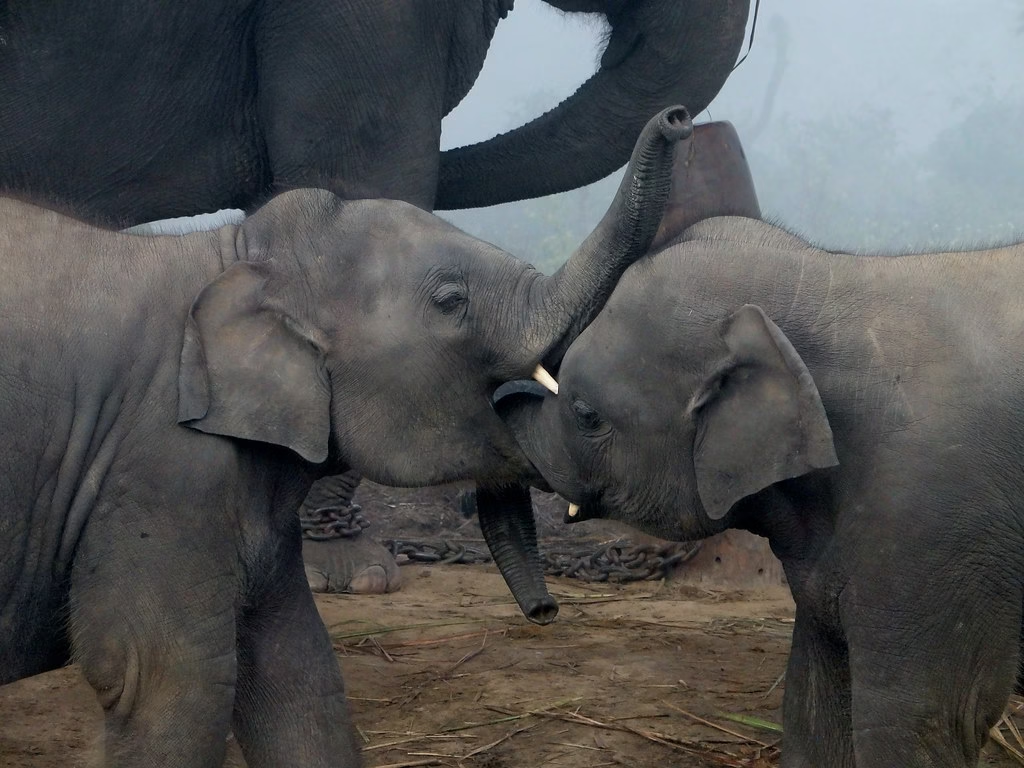
    A study in the Journal of Geomatics found 1,22,986 human–elephant conflict incidents recorded across eight Karnataka districts from 2019 to 2023. Researchers analysed geo-tagged data from the e-Parihara web portal of the Karnataka Forest Department covering the Southern Western Ghats region. Kodagu district recorded the highest cases and compensation. Cases rose from 8,184 in 2019 to 30,912 in 2023, while compensation increased from ₹53.7 million to ₹390.4 million, totalling ₹1,050.5 million over five years. Districts within the Western Ghats were distinguished from those outside such as Mandya and Ramanagara to understand geographical dynamics. The study categorised damage into six types including crop loss, property damage, and human injury or death. It identified 1,998 conflict-prone villages, classifying 26.1% as Very High and 35.4% as High hotspots, with 9.4% as New or Emerging Hotspots. The authors suggest the village-level hotspot database supports targeted habitat management and policy interventions aligned with the Ministry of Environment, Forest and Climate Change 2023 mitigation guidelines, emphasising early warning and rapid response systems.
  • Rabies surveillance in India needs integrated system, study finds

    Research

    Rabies surveillance in India needs integrated system, study finds

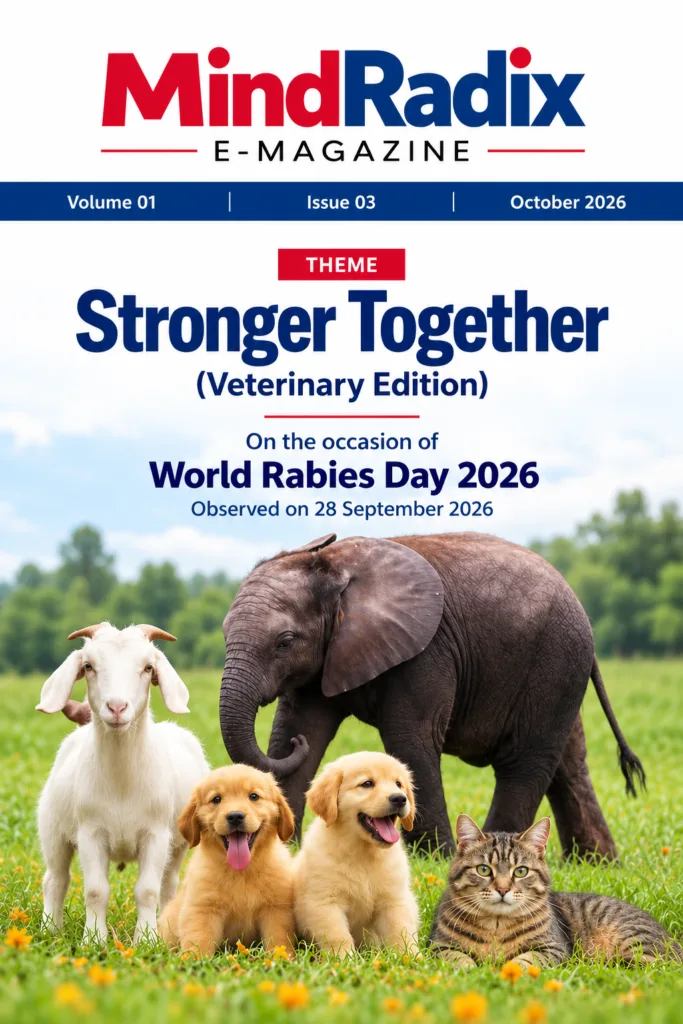
    An effective rabies surveillance system in India must connect multiple elements early enough to ensure a prompt response. The analysis published in Volume 1 Issue 3 across pages 25 to 41 argues that rabies surveillance must connect bite incidents, animal tracking, laboratory data, treatment pathways, vaccination campaigns and geographic locations early enough for an effective response. India already holds important pieces of this architecture. The next step described by the authors is making these components interoperable, timely and useful at the district level. They describe a system that should not merely count cases after they occur, but instead integrate data flows across the entire prevention and response chain. The article frames this integration as essential for moving away from reactive case counting toward proactive surveillance that can guide interventions where they are needed most.

  • Elephant attacks in Nagaon, Assam, peak at rice harvest

    Research

    Elephant attacks in Nagaon, Assam, peak at rice harvest

    Research on human-elephant conflict in Assam found that 23.35% of villages in Nagaon District reported incidents, with attacks peaking during the December rice harvest. A study published in Scientific Reports analyzed twenty-one years of compensation records from Nagaon District in Assam, India, covering the years 1999 through 2020. The authors evaluated the spatial, seasonal, and institutional structure of the conflict by applying Getis-Ord Gi and Local Moran's I statistics to 1,915 georeferenced incidents across 1,032 villages. The team also examined 1,788 records containing complete financial data using non-parametric correlation, Theil-Sen regression, and segmentation by policy regime. The study found that conflict occurred in 241 villages, yielding the 23.35% figure. Incidents concentrated along the Karbi Anglong foothills, and human casualty clusters were found in the northeastern part of the district. Attacks peaked in December at 23.29%, aligning with the Sali rice harvest. Property and crop damage formed over 88% of claims while receiving under 28% of disbursed funds, whereas human fatalities made up 6.26% of claims and took 68.37% of funds. Claim volume explained 31.8% of the payout variation, with rate revisions accounting for the rest. The authors suggest that mitigation should be spatially targeted and seasonally adaptive, and compensation should change into a tiered, need-opedic model recognizing chronic livelihood loss alongside catastrophic outcomes.

From the Library

  • Human wildlife conflict centre and portal launched

    Official Release

    Human wildlife conflict centre and portal launched

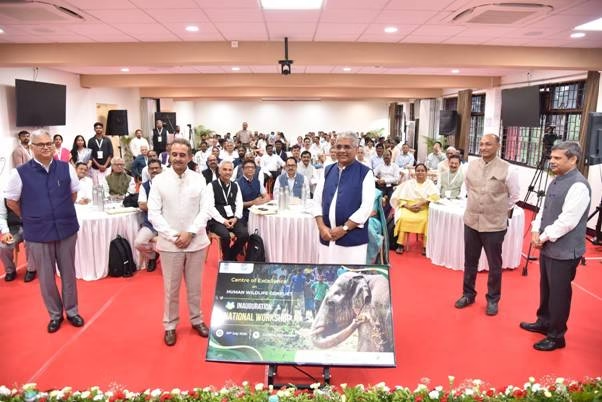
    On 10 Jul 2026, the Union Environment Minister inaugurated a Centre of Excellence for human-wildlife conflict at the Wildlife Institute of India’s SACON campus in Coimbatore. The minister also launched a National Human-Wildlife Conflict Portal on the same day. This newly established center will serve as a national hub for research, innovation, policy support, capacity building, and dissemination of best practices. During the event, officials gathered to deliberate on effective strategies for mitigating human-wildlife conflict and promoting coexistence.

  • 28th meeting of the Wildlife Institute of India Society

    Official Release

    28th meeting of the Wildlife Institute of India Society

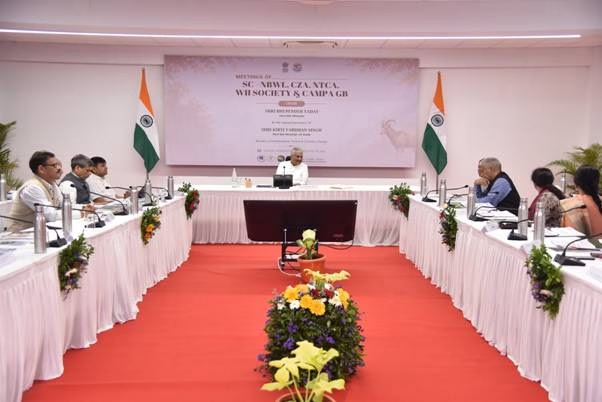
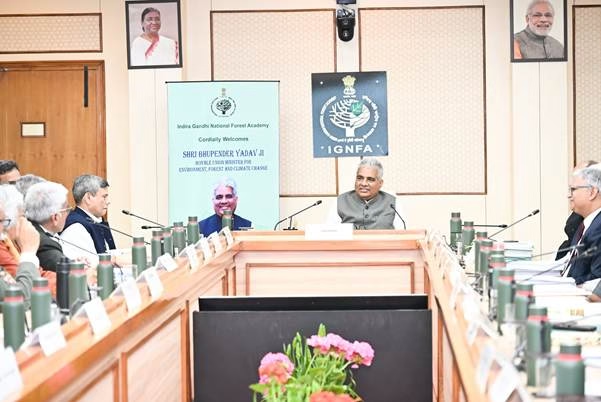
    The Union Minister for Environment, Forest and Climate Change, Shri Bhupender Yadav, chaired the 28th meeting of the reconstituted Wildlife Institute of India (WII) Society at the Central Academy for State Forest Service in Coimbatore. This meeting marked the first gathering since the society's reconstitution for a three-year term. Shri Yadav emphasized the need to align WII’s research, training, and policy-support frameworks with the vision of ‘Viksit Bharat @ 2047’. He stated the importance of focusing on human-wildlife conflict resolution and capacity building. The meeting also featured an overview of WII's achievements and involved participation from various officials and stakeholders in wildlife conservation.

  • 90th meeting of the National Board for Wildlife committee

    Official Release

    90th meeting of the National Board for Wildlife committee

    The Union Minister for Environment, Forest and Climate Change chaired the 90th meeting of the Standing Committee of the National Board for Wildlife in Dehradun to address wildlife conservation. The statutory body constituted under the Wild Life (Protection) Act, 1972 reviewed infrastructure proposals across sectors such as roads, drinking water supply, transmission lines, defence, and irrigation. During the proceedings, a Memorandum of Understanding was signed between the Forest Survey of India and the Bhaskaracharya National Institute for Space Applications and Geo-informatics to strengthen geospatial technologies, remote sensing, and artificial intelligence and machine learning tools in forest fire management and wildlife conservation. The committee also reviewed progress on decisions from the 7th meeting of the National Board for Wildlife regarding species recovery and habitat management. The agenda covered environmental flows in the River Chambal for riverine species like dolphins and gharials during lean seasons. The participants examined the conservation of grasslands and rangelands for biodiversity and pastoral livelihoods, along with the ecological dependence of nomadic communities on Protected Areas. The meeting addressed the conservation status of the wild water buffalo and recommended a conservation action plan for the species.

Get Animal Writes updates

News, important developments and practical guides — no spam.

Newsletter

Email me Animal Writes updates. I can unsubscribe at any time.