A study in the Journal of Entomology and Zoology Studies found livestock loss, psychological stress, and fear were the major socio-economic impacts of human-leopard conflict in and around Ramgarh Visdhari Tiger Reserve in Rajasthan’s Bundi district. The researchers surveyed 110 villages across the reserve’s six forest ranges — 15 in Ramgarh, 15 in Bhopatpura, 14 in Jaitpura, 32 in Indragarh, 15 in Keshorai Patan, and 19 in Itawa — from to . They used structured questionnaires administered personally in the local language and recorded digitally via the Epicollect5 mobile application with geographical coordinates. Respondents were livestock owners, farmers, herders, and long-term residents with knowledge of leopard interactions. The 1,501.88 km² reserve forms a transition zone between the Vindhyan and Aravalli hill systems, featuring rugged hills, plateaus, and valleys, and connects ecologically with Ranthambore Tiger Reserve to the northeast and Mukundra Hills Tiger Reserve to the south, with the Mez River flowing through it. The authors grouped recurring circumstances around leopard encounters and livestock depredation to identify conflict drivers, and categorised reported consequences by socio-economic impact type. Monetary estimates of livestock losses were excluded because reported financial values were considered unreliable. The study suggests conflict management should consider local ecological conditions, livestock husbandry, habitat characteristics, and community responses rather than relying on translocation, which research has questioned as a long-term solution.
Questions about the Ramgarh Visdhari Tiger reserve study in Rajasthan
Aman Vardhan, Kapil Kumar, Suhotrasingh K Rajput and others carried out the study, titled “Drivers and socio-economic impacts of human–leopard conflict in and around Ramgarh Visdhari Tiger Reserve, Rajasthan, India”. Read the study.
The study was published in Journal of Entomology and Zoology Studies on . See it in the journal.
Sources
Study: Drivers and socio-economic impacts of human–leopard conflict in and around Ramgarh Visdhari Tiger Reserve, Rajasthan, India by Aman Vardhan, Kapil Kumar, Suhotrasingh K Rajput et al. in Journal of Entomology and Zoology Studies ·Read the original ↗ (opens in a new tab)
Summary written by Animal Writes. Read the original before relying on it.
The study finds that delayed compensation and fragmented coordination weaken Odisha's framework for human‑elephant conflict, which contributes to an estimated 400 human and over 100 elephant deaths in India. The…
A study in the Journal of Geomatics found 1,22,986 human–elephant conflict incidents recorded across eight Karnataka districts from 2019 to 2023. Researchers analysed geo-tagged data from the e-Parihara web portal…
A study found Wayanad district accounted for 17 of 42 recorded human deaths from human-wildlife conflict in Kerala between 2021 and 2025, with Asian elephants linked to 27 fatalities. Researchers…
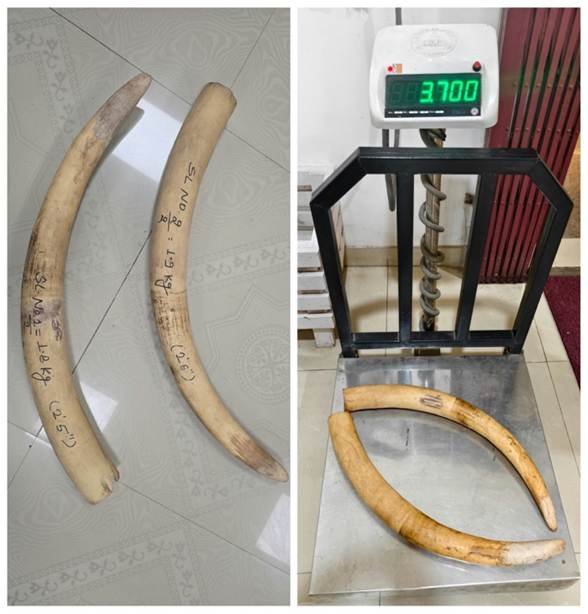
The Directorate of Revenue Intelligence issued an enforcement report detailing the seizure of elephant tusks during a wildlife trafficking operation near Guwahati, Assam. This action applies to law enforcement agencies,…
Pune zoo workers at centre of India’s zoonotic disease tracking through a workshop and health check-up camp for stray dogs, wildlife, and zoonotic diseases held at Rajiv Gandhi Zoological Park…
The Directorate of Revenue Intelligence issued a seizure report detailing how officers foiled an attempt to smuggle live reptiles into India at Trichy Airport. The action applies to international passengers…
Get Animal Writes updates
News, important developments and practical guides — no spam.