
Human wildlife conflict costs in the Garhwal Himalaya

Human wildlife conflict costs in the Garhwal Himalaya

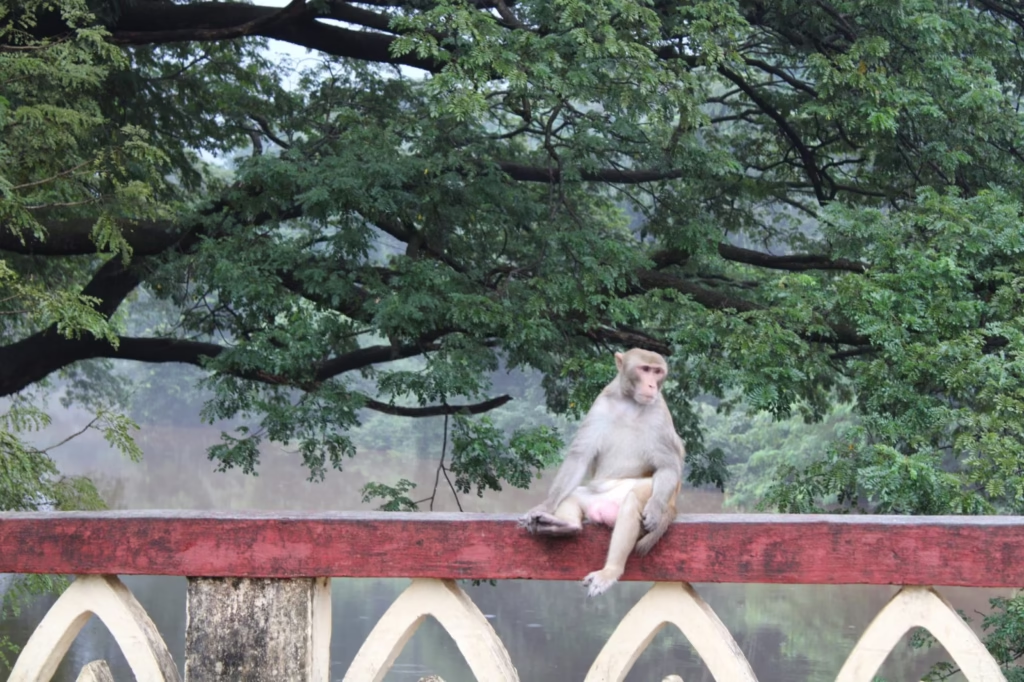
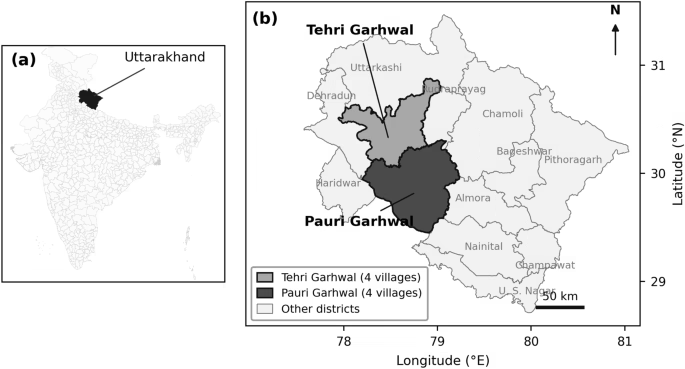
A 2026 study of 48 households in the Garhwal Himalaya found that the mix of wildlife species causing conflict determines economic loss more than how close villages are to forest. The researchers from the College of Forestry, VCSG Uttarakhand University of Horticulture and Forestry surveyed eight forest‑fringe villages in Tehri Garhwal and Pauri Garhwal districts between March and , recording conflict type, species involved, seasonality, economic loss, mitigation practice and government support. All households reported loss, with wild boar, Indian crested porcupine, Himalayan black bear, rhesus macaque and leopard comprising the assemblage. Leopard conflict was reported by every household in Pauri Garhwal but only by 29.2 % of households in Tehri Garhwal (p < 0.001), while rhesus macaque reports were higher in the latter district. Total reported loss was US $75,179, of which Pauri Garhwal bore US $70,895 and Tehri Garhwal US $4,284, even though Pauri villages were on average farther from forest (0.83 km vs 0.31 km). Where large carnivores dominated, livestock depredation and medical costs were the main losses and guard‑dog use was higher (41.7 % vs 12.5 %, p = 0.049). Conflict peaked in summer, occurred also in winter, and only 31.3 % of households received any government support. The authors state, “Forest proximity did not order the economic outcome; the species assemblage did,” and recommend that mitigation be zoned by conflict‑species assemblage at sub‑district scale rather than allocated uniformly by distance to forest.

Questions about the human wildlife conflict in Garhwal study

Animal welfare FAQ

Shweta Rawat, Manoj Kumar Riyal, Ekta Belwal and others carried out the study, titled “Species assemblage rather than forest proximity shapes the cost of human–wildlife conflict in the Garhwal Himalaya, India”. Read the study.

The study was published in Tropical Ecology on . See it in the journal.

A 2026 study of 48 households in the Garhwal Himalaya found that the mix of wildlife species causing conflict determines economic loss more than how close villages are to forest. Read the full study.

Sources

Study: Species assemblage rather than forest proximity shapes the cost of human–wildlife conflict in the Garhwal Himalaya, India by Shweta Rawat, Manoj Kumar Riyal, Ekta Belwal et al. in Tropical Ecology Read the original (opens in a new tab)

Summary written by Animal Writes. Read the original before relying on it.

More research

From the Library

Get Animal Writes updates

News, important developments and practical guides — no spam.

Newsletter
+91

Email me Animal Writes updates. I can unsubscribe at any time.