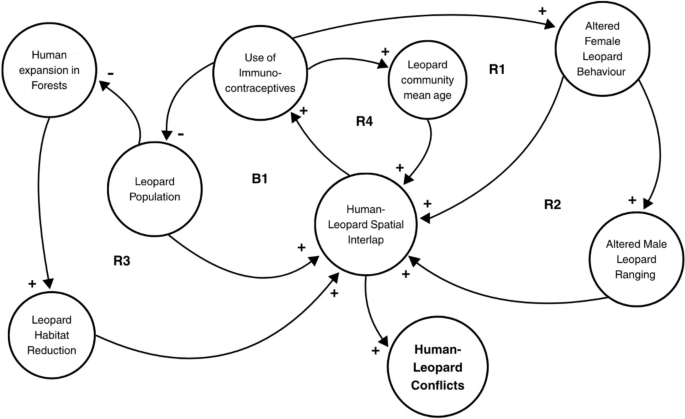
The Indian government is implementing immune contraceptives to manage rising conflicts between humans and leopards, prompting discussions among wildlife experts, conservation organizations, officials, and local communities regarding the ecological and ethical implications of this intervention. The scientific literature discusses the ecological and ethical costs of anthropocentric wildlife management, alongside the governance of these wild animals. The piece also presents alternative methods for coexistence that involve both humans and wildlife within shared socio-ecological systems. Between 2018 and 2022, the leopard population in India grew at a rate of 1.08 percent per year, though growth varied regionally with states like Maharashtra and Tamil Nadu experiencing a roughly 1.5 percent increase, while the Shivalik Hills and Gangetic plains witnessed a 3.4 percent decline each year. In , the use of immuno-contraceptives was approved to manage the leopard population in certain regions of India, following increased public outrage in villages around the Junnar forest in the Pune district of Maharashtra after the deaths of 8 people in 2024 and 5 in 2025 due to leopard attacks. The approved pilot plan involves administering immuno-contraceptives using darts to 125 female leopards in the region to trigger immune system responses that prevent reproduction without requiring surgical methods. Two main classes of immuno-contraceptives are used in wildlife management: porcine zona pellucida vaccines, which inhibit fertilization by preventing sperm-egg binding, and gonadotropin-releasing hormone vaccines, which suppress reproductive hormone production. While the Indian government’s proposed pilot represents the first application of immuno-contraception on an apex predator, the leopard, the long-term effectiveness of localised fertility control may be undermined by continued immigration of leopards from surrounding habitats, and the program raises complex ethical questions concerning animal welfare, stress from darting, potential side effects of hormonal disruption, and broader anthropocentric conservation frameworks.
Pranay Arora carried out the study, titled “Leopard sterilisation in India: The ecological and ethical costs of anthropocentric wildlife management”. Read the study.
The Indian government is implementing immune contraceptives to manage rising conflicts between humans and leopards, prompting discussions among wildlife experts, conservation organizations, officials, and local communities regarding the ecological and ethical implications of this intervention. Read the full study.
Sources
Study: Leopard sterilisation in India: The ecological and ethical costs of anthropocentric wildlife management by Pranay Arora in Ambio ·Read the original ↗ (opens in a new tab)
Summary written by Animal Writes. Read the original before relying on it.
The study finds that delayed compensation and fragmented coordination weaken Odisha's framework for human‑elephant conflict, which contributes to an estimated 400 human and over 100 elephant deaths in India. The…
A study in the Journal of Geomatics found 1,22,986 human–elephant conflict incidents recorded across eight Karnataka districts from 2019 to 2023. Researchers analysed geo-tagged data from the e-Parihara web portal…
A study found Wayanad district accounted for 17 of 42 recorded human deaths from human-wildlife conflict in Kerala between 2021 and 2025, with Asian elephants linked to 27 fatalities. Researchers…
Pune zoo workers at centre of India’s zoonotic disease tracking through a workshop and health check-up camp for stray dogs, wildlife, and zoonotic diseases held at Rajiv Gandhi Zoological Park…
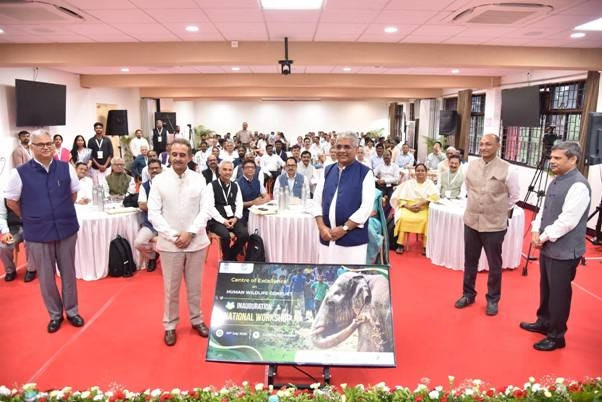
The Union Minister for Environment, Forest and Climate Change, Shri Bhupender Yadav, inaugurated the Centre of Excellence on Human‑Wildlife Conflict and launched the National Human‑Wildlife Conflict Portal on 10 Jul…
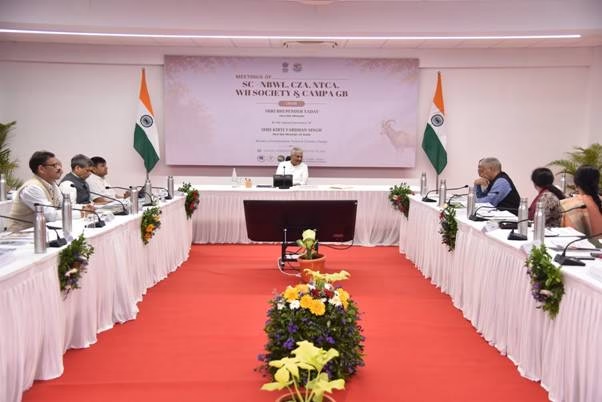
The Wildlife Institute of India Society held its 28th meeting chaired by Union Minister for Environment, Forest and Climate Change Shri Bhupender Yadav. The Union Minister for Environment, Forest and…
Get Animal Writes updates
News, important developments and practical guides — no spam.