A study found high densities of leopards and striped hyenas in Jaipur, India. Urban protected areas provide refuge and continuously abundant resources for wildlife. Researchers evaluated the densities and interactions of leopards and striped hyenas within the Jhalana-Amagarh Conservation Reserve. From May to , researchers deployed 30 paired camera traps and used spatially explicit capture-recapture models to estimate density and individual activity centres. Researchers estimated leopard density at approximately 7.03 individuals per 10 km² and striped hyena density at about 4.06 individuals per 10 km² using camera traps in the Jhalana-Amagarh Conservation Reserve. The activity centres of both species occurred in close proximity and frequently towards the reserve periphery. The study showed the nocturnal activity patterns of both species and their close spatial interactions within the urban protected area. Both species showed high temporal overlap. The findings demonstrate the importance of small protected areas within rapidly expanding cities. Such systems require careful management of food subsidies, habitat quality, and connectivity alongside long-term monitoring of population viability, disease dynamics, and human-wildlife conflict.
Questions about the leopards and striped hyenas study in Jaipur
Riddhi Sondagar, Kamakshi Singh Tanwar, Mohanraj Thangavel and others carried out the study, titled “Carnivores in a metropolitan forest island: first spatial capture-recapture estimates reveal high densities of leopards and striped hyenas in Jaipur, India”. Read the study.
A study found high densities of leopards and striped hyenas in Jaipur, India. Urban protected areas provide refuge and continuously abundant resources for wildlife. Read the full study.
Sources
Study: Carnivores in a metropolitan forest island: first spatial capture-recapture estimates reveal high densities of leopards and striped hyenas in Jaipur, India by Riddhi Sondagar, Kamakshi Singh Tanwar, Mohanraj Thangavel et al. in bioRxiv ·Read the original ↗ (opens in a new tab)
Summary written by Animal Writes. Read the original before relying on it.
The study finds that delayed compensation and fragmented coordination weaken Odisha's framework for human‑elephant conflict, which contributes to an estimated 400 human and over 100 elephant deaths in India. The…
A study in the Journal of Geomatics found 1,22,986 human–elephant conflict incidents recorded across eight Karnataka districts from 2019 to 2023. Researchers analysed geo-tagged data from the e-Parihara web portal…
A study found Wayanad district accounted for 17 of 42 recorded human deaths from human-wildlife conflict in Kerala between 2021 and 2025, with Asian elephants linked to 27 fatalities. Researchers…
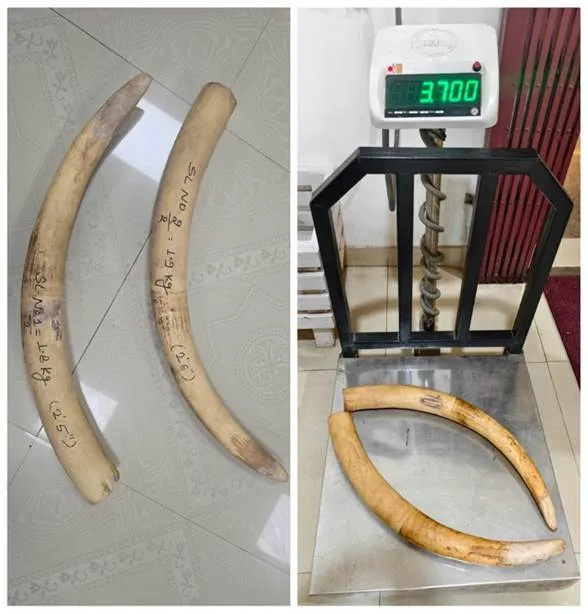
The Directorate of Revenue Intelligence issued an enforcement report detailing the seizure of elephant tusks during a wildlife trafficking operation near Guwahati, Assam. This action applies to law enforcement agencies,…
Pune zoo workers at centre of India’s zoonotic disease tracking through a workshop and health check-up camp for stray dogs, wildlife, and zoonotic diseases held at Rajiv Gandhi Zoological Park…
The Directorate of Revenue Intelligence issued a seizure report detailing how officers foiled an attempt to smuggle live reptiles into India at Trichy Airport. The action applies to international passengers…
Get Animal Writes updates
News, important developments and practical guides — no spam.