
From letters to the Supreme Court to a year-round resource for animals. Read the story

Elephant “Mridula” welcomes new calf as Manas celebrates rare wildlife births

Elephant “Mridula” welcomes new calf as Manas celebrates rare wildlife births

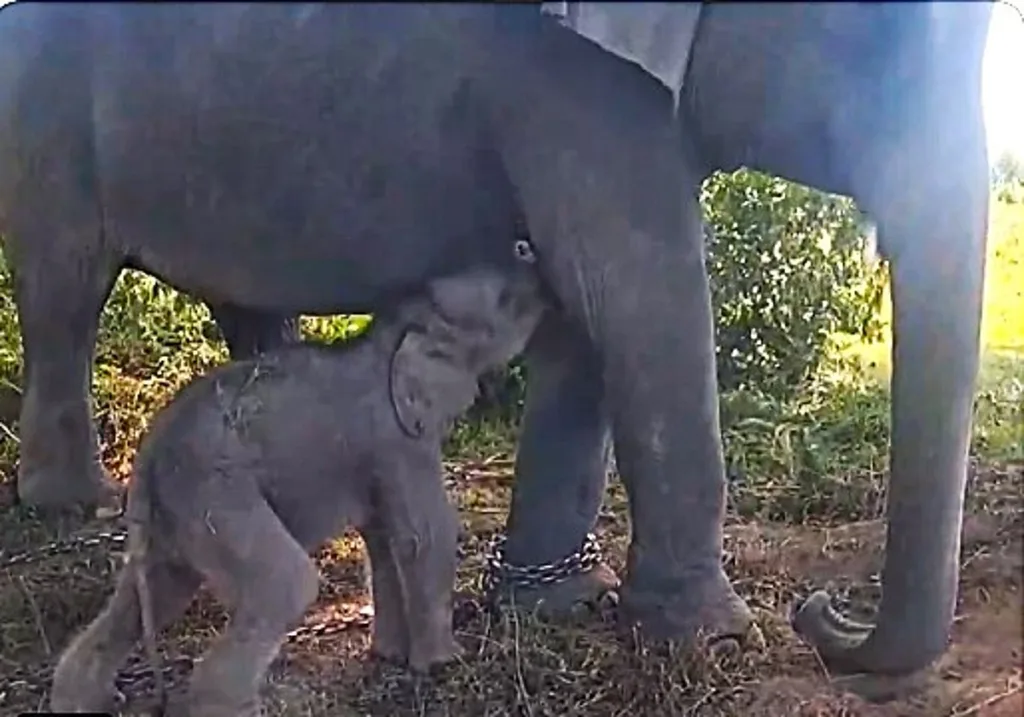
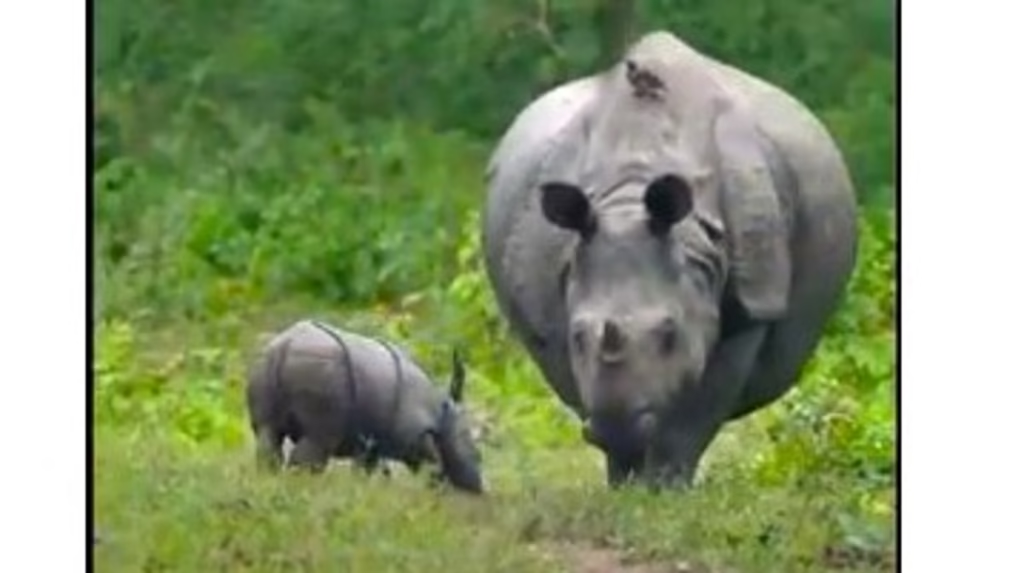
A captive elephant named Mridula gave birth to a healthy male calf at Manas National Park in Baksa, Assam, alongside the historic birth of a greater one-horned rhinoceros calf in the park’s Bansbari range. The forest department monitored the elephant birth, while the rhinoceros calf extended the family of a flood-rescued rhino named Ganga into a three-generation wild lineage. Head Mahout Dandeshwar Boro stated, “The birth has brought immense joy among the staff and mahouts working in the park.” The arrivals occurred as the UNESCO Natural World Heritage Site began its peak tourism season. Assam Chief Minister Himanta Biswa Sarma noted that the three-generation lineage shows the success of conservation efforts for animals rescued from the 2004 Brahmaputra floods and rehabilitated by the Wildlife Trust of India-IFAW Centre for Wildlife Rehabilitation and Conservation. Forest and Climate Change Minister Jayanta Malla Baruah stated that the births demonstrate the importance of sustained care and a secure ecosystem following past habitat degradation.

Sources

Read the original (opens in a new tab)Summary written by Animal Writes. Read the original before relying on it.

More in Disaster and Emergency Rescue

  • Three generations in the wild: rescued rhino ‘Ganga’ becomes a grandmother at Manas

    News

    Three generations in the wild: rescued rhino ‘Ganga’ becomes a grandmother at Manas

    India's 22-year-old rescued rhino Ganga has become a grandmother after the birth of a newborn greater one-horned rhino calf at Manas National Park in Baksa district, Assam. The calf was delivered by Ganga-Ka, the second-generation rhino born to Ganga. Ganga was rescued as a 4-month-old stranded infant from the 2004 Brahmaputra floods in Kaziranga National Park, hand-raised at the Centre for Wildlife Rehabilitation and Conservation, and translocated to Manas National Park in 2007. This birth marks the first three-generation lineage of a rehabilitated rhino in the wild in India. The Assam Chief Minister hailed the event on social media. Dr. Bhaskar Choudhury, Head Veterinarian for the Wildlife Trust of India, stated, "The fact that the second generation of calves is breeding in the wild is a clear indication of the success of our rhino rehabilitation efforts." Poaching and civil unrest wiped out the local rhino population in the 1990s, but sustained conservation work by the Assam Forest Department, Wildlife Trust of India, and IFAW restored the population to over 50 rhinos. Assam Forest Department officials confirmed that frontline protection staff are maintaining a round-the-clock watch on the newborn and mother.
  • UK ministers told not to engage formally with Indian mega zoo after lobbying

    News

    UK ministers told not to engage formally with Indian mega zoo after lobbying

    UK government officials advised ministers against formal engagement with the Greens Zoological Rescue and Rehabilitation Centre, a private mega-zoo housing numerous wild animals in Jamnagar, Gujarat. Foreign, Commonwealth and Development Office diplomats issued this guidance after lobbying by representatives of the facility in Jamnagar, Gujarat. Internal documents showed that officials cautioned against providing a formal platform to the project. The Foreign, Commonwealth and Development Office stated that the facility has acquired species including elephants and leopards for its operations. Officials raised concerns that ministerial involvement could be seen as an official endorsement of the private entity. An internal communication stated that "we should avoid any formal ministerial engagement" to maintain distance from the project. The Foreign, Commonwealth and Development Office recommended that future interactions be limited to technical or informal levels instead of high-level diplomatic support. No hearing or investigation was mentioned.

  • Delhi drops Wildlife SOS from wildlife board over poaching allegations

    News

    Delhi drops Wildlife SOS from wildlife board over poaching allegations

    The Delhi government is removing Wildlife SOS from its wildlife board and ending departmental ties over poaching allegations involving the organisation in Delhi. Environment Minister Sardar Manjinder Singh Sirsa stated that the organisation will be dropped following cases registered in August in Madhya Pradesh concerning alleged wildlife crimes. Activist Ajay Dubey stated that CEO Kartikey Satyanarayan was booked over leopard poaching allegations within the Kuno National Park area. Satyanarayan rejected the allegations in an August statement, asserting that the organisation protects and preserves voiceless creatures. The Central Zoo Authority directed chief wildlife wardens in multiple states to inspect facilities managed by Wildlife SOS over alleged violations of the Wildlife (Protection) Act, 1972, including operating without mandatory approval and failing to submit animal inventories. A formal removal order is to be issued by the Delhi government.

From the Library

  • Human wildlife conflict centre and portal launched

    Official Release

    Human wildlife conflict centre and portal launched

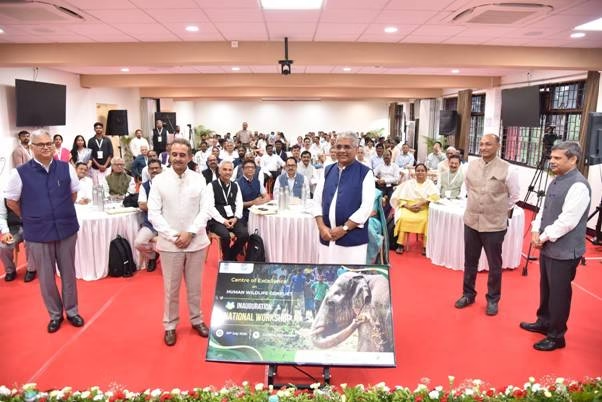
    On 10 Jul 2026, the Union Environment Minister inaugurated a Centre of Excellence for human-wildlife conflict at the Wildlife Institute of India’s SACON campus in Coimbatore. The minister also launched a National Human-Wildlife Conflict Portal on the same day. This newly established center will serve as a national hub for research, innovation, policy support, capacity building, and dissemination of best practices. During the event, officials gathered to deliberate on effective strategies for mitigating human-wildlife conflict and promoting coexistence.

  • 28th meeting of the Wildlife Institute of India Society

    Official Release

    28th meeting of the Wildlife Institute of India Society

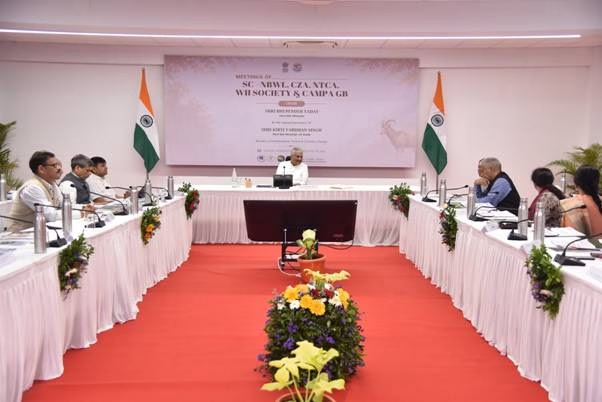
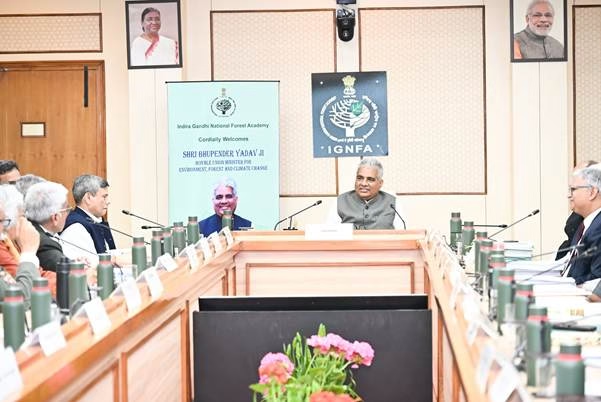
    The Union Minister for Environment, Forest and Climate Change, Shri Bhupender Yadav, chaired the 28th meeting of the reconstituted Wildlife Institute of India (WII) Society at the Central Academy for State Forest Service in Coimbatore. This meeting marked the first gathering since the society's reconstitution for a three-year term. Shri Yadav emphasized the need to align WII’s research, training, and policy-support frameworks with the vision of ‘Viksit Bharat @ 2047’. He stated the importance of focusing on human-wildlife conflict resolution and capacity building. The meeting also featured an overview of WII's achievements and involved participation from various officials and stakeholders in wildlife conservation.

  • 90th meeting of the National Board for Wildlife committee

    Official Release

    90th meeting of the National Board for Wildlife committee

    The Union Minister for Environment, Forest and Climate Change chaired the 90th meeting of the Standing Committee of the National Board for Wildlife in Dehradun to address wildlife conservation. The statutory body constituted under the Wild Life (Protection) Act, 1972 reviewed infrastructure proposals across sectors such as roads, drinking water supply, transmission lines, defence, and irrigation. During the proceedings, a Memorandum of Understanding was signed between the Forest Survey of India and the Bhaskaracharya National Institute for Space Applications and Geo-informatics to strengthen geospatial technologies, remote sensing, and artificial intelligence and machine learning tools in forest fire management and wildlife conservation. The committee also reviewed progress on decisions from the 7th meeting of the National Board for Wildlife regarding species recovery and habitat management. The agenda covered environmental flows in the River Chambal for riverine species like dolphins and gharials during lean seasons. The participants examined the conservation of grasslands and rangelands for biodiversity and pastoral livelihoods, along with the ecological dependence of nomadic communities on Protected Areas. The meeting addressed the conservation status of the wild water buffalo and recommended a conservation action plan for the species.

Get Animal Writes updates

News, important developments and practical guides — no spam.

Newsletter

Email me Animal Writes updates. I can unsubscribe at any time.