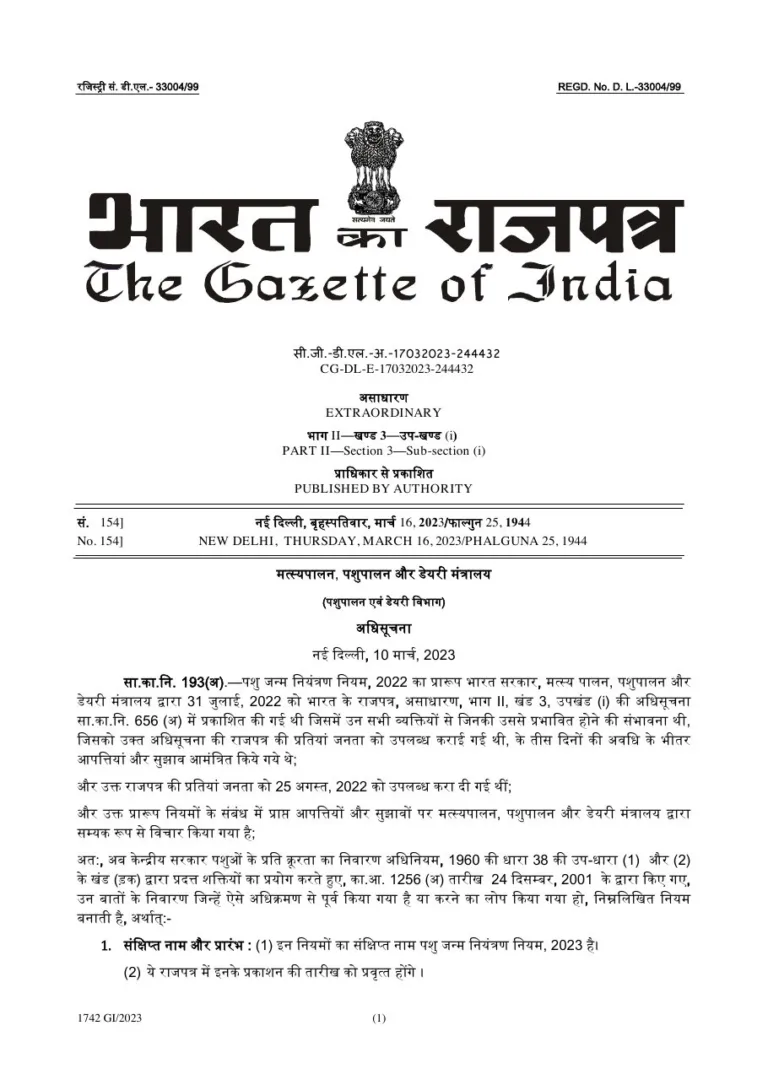
Animal Birth Control (ABC) is the method India uses by law to manage community dog populations humanely. It is set out in the Animal Birth Control Rules, 2023, made under the Prevention of Cruelty to Animals Act, 1960. The central government notified the rules in . They replace the 2001 rules and cover community dogs and cats.
How it works
- Community dogs are caught humanely.
- They are sterilised and vaccinated against rabies.
- They are returned to the same area they were taken from.
Why it works
Sterilised, vaccinated dogs stay in their territory, so they keep unsterilised dogs out. Over time, fewer puppies are born, the population falls and fewer dogs carry rabies.
What the rules say
- Who runs it: local bodies (municipal corporations, municipalities, panchayats), working with organisations recognised by the Animal Welfare Board of India for this work.
- No relocation: sterilised community dogs must not be removed or relocated.
- Feeding: residents’ and apartment owners’ associations are responsible for arranging feeding spots for community animals in their area.
- Monitoring: local committees oversee the programme and handle complaints.
If the rules are not being followed
Write to your local body’s ABC or veterinary department, then your State Animal Welfare Board and the Animal Welfare Board of India. Each city’s official complaint channel is in how to make a stray dog complaint to the municipal corporation.
Read the rules
Animal Birth Control Rules, 2023 (PDF, AWBI). Court orders can affect how the rules are applied; follow the Library.
Questions and answers
This guide is general information, not legal advice. Laws and court orders change; check the Library and the original documents.
 By Animal Writes