In , India’s Supreme Court issued an order creating permanent exclusion zones for sterilized and vaccinated community dogs in institutional areas. This decision, made in , recognized the Catch, Neuter, Vaccinate, and Release method as effective for urban regions. The article analyzes the implications of this two-tiered system in terms of constitutional protections, public health, and shelter capacity. The study examines the order through comparative constitutional analysis of Germany’s proportionality framework, Ecuador’s rights of nature jurisprudence, and Argentina’s individual animal rights doctrine. The authors demonstrate how this system subordinates the constitutional mandate of animal dignity found in Article 51A(g) to institutional expedience. At the same time, the study suggests that the territorial replacement of dogs by unvaccinated populations paradoxically reduces protection for children and patients from rabies. The analysis reveals three interconnected failures regarding constitutional incoherence, epidemiological counterproductivity, and a structural impossibility given the shelter capacity deficit in the country. By tracing the trajectory from August’s constitutional restoration to the reversal in , the research reveals the capacity of judicial populism to create precedents that simultaneously uphold and undermine constitutional principles. The work examines how these legal measures impose obligations that the state cannot fulfill.
Questions about the Supreme Court exclusion zones community dogs study
Bhavya Johari carried out the study, titled “When Animal Welfare Meets Institutional Panic: India's Supreme Court Creates Territorial Exclusion Zones for Community Dogs”. Read the study.
The study was published in LEOH – Journal of Animal Law, Ethics and One Health on . See it in the journal.
In Jan 2026, India's Supreme Court issued an order creating permanent exclusion zones for sterilized and vaccinated community dogs in institutional areas. Read the full study.
Sources
Study: When Animal Welfare Meets Institutional Panic: India's Supreme Court Creates Territorial Exclusion Zones for Community Dogs by Bhavya Johari in LEOH – Journal of Animal Law, Ethics and One Health ·Read the original ↗ (opens in a new tab)
Summary written by Animal Writes. Read the original before relying on it.
A Research Square study of over 24,000 free-ranging dogs in four Indian shelters from 2018 to 2022 found physical trauma drove most admissions and non-live outcomes reached 40–60%. The researchers…
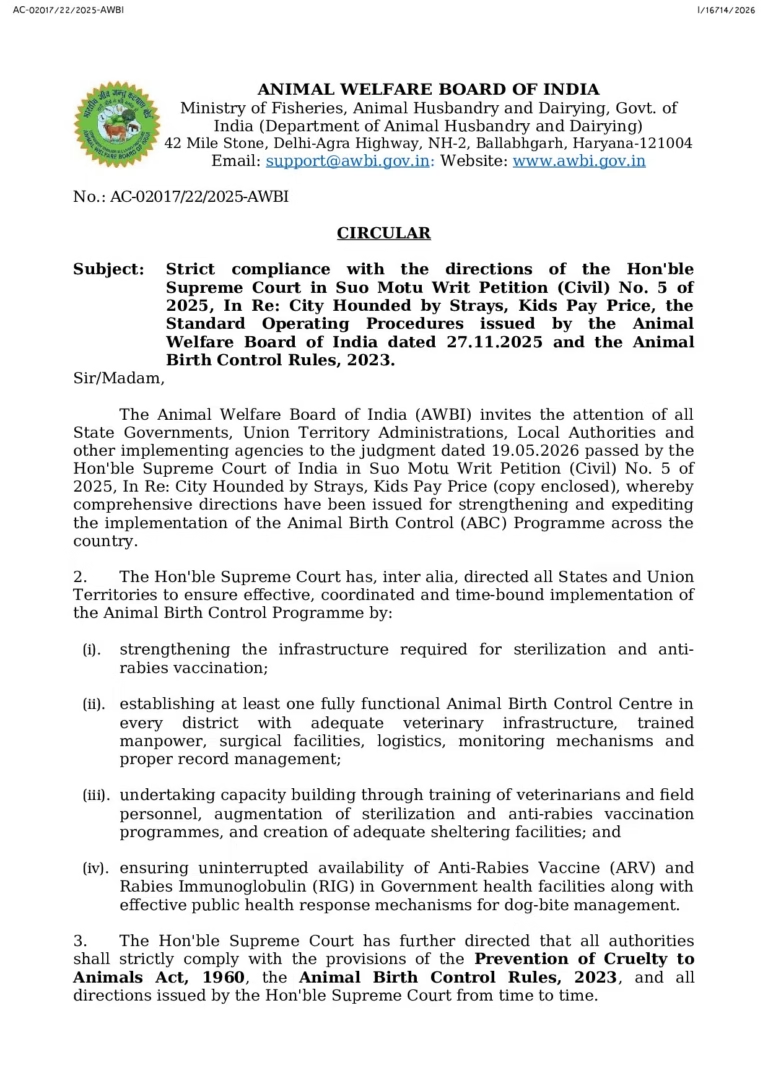
The Animal Welfare Board of India issued a circular requiring strict adherence to stray dog management regulations. The notice mandates compliance with Supreme Court of India orders from a 2025…
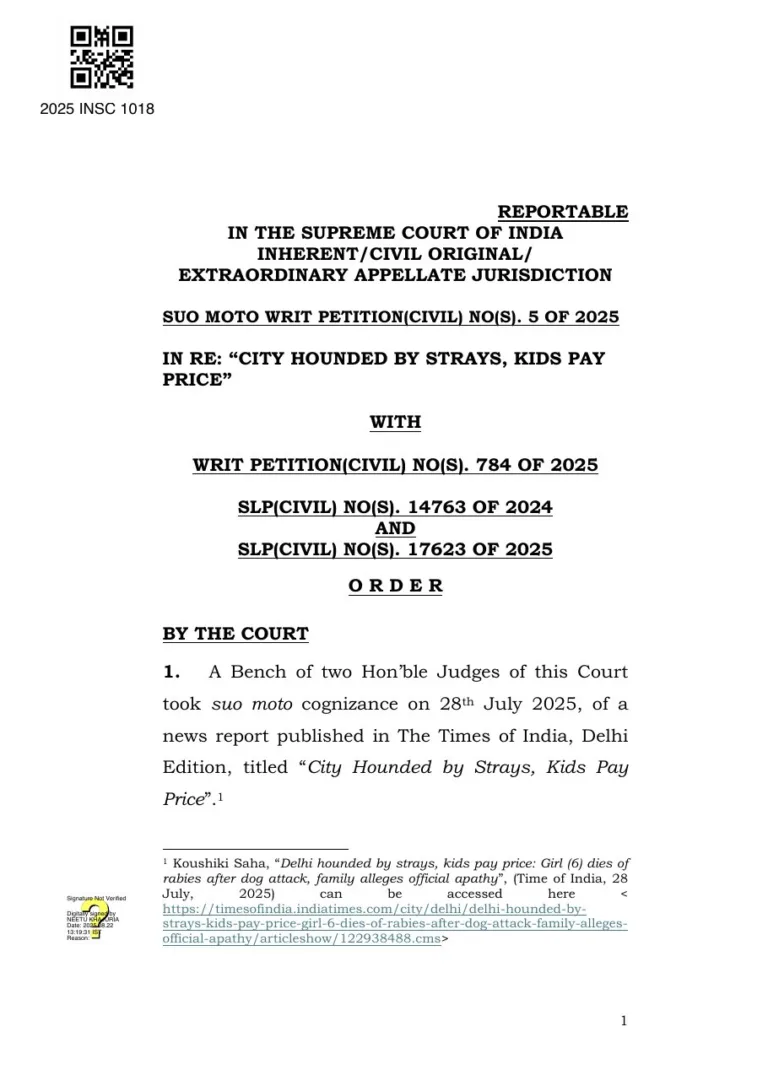
The Supreme Court of India issued a judgment regarding stray dogs on 22 Aug 2025, modifying its order of 11 Aug 2025. In Suo Motu Writ Petition (Civil) No. 5…
The Supreme Court of India, in a judgment dated 19 May 2026 (2026 INSC 506), dismissed all applications to modify, recall or stay its 7 Nov 2025 order removing stray…
Get Animal Writes updates
News, important developments and practical guides — no spam.