
Dog bites rise with heat in five Indian states

Dog bites rise with heat in five Indian states

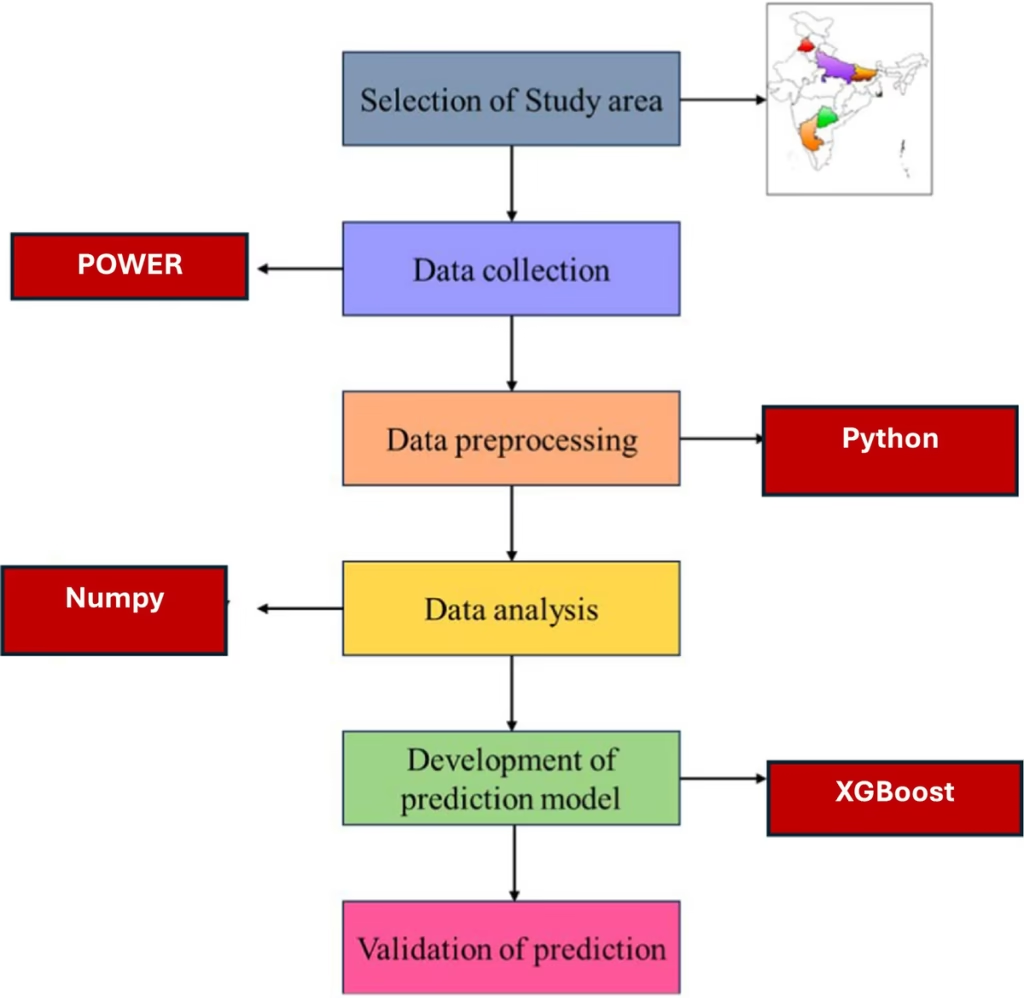
An artificial‑intelligence model predicted dog‑bite risk with 87 % accuracy, showing that hotter days raise the chance of bites while higher humidity lowers it. The research was carried out by teams from the Karunya Institute of Technology and Sciences in Coimbatore and the Department of Climate and Energy Systems Engineering at Ewha Womans University, Seoul, and examined five Indian states — Bihar, Karnataka, Punjab, Telangana and Uttar Pradesh — using monthly data on maximum temperature, relative humidity and the pollutants formaldehyde, nitrogen dioxide, sulfur dioxide and ozone. Statistical tests found maximum temperature significantly associated with bite incidence (p = 0.0014) and relative humidity inversely associated (p = 0.0252), with a correlation coefficient of 0.84 for temperature. Principal‑component analysis showed no clear clustering, indicating that temperature and humidity alone cannot fully explain regional variations. To forecast risk, the authors built an H2O XGBoost model that achieved 87 % accuracy and a mean absolute percentage error of 9.6 %. The authors state that localized environmental interpretation is essential and recommend that public‑health strategies for safer urban spaces incorporate region‑specific weather and pollution data, supporting Sustainable Development Goals 3, 11 and 13.

Questions about the Indian states study

Animal welfare FAQ

Sneha Gautam, Aron Rodrick Lakra, N. S. Athish and others carried out the study, titled “AI-based analysis of climatic and air pollution determinants of dog bite incidence”. Read the study.

The study was published in Frontiers in Veterinary Science on . See it in the journal.

An artificial‑intelligence model predicted dog‑bite risk with 87 % accuracy, showing that hotter days raise the chance of bites while higher humidity lowers it. Read the full study.

Sources

Study: AI-based analysis of climatic and air pollution determinants of dog bite incidence by Sneha Gautam, Aron Rodrick Lakra, N. S. Athish et al. in Frontiers in Veterinary Science Read the original (opens in a new tab)

Summary written by Animal Writes. Read the original before relying on it.

More research

From the Library

Guides on this

Get Animal Writes updates

News, important developments and practical guides — no spam.

Newsletter
+91

Email me Animal Writes updates. I can unsubscribe at any time.