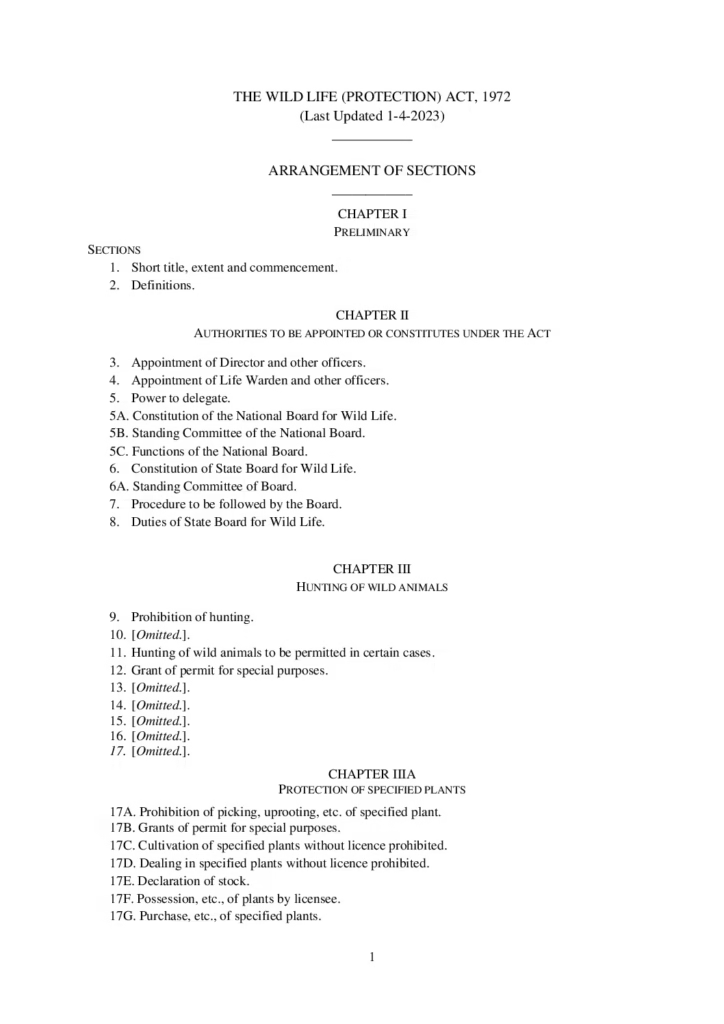
The Indian Journal of Legal Review discusses the development of wildlife protection laws in India, tracing a history from ancient practices to the Wildlife (Protection) Act, 1972. The study explores how an ecological heritage of ancient reverence and cultural norms shifted through colonial exploitation toward modern legal frameworks. The authors note increasing human-wildlife conflict due to habitat loss, expanding agricultural and infrastructural development, and social pressures. To address these challenges, the study examines constitutional mandates such as Articles 48A and 51A(g), alongside judicial interventions that expand environmental and animal welfare rights through court cases. The research points out the importance of local communities in conservation efforts, along with judicial interventions that support environmental rights. It analyses participatory governance mechanisms such as the Forest Rights Act and Joint Forest Management, which allow local people to take part in protecting nature. The authors call for reforms to improve the relationship between legal frameworks and conservation practices. Their analysis suggests that policy measures should focus on capacity building, incorporating community knowledge, and fostering sustainable coexistence strategies. Ultimately, the study recommends an integrative approach to wildlife conservation that aligns ecological preservation with social justice and participatory governance across the country.